
Peloton Bike for Small Spaces: Smart Fitness Solutions for Compact Homes
Finding space for exercise equipment at home can be tough, especially when living in an apartment, condo, or smaller house. Many people want a high-quality workout but worry a stationary bike will take up too much room. The Peloton Bike has become popular not just for its interactive classes, but also for its relatively compact design. But is it really the right fit for small spaces? Let’s explore how you can make the Peloton Bike work in tight areas, practical tips for setup, and ways to maximize your fitness without sacrificing comfort or style.
Why Peloton Bike Appeals To Small Space Owners
The Peloton Bike is known for its sleek look and advanced technology. But what’s most impressive for apartment dwellers and homeowners with limited space is its modest footprint. Measuring about 4 feet long and 2 feet wide (exactly 59″ L x 23″ W), the Peloton Bike can fit where many traditional gym equipment pieces cannot.
Unlike treadmills or elliptical machines that often require extra clearance for movement, the Peloton Bike stays stationary during use. That means you don’t need a large buffer zone around the machine. This is a huge advantage in rooms where every inch matters.
Peloton’s digital features also reduce the need for extra accessories. The screen, speakers, and connectivity are all built-in. You don’t need a separate TV or sound system, further saving space.
Dimensions And Technical Requirements
Before buying a Peloton Bike, it’s important to know the exact space requirements. Here’s what you need:
- Bike footprint: 59” length x 23” width
- Recommended clearance: At least 24” (2 feet) on all sides for safe mounting and dismounting
- Height: 53” from floor to top of the screen
So, the minimum space for a safe setup is roughly 7 feet long and 5 feet wide. But many users squeeze the bike into tighter spots with careful planning.
Peloton Bike Vs. Other Exercise Bikes
Let’s compare the Peloton Bike’s size with other popular stationary bikes:
| Bike | Length (inches) | Width (inches) | Height (inches) | Recommended Clearance |
|---|---|---|---|---|
| Peloton Bike | 59 | 23 | 53 | 24” each side |
| Schwinn IC4 | 48 | 21 | 51 | 18” each side |
| NordicTrack S22i | 56 | 22 | 61 | 24” each side |
| Bowflex C6 | 54 | 22 | 51 | 18” each side |
While the Peloton is not the smallest, it’s competitive. The integrated screen means you don’t need extra space for devices or stands.
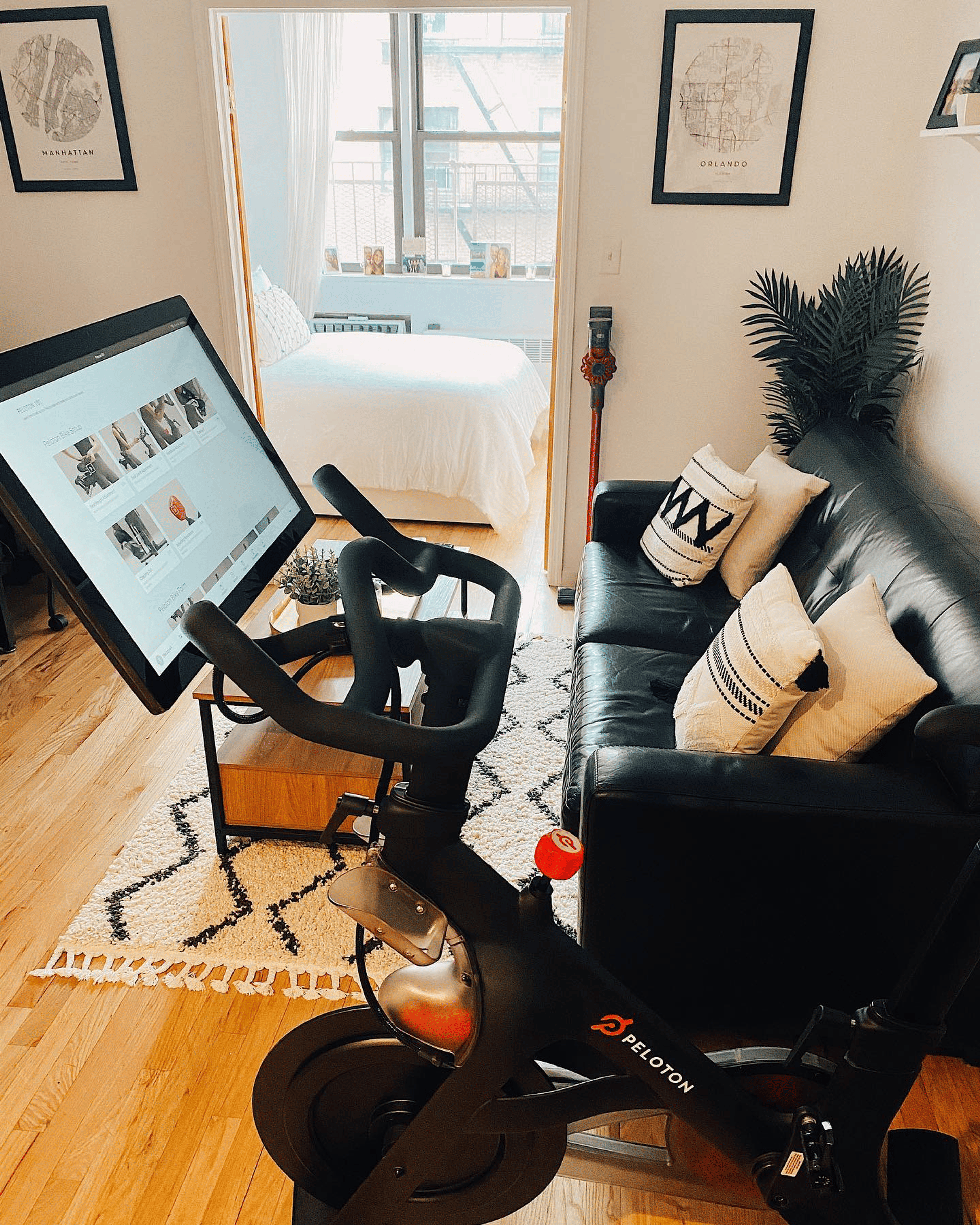
Choosing The Right Spot For Your Peloton Bike
Placing your Peloton Bike in a small home requires smart planning. Here are some ideas and tips:
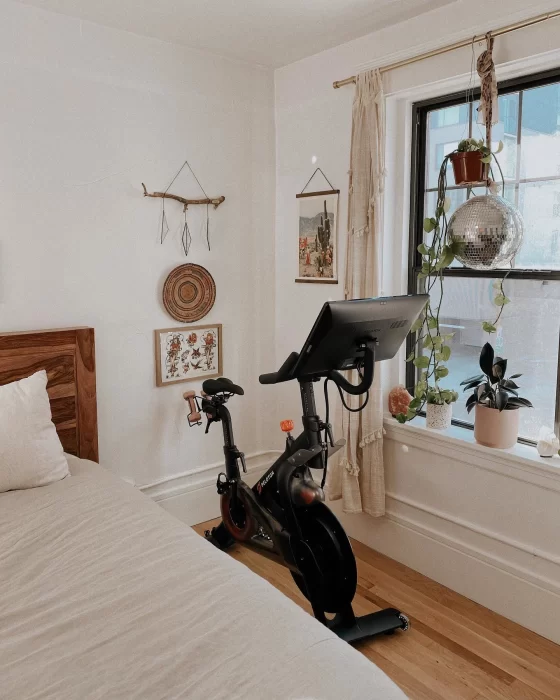
- Bedroom Corners: Many users tuck the bike into a bedroom corner, especially near a window for natural light. Make sure you can still access closets and walkways.
- Living Room Nooks: If you have a little-used corner or space behind a couch, the Peloton Bike fits well. Some people place the bike near their TV, using the screen for classes and the TV for entertainment.
- Home Office: If you work from home, a Peloton Bike in your office lets you squeeze in quick workouts. Just check for noise, so it doesn’t disturb calls.
- Balcony or Patio: In warmer climates, some users place the bike on a covered balcony. The bike is not weatherproof, so protect it from rain and humidity.
- Closet Conversion: If you have a walk-in closet, you can turn part of it into a mini gym. Remove unnecessary storage, add a mat, and your bike will be out of sight when not in use.
Practical Placement Tips
- Floor Protection: Always use a mat. It keeps floors safe from sweat and movement.
- Power Outlet: The Peloton Bike needs a standard outlet. Plan placement near one, or use a quality extension cord.
- Ventilation: Good airflow prevents overheating during workouts.
- Wi-Fi Signal: The bike’s classes stream online. Place it where Wi-Fi is strong.
Storage And Mobility Solutions
One common concern is how to move or store the Peloton Bike when space is needed for other uses. Although the bike is heavy (135 lbs), it has front wheels for easier movement. Here’s how you can optimize mobility and storage:
- Rolling Out: Tilt the bike forward onto its wheels. You can roll it to another spot, but avoid frequent moves to prevent floor damage.
- Temporary Storage: If you need to clear the area (for guests or cleaning), store the bike in a closet or against a wall.
- Multi-use Spaces: Place the bike in a room used for multiple purposes. For example, in a dining area that becomes a workout zone after meals.
Comparison: Peloton Bike Vs. Peloton Bike+
The newer Peloton Bike+ offers improved features and slightly larger size. Here’s how they compare for small spaces:
| Feature | Peloton Bike | Peloton Bike+ |
|---|---|---|
| Footprint | 59″ x 23″ | 59″ x 23″ |
| Screen Size | 21.5″ | 23.8″ |
| Swivel Screen | No | Yes |
| Weight | 135 lbs | 140 lbs |
| Price | Lower | Higher |
The footprint is identical, but Bike+ is slightly heavier. The swivel screen is a bonus for floor workouts but may need extra clearance.
Decorating And Integrating The Peloton Bike
Many people worry a stationary bike will ruin the look of their home. But with some creativity, you can make the Peloton Bike blend in or even look stylish.
- Decorative Mats: Choose a mat that matches your decor. Some brands offer mats in wood grain, marble, or bright colors.
- Plants and Art: Place a plant or artwork near the bike. It softens the gym feel and makes the area pleasant.
- Room Dividers: Use a folding screen or curtain to hide the bike when not in use. This is useful for shared spaces.
- Smart Lighting: Install LED strips or lamps to highlight the workout area. Good lighting can make the space feel bigger and more inviting.
Real-life Example
A New York City user placed their Peloton Bike in a living room corner, surrounded by plants and a bookshelf. By choosing a matching mat and adding a floor lamp, the bike became part of the room’s design, not an eyesore.
Accessories For Small Spaces
Peloton offers accessories that help save space or improve workouts. Here are a few that work well in compact homes:
- Compact Weights: Use light dumbbells (1–3 lbs) for arm workouts. Store them on the bike’s built-in holders.
- Resistance Bands: Great for stretching or strength exercises. Bands are easy to store in a drawer or basket.
- Wireless Headphones: If you share your home, use headphones to avoid disturbing others.
- Bike Covers: Protect your bike from dust in multi-use rooms.
Many users skip large accessories like foam rollers or yoga mats unless they fit easily in their space.
Sound And Noise Considerations
In apartments, noise can be a big issue. The Peloton Bike is quieter than many treadmills, but there are still sounds from pedaling and the instructor’s voice. Here’s how to minimize disturbance:
- Floor Mat: Dampens vibration and noise.
- Headphones: Prevents speaker sound from disturbing neighbors.
- Timing: Ride at reasonable hours, especially if you live above someone.
- Door Closed: If possible, place the bike in a room with a door to contain noise.
Data: Peloton Bike Noise Levels
According to user tests, the Peloton Bike produces about 40–50 decibels during normal use. This is similar to a quiet conversation. Treadmills, by contrast, often exceed 60 decibels.
Airflow And Temperature In Small Rooms
Exercise raises your body temperature quickly. In small rooms, heat can build up fast. Here’s how to keep your workouts comfortable:
- Small Fans: Place a fan nearby to cool you during rides.
- Open Windows: Fresh air helps prevent overheating.
- Dehumidifiers: Useful in humid climates, especially in basements or closets.
Some users install a mini air conditioner or use portable fans for longer rides.
Peloton Bike Setup: Step-by-step For Small Spaces
Setting up your Peloton Bike in a compact area requires careful steps. Here’s a practical guide:
- Measure Your Space: Use a tape measure to confirm the area is at least 59” x 23”, plus extra for clearance.
- Clean and Prepare: Remove clutter, vacuum, and lay down a protective mat.
- Position the Bike: Place it so you can mount/dismount safely. Check for nearby power outlets.
- Connect Wi-Fi: Test signal strength in your chosen spot. Move a router closer if needed.
- Check Lighting: Make sure you can see the screen clearly, day or night.
- Add Accessories: Place weights, headphones, and water bottle within reach.
- Test Noise and Vibration: Ride for a few minutes to check for excessive sound or shaking.
Common Setup Mistakes
- Ignoring Clearance: Not leaving enough space can cause accidents.
- Blocking Doors: Placing the bike where it blocks entry/exit is unsafe.
- Bad Wi-Fi Signal: Weak internet leads to laggy classes.
- No Floor Protection: Skipping a mat risks floor scratches and extra noise.
Maximizing Your Workout In Small Spaces
Small spaces can make workouts feel limited, but you can still enjoy a full fitness routine. Here’s how:
- Bodyweight Exercises: Use the bike’s screen for off-bike classes like stretching or strength, right beside the bike.
- Short Sessions: In tight quarters, quick workouts (10–20 minutes) are easier to fit in.
- Multi-use Equipment: Use resistance bands or small weights for variety.
- Mindful Movement: Move slowly and carefully to avoid bumping walls or furniture.
Advanced Tip: Floor Workouts With Limited Space
Peloton offers classes for yoga, stretching, and strength. If your space is tight, try these:
- Standing Moves: Focus on exercises done upright.
- Chair Workouts: Use a sturdy chair for support.
- Wall Exercises: Use walls for balance or resistance.
:max_bytes(150000):strip_icc()/Peloton-Indoor-Exercise-Bike-1-cfcb1391f0474f76a41aa278d4584b13.jpeg)
Cleaning And Maintenance Tips For Small Areas
A small home means dust and sweat can build up fast. Here’s how to keep your Peloton Bike clean and functional:
- Daily Wipe Down: Use a damp cloth to clean the bike frame and screen after every ride.
- Mat Cleaning: Vacuum or mop the mat regularly.
- Air Out: Open windows or run a fan after workouts to reduce humidity.
- Inspect for Wear: Check pedals, seat, and handles for signs of damage.
- Cable Management: Keep power cords tidy to avoid tripping.
Non-obvious Insight: Screen Dust And Smudges
Many users forget to clean the bike’s screen. In small rooms, dust builds up quickly. Use a microfiber cloth and avoid harsh cleaners.
Peloton Bike Subscription In Small Homes
The Peloton experience depends on its digital classes. Here’s what you need to know:
- Monthly Fee: $44 for the all-access membership.
- Multiple Users: One bike can support several profiles, so families or roommates can share.
- Class Variety: Over 10,000 classes, including cycling, yoga, strength, and more.
- Space-Efficient Workouts: Many classes are designed for tight areas, like HIIT or stretching.
Example: Sharing A Bike In A Small Apartment
Two roommates can use the same bike, each with their own profile. With quick setup and short classes, both can workout without needing a gym or extra equipment.
Peloton Bike Alternatives For Small Spaces
If the Peloton Bike still seems too big or expensive, consider these alternatives:
- Folding Bikes: Some brands offer foldable stationary bikes. They’re lighter, cheaper, and can be stored in a closet.
- Mini Exercise Bikes: These are pedal-only devices you can use while sitting at a desk or chair. They take up very little space.
- Smart Trainers: Attach your regular bike to a smart trainer, turning it into a stationary bike. Some trainers are small and easy to store.
Comparison Table: Peloton Bike Vs. Folding Bike Vs. Mini Bike
| Bike Type | Footprint | Features | Price Range | Storage |
|---|---|---|---|---|
| Peloton Bike | 59″ x 23″ | Interactive screen, classes | $1,445+ | Medium |
| Folding Bike | 22″ x 18″ | Basic monitor | $200–$400 | High |
| Mini Exercise Bike | 16″ x 13″ | No screen | $50–$150 | Very High |
Cost And Value For Small Space Users
Buying a Peloton Bike is a big investment. For small space owners, value comes from usability and long-term benefits.
- One-Time Purchase: The bike costs $1,445 or more, plus a $44 monthly subscription.
- Durability: Peloton bikes are built to last, so you don’t need to replace them often.
- Space Saving: Compared to a gym membership, the bike saves travel time and gym bag storage.
- Resale Value: Peloton bikes retain value. If you move, you can sell or move the bike easily.
Non-obvious Insight: Insurance Coverage
Many renters and homeowners don’t realize their Peloton Bike may be covered by insurance. If you have renters or homeowners insurance, ask about coverage for exercise equipment.
Safety And Accessibility In Small Homes
Safety is important, especially in tight rooms. Here’s what to watch for:
- Trip Hazards: Keep cords and accessories organized.
- Child Proofing: If you have kids, teach them not to play near the bike.
- Emergency Access: Don’t block exits or doors with the bike.
- Stability Checks: Make sure the bike sits flat, not wobbling.
Accessibility Tip
If someone in your home has mobility issues, place the bike where they can reach it easily. Adjust seat and handlebar height for comfort.
Peloton Bike Community For Small Space Users
One hidden benefit is the Peloton community. Many users share tips for small space setups on forums and social media. You’ll find inspiration and practical advice.
- Photos: See real-life pictures of bikes in tiny apartments.
- Ideas: Learn how others decorate, store, and use their bikes.
- Support: Connect with people who understand your challenges.
For official community resources, visit the Peloton website and forums.
Peloton Bike Upgrades For Small Spaces
If you’re ready to upgrade your setup, consider these smart additions:
- Wall-Mounted Shelves: Store towels, water bottles, and accessories without using floor space.
- Mirror: Place a mirror behind the bike. It makes the room feel bigger and helps with form.
- Bluetooth Speakers: If you want louder sound, use wireless speakers to avoid cords.
Non-obvious Insight: Visual Space Tricks
Mirrors and light colors make small rooms look larger. Place your Peloton Bike near a mirror or use white walls to maximize openness.
Real User Stories: Peloton Bike In Compact Homes
Many Peloton owners live in small spaces. Here are a few stories:
- Mia (San Francisco): Mia placed her bike in a studio apartment, using a decorative mat and plants to create a workout corner. She rolls the bike aside when guests visit.
- Alex (Chicago): Alex keeps his Peloton Bike in a walk-in closet. He added a small fan and wireless headphones for comfort.
- Sam (Boston): Sam and his partner share a bike in a home office. They schedule workouts so both can use the bike without conflicts.
These examples show that with creativity, the Peloton Bike can fit almost anywhere.
Frequently Asked Questions
Is The Peloton Bike Really Suitable For Small Apartments?
Yes, the Peloton Bike is designed with a compact footprint. With smart placement and a protective mat, it fits in bedrooms, living rooms, or offices. Just make sure you have enough clearance for safety.
What’s The Minimum Space Needed For Safe Use?
You need at least 59” x 23” for the bike itself, plus about 2 feet on each side for mounting and dismounting. Most users recommend a space of 7’ x 5’ for comfort.
Can I Move The Peloton Bike Easily?
The bike has front wheels for rolling, but it weighs about 135 lbs. It’s possible to move with help or by tilting, but frequent moves are not recommended for floor safety.
How Do I Reduce Noise In Shared Living Spaces?
Use a floor mat to dampen vibration, and headphones to keep the class sound private. Ride during reasonable hours, and choose a spot away from bedrooms if possible.
Are There Alternatives To Peloton For Small Spaces?
Yes. Folding bikes, mini exercise bikes, and smart trainers are all good for compact homes. Each has pros and cons for price, features, and storage.
Small homes don’t have to limit your fitness goals. With the right setup, accessories, and a little creativity, the Peloton Bike can become a valuable part of your routine. It’s not just about saving space—it’s about making your home work for you, staying healthy, and enjoying workouts on your terms. For more details on exercise bike dimensions and placement, see Wikipedia.

