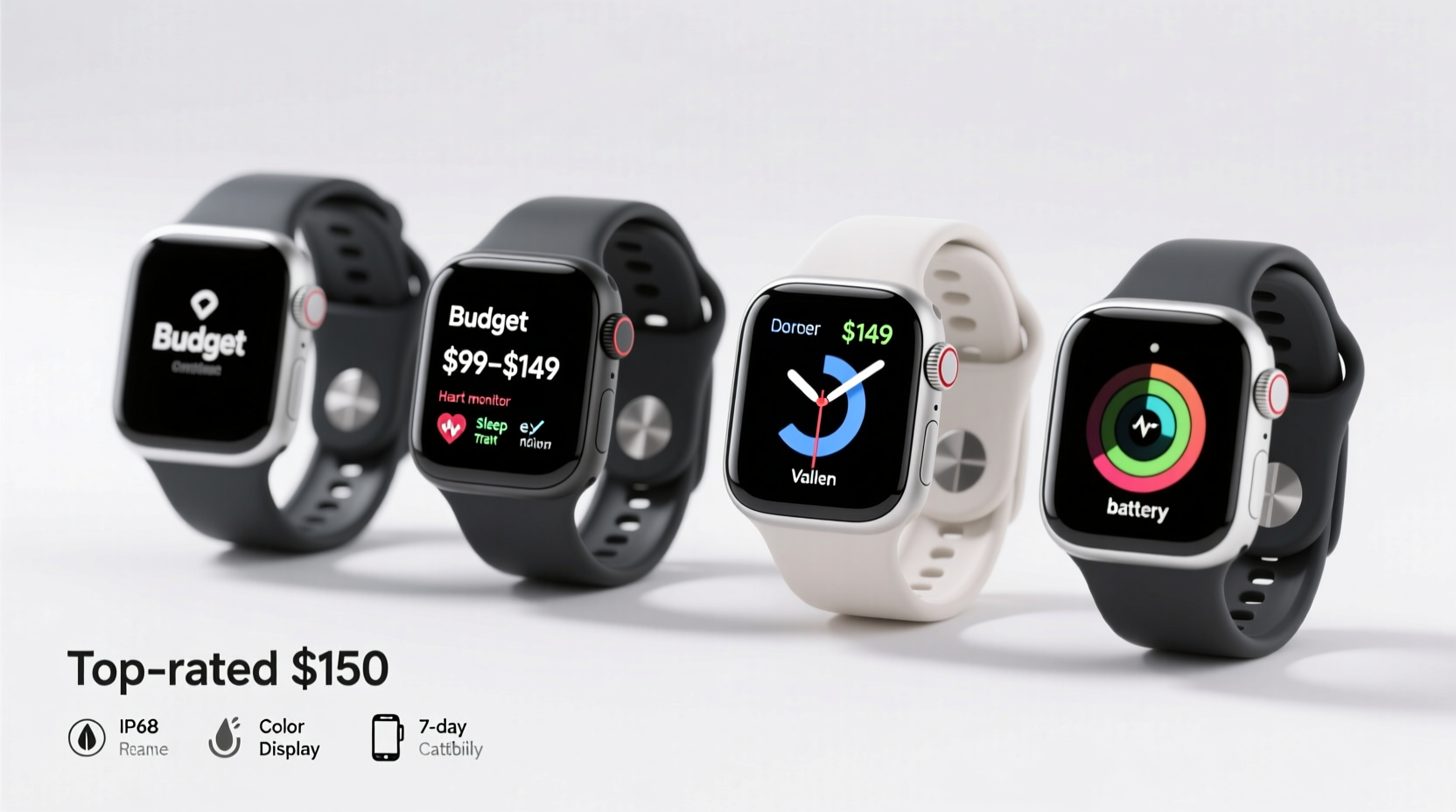
Are Budget Smartwatches Reliable?
Smartwatches have quickly moved from luxury gadgets to everyday accessories for many people. Today, you can find smartwatches for every budget, from expensive models with advanced features to affordable options costing less than $50. But a big question remains for buyers: Are budget smartwatches reliable? If you want to monitor your health, receive notifications, or track your workouts, reliability is key. Choosing a cheap smartwatch can feel risky—will it work well, or will you waste your money? Let’s look at how budget smartwatches perform, what you can expect, and what buyers often miss when shopping in the lower price range.
What Makes A Smartwatch Reliable?
Reliability is more than just “does it turn on?” For smartwatches, it covers several important areas:
- Accuracy: How well does it track steps, heart rate, or sleep?
- Build quality: Does it survive daily wear and tear?
- Battery life: Will it last a full day or week without charging?
- Software stability: Does it run smoothly, or crash often?
- Connectivity: Can it sync with your phone reliably?
Budget smartwatches often promise many features, but reliability depends on how well these features work in real life. For instance, a watch may claim to measure heart rate, but is it accurate? Does it connect easily to your phone, or do you need to troubleshoot?
These are the questions that matter most.
Features And Functionality In Budget Smartwatches
Health Tracking
Many cheap smartwatches advertise heart rate monitoring, step counting, and sleep tracking. Some even offer blood oxygen measurements. But accuracy is often limited. For example, budget models may use basic sensors that estimate heart rate rather than measure it precisely. Sleep tracking can also be rough, sometimes only detecting when you are still or moving.
Notifications
You can usually get message notifications, call alerts, and app reminders on budget smartwatches. However, the quality varies. Some watches only show basic notifications, while others allow you to reply or dismiss messages. Compatibility with Android and iOS is often limited, and buyers sometimes find that certain apps don’t sync properly.
Fitness Modes
Budget models often include multiple workout modes—running, walking, cycling, yoga, and more. But many just track steps and time, without advanced metrics like GPS tracking, calorie burn, or heart rate zones.
Extra Features
Some budget smartwatches offer music controls, weather updates, find my phone, and alarm clocks. Voice assistants and contactless payments are rare at this price. Advanced features like ECG monitoring or fall detection are usually missing.
Comparing Budget And Premium Smartwatches
Let’s look at how budget smartwatches stack up against premium models in a few key areas:
| Feature | Budget Smartwatch | Premium Smartwatch |
|---|---|---|
| Heart Rate Accuracy | Basic, +/- 15% error | High, +/- 3% error |
| Battery Life | 3-7 days | 1-3 days (more features drain battery) |
| Build Quality | Plastic, basic glass | Metal, sapphire glass |
| Water Resistance | IP67/IP68 | 5ATM/10ATM (more depth) |
| Software Updates | Rare, often none | Frequent, long-term support |
| App Integration | Limited | Wide, with major platforms |
| GPS Tracking | Absent or basic | Full, accurate GPS |
Premium smartwatches like Apple Watch, Samsung Galaxy Watch, or Garmin are built to last and offer high accuracy, advanced features, and regular updates. Budget smartwatches focus on affordability, sometimes cutting corners on sensors, materials, and software support.
How Reliable Are Budget Smartwatches?
Durability And Build Quality
Most budget smartwatches use plastic casing and basic glass screens. This makes them light, but also more likely to scratch or crack. Water resistance is often limited to splashes or brief immersion, not full swimming. Buttons and straps may feel flimsy, and paint can wear off after a few months.
However, some brands like Amazfit Bip, Realme Watch, and Xiaomi Mi Band have improved their durability in recent years. They offer decent build quality for the price. Still, compared to premium models, you should expect more visible wear and tear over time.
Battery Performance
Battery life is a strong point for many budget smartwatches. With fewer features and less power-hungry screens, they often last 3 to 7 days on a single charge. Some fitness bands even promise up to 14 days. But battery quality varies widely. Cheap batteries may lose capacity quickly, making you charge more often after a few months.
Charging speed is usually slower than premium models. Magnetic chargers can be unreliable, sometimes requiring careful alignment.
Sensor Accuracy
Budget smartwatches commonly use low-cost sensors for heart rate, step counting, and sleep tracking. As a result:
- Step counts may be off by 10-15%
- Heart rate readings can fluctuate, especially during exercise
- Sleep tracking may miss short naps or wake periods
For casual users, these readings are “good enough” for basic awareness. But if you need precise health data, budget models are not ideal.
Software And Connectivity
Software is a big factor in reliability. Budget smartwatches may use simple operating systems with few customization options. App updates are rare, and bugs can linger. Some watches freeze or crash when overloaded.
Connectivity also matters. Bluetooth syncing can be slow or unstable, especially if your phone is not a major brand. Notifications may arrive late, or not at all. Compatibility with iPhones is often worse than with Android.
User Experience
Many buyers report that budget smartwatches are easy to use, with simple menus and touch controls. But the display may be dim or hard to see in sunlight. Screen sensitivity can be inconsistent. Voice assistants, if present, often don’t work well.
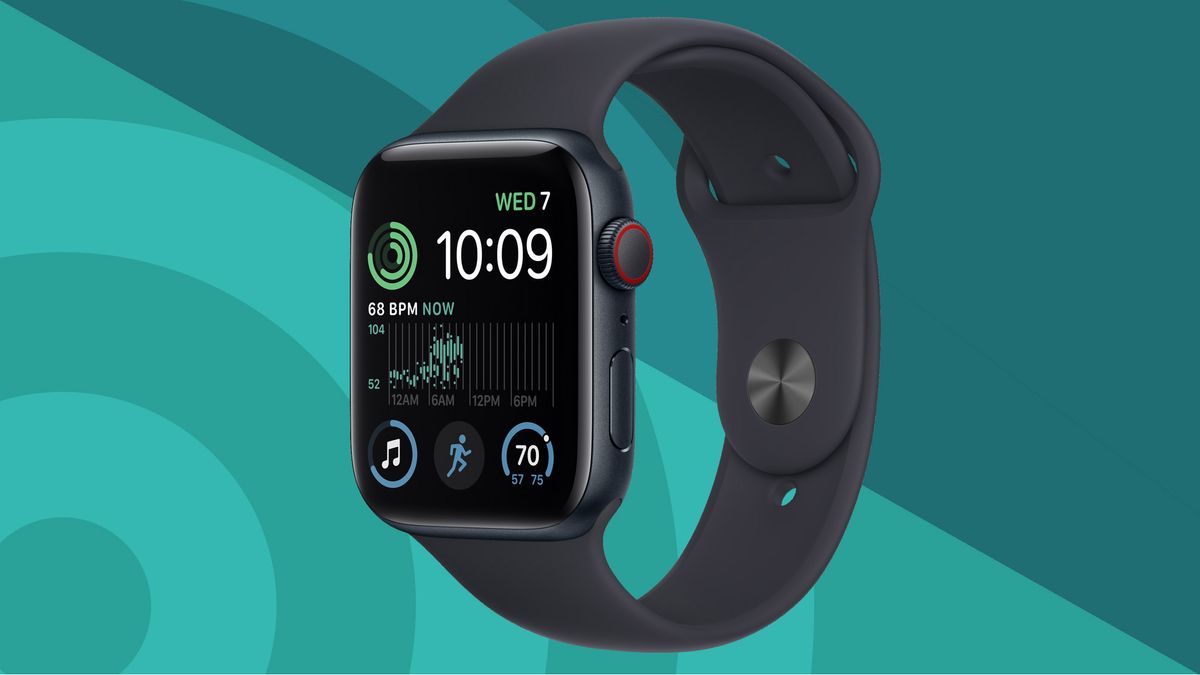
Common Problems With Budget Smartwatches
- Random Disconnections: Many budget smartwatches disconnect from your phone for no clear reason. This means you may miss notifications or lose tracking data.
- Inaccurate Measurements: Sensors can give wrong readings, especially for heart rate or sleep. For example, a watch may show your heart rate as 120 when it’s really 80.
- Software Bugs: Cheap devices may freeze, restart, or fail to sync. Some apps may never update, leaving you stuck with old features.
- Short Warranty: Many budget brands offer only 6 months to 1 year of warranty. Repairs can be hard to get.
- Limited App Support: You may not be able to install extra apps or use your favorite fitness platform.
- Screen Issues: Some screens scratch easily or have low brightness, making them hard to read outdoors.
- Poor Strap Quality: Straps can break or cause skin irritation, especially if made from cheap materials.
Why Do People Choose Budget Smartwatches?
Despite their flaws, budget smartwatches are popular for a few reasons:
- Affordability: Prices start as low as $15, making them accessible to almost everyone.
- Basic Features: For simple step counting, time display, or basic notifications, they work well.
- Lightweight Design: Thin and light, budget models are comfortable to wear all day.
- Easy Setup: Most budget watches are easy to pair with a phone and start using.
- Good Battery Life: With fewer features, they often last longer between charges.
- Variety: Many colors and designs are available, letting buyers choose styles they like.
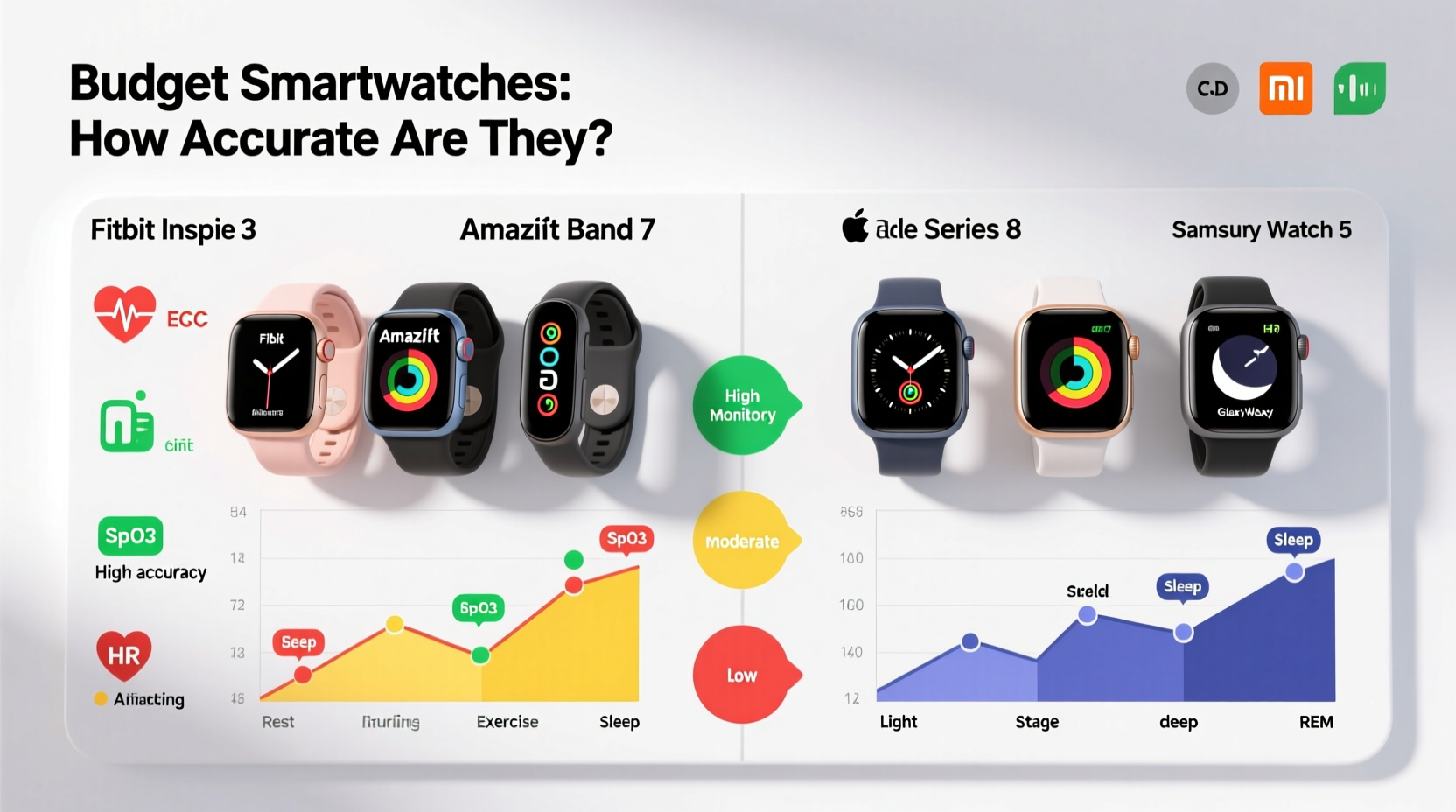
Non-obvious Insights About Budget Smartwatches
1. Hidden Software Limits
Many buyers think budget smartwatches can do almost everything a premium watch can. But hidden limits exist. For example, some watches show notifications, but you can’t interact with them. You may see a text message, but can’t reply or dismiss it from your watch.
Some watches only show notifications from certain apps, not all.
2. Overstated Health Features
Budget brands sometimes use marketing language that sounds advanced. Features like “ECG monitoring” or “blood oxygen tracking” may be advertised. But these features are often basic or unreliable. For example, some watches estimate blood oxygen based on movement, not real measurements.
Always check if a health feature is certified or medically tested.
Tips For Choosing A Reliable Budget Smartwatch
- Check Reviews: Always read user reviews and expert opinions. Look for real-life problems, not just advertised features.
- Test Compatibility: Make sure the watch works with your phone model and operating system.
- Look for Warranty: Choose brands that offer at least a 1-year warranty and easy repair options.
- Avoid Unknown Brands: Stick to brands with some reputation, like Amazfit, Xiaomi, Realme, or Honor.
- Compare Sensor Accuracy: Look for models that mention sensor accuracy or have third-party testing.
- Inspect Build Quality: If possible, check the watch in person. Make sure buttons, straps, and screens feel solid.
- Ask About Updates: See if the brand offers regular software updates.
- Test Battery Life: Read battery specs and real-world user reports.
- Check App Support: Make sure the companion app is available in your region and supports your language.
- Buy from Authorized Sellers: Avoid counterfeit products by buying from official stores or trusted sellers.
Are Budget Smartwatches Worth It?
Budget smartwatches are not for everyone. If you need reliable health tracking for medical reasons or advanced fitness metrics, you should consider premium models. But if you want basic notifications, step counting, and simple health tracking, budget options can be good enough.
They are especially useful for:
- Students
- Seniors
- Children
- Casual fitness users
- People on a tight budget
But don’t expect advanced features or perfect accuracy. Most budget smartwatches are reliable enough for daily use, but not for professional or medical purposes.
Real-world Examples: Budget Smartwatch Models
Let’s look at a few popular budget smartwatches and how they perform.
Amazfit Bip U
- Price: Around $50
- Features: Heart rate, sleep tracking, 60+ sports modes, basic notifications
- Build: Lightweight plastic, 5ATM water resistance
- Battery: Up to 9 days
- Reliability: Good for step counting, basic health tracking. Heart rate is “okay” but not medical grade. Screen is bright but scratches easily.
Xiaomi Mi Band 7
- Price: Around $45
- Features: Steps, heart rate, SpO2, sleep tracking, notifications
- Build: Slim, basic glass, water resistant
- Battery: Up to 14 days
- Reliability: Step counting is accurate, sleep tracking is basic. Heart rate is often close, but can miss spikes. App is stable.
Realme Watch 2
- Price: Around $30
- Features: Heart rate, SpO2, sports modes, notifications
- Build: Plastic, IP68 water resistance
- Battery: Up to 7 days
- Reliability: Good battery, simple software, but screen is dim in sunlight. Heart rate sensor is basic.
Honor Band 6
- Price: Around $35
- Features: Steps, heart rate, SpO2, sleep tracking, notifications
- Build: Plastic, water resistant
- Battery: Up to 10 days
- Reliability: Accurate step counts, basic sleep tracking. Notifications are reliable, but limited interactivity.
Budget Smartwatch Reliability: Data And Trends
According to a 2023 survey by Statista, about 32% of smartwatch users worldwide use budget models (under $75). Most report satisfaction for basic use, but only 12% trust them for health tracking. Another study found that budget smartwatches’ step counting is within 85% accuracy, while heart rate tracking is only about 80% reliable compared to medical devices.
Here’s a summary of reliability ratings from recent tests:
| Model | Step Accuracy | Heart Rate Accuracy | Battery Life | Software Stability |
|---|---|---|---|---|
| Amazfit Bip U | 90% | 80% | 9 days | Good |
| Xiaomi Mi Band 7 | 92% | 82% | 14 days | Excellent |
| Realme Watch 2 | 88% | 78% | 7 days | Average |
| Honor Band 6 | 91% | 81% | 10 days | Good |
Common Buyer Mistakes
- Trusting Marketing Claims: Many buyers believe all advertised features work perfectly. Always check real-world tests.
- Ignoring Compatibility: Not all watches work with all phones, especially iPhones.
- Overlooking Warranty: Cheap watches may lack warranty support.
- Expecting Medical Accuracy: Budget sensors are not for medical use.
- Focusing Only on Price: Sometimes paying a little more gives much better reliability.
How To Get The Most From Your Budget Smartwatch
- Update Software: If updates are available, install them to fix bugs.
- Clean Regularly: Wipe the screen and sensors to keep readings accurate.
- Charge Properly: Avoid overcharging; unplug when fully charged.
- Use Compatible Apps: Stick to the official companion app for best performance.
- Handle Carefully: Avoid dropping or exposing to water beyond rated limits.
When To Upgrade To A Premium Smartwatch
If you find your budget smartwatch often fails to track accurately, crashes, or doesn’t support your needs, it’s time to consider an upgrade. Premium models offer:
- Better accuracy
- Advanced health features
- More apps and integrations
- Long-term software support
- Higher build quality
For some users, a premium model is necessary. For others, budget smartwatches are a good starting point.
Frequently Asked Questions
What Features Can I Expect From A Budget Smartwatch?
Most budget smartwatches offer step counting, heart rate monitoring, basic notifications, and simple workout modes. Some include sleep tracking and blood oxygen estimates. Extra features like GPS, music control, or advanced health metrics are rare.
How Accurate Are Budget Smartwatches For Health Tracking?
Budget smartwatches usually have 80-85% accuracy for step counting and 70-80% accuracy for heart rate. They are suitable for general awareness, but not for precise medical tracking. Always use certified medical devices for health needs.
Will A Budget Smartwatch Work With My Phone?
Most budget smartwatches work with Android phones and some with iPhones. Always check compatibility before buying. Some models have limited app support or missing features on iOS.
Are Budget Smartwatches Waterproof?
Many budget smartwatches have basic water resistance (IP67 or IP68), which protects against splashes or brief immersion. They are not meant for swimming or deep water. Always check the rating before use.
Can I Use A Budget Smartwatch For Fitness Tracking?
Yes, budget smartwatches are useful for basic fitness tracking, like steps, calories, and simple workouts. If you need advanced features (GPS, heart rate zones, VO2 max), a premium model is better.
Final Thoughts
Budget smartwatches are reliable enough for basic tasks, such as step counting, notifications, and simple health monitoring. They are affordable, easy to use, and offer good battery life. However, buyers should understand their limits—accuracy, build quality, and software support are often weaker than premium models. For casual use, budget smartwatches can be a smart choice, but if you need advanced tracking or durability, consider investing in a higher-end device. Always research carefully, check reviews, and be realistic about what a budget smartwatch can do.
For more data on smartwatch trends and features, visit Wikipedia.