
The best rowing machine for a tall person needs a long rail, smooth motion, and enough room for a full leg drive.
If you are tall, a rower can feel more like a cramped suitcase than a fitness tool. Your knees may hit your chest, your handle may stop too soon, or your hips may slide past the seat. I know how frustrating that feels after spending good money on home gym gear. The models below focus on rail length, seat travel, frame strength, comfort, and smooth resistance. I also included compact options for smaller rooms, plus premium rowers for serious training. Always compare your inseam with the maker’s fit details before ordering.
Concept2 RowErg Indoor Rower
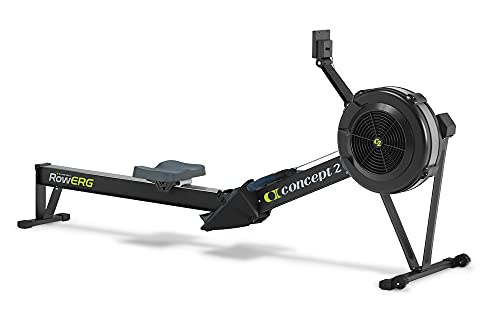
The Concept2 RowErg is my first pick for most tall users. Its long, sturdy frame gives a full stroke for many long-legged athletes, and the seat rolls with very little drag. The PM5 monitor tracks key data such as pace, distance, time, watts, and calories. Air resistance also feels natural because it rises as you pull harder.
This rower is not fancy, but it is trusted in gyms, schools, and training centers for a reason. The frame separates in the center, so storage and moving become easier. The device holder helps you follow a class or watch a show while you row. For a tall person who wants proven build quality and clear workout data, this is a very safe buy.
Pros:
- Long travel suits many tall users
- Excellent PM5 workout monitor
- Strong frame for hard training
- Air resistance feels smooth and natural
- Separates for easier storage
- Large user community and workout support
Cons:
- Fan noise rises during hard pulls
- Basic seat may feel firm to some users
- Costs more than many home rowers
My Recommendation
I recommend the Concept2 RowErg for tall users who want a long-term training tool, not a short-term bargain. It is especially good for athletes, larger households, and people who care about accurate data. It may be the best rowing machine for a tall person who values reliability above screens and built-in classes. Its strong resale value also improves its overall value and availability.
Hydrow Origin Magnetic Rower

The Hydrow Origin targets users who want a polished home workout. Magnetic drag keeps the pull quiet, which helps in apartments and shared spaces. Its guided rowing content adds structure when you do not want to build your own plan. The seat and rail design aim to create a steady, fluid stroke.
Tall buyers should check the current fit chart before purchase, since body proportions matter more than height alone. The machine has a premium feel and looks cleaner than many bulky rowers. Its connected experience can make hard sessions feel like a trip on open water. Subscription costs may apply for full content access, so include that expense in your budget.
Pros:
- Quiet magnetic resistance for home use
- Strong guided workout platform
- Sleek design suits modern rooms
- Smooth seat movement
- Good choice for users who need motivation
- Low-distraction rowing experience
Cons:
- Premium price may not fit every budget
- Full content access may require a membership
- Fit should be checked carefully by tall buyers
My Recommendation
I suggest the Hydrow Origin for tall users who want quiet training and coached sessions. It fits people who enjoy visual lessons more than raw performance numbers. If you live in an apartment, its magnetic system can be a major benefit. It can serve as the best rowing machine for a tall person who stays motivated through a connected fitness experience.
Upgraded Long-Rail Magnetic Rower

This upgraded magnetic rower focuses on the feature tall users need most: extra slide-rail room. The quiet pull makes it useful for early workouts, late sessions, and shared homes. Magnetic resistance offers a smooth feel without the loud rush of a fan. Its app connection can add more variety than a simple basic monitor.
I like this style of rower for buyers who need space for a full stroke but still want a home-friendly machine. The longer rail can help reduce the cramped feeling found on small rowers. Still, you should measure your inseam and the room around the machine before ordering. A long rail only helps when the seat can travel far enough for your body.
Pros:
- Longer rail helps tall users row fully
- Quiet resistance works well indoors
- Smooth magnetic pull
- App support adds workout variety
- Useful for apartments and shared rooms
- Designed for full-body cardio
Cons:
- App features may vary over time
- Basic monitor may not satisfy data-focused athletes
- Requires floor space when fully extended
My Recommendation
This machine suits tall beginners and intermediate users who want a long rail at a more approachable price. It is a good match for quiet home workouts and light coaching. I would choose it over a short compact rower when legroom is the main concern. It offers solid value if its current fit measurements match your inseam.
Merach Q1S Magnetic Rowing Machine
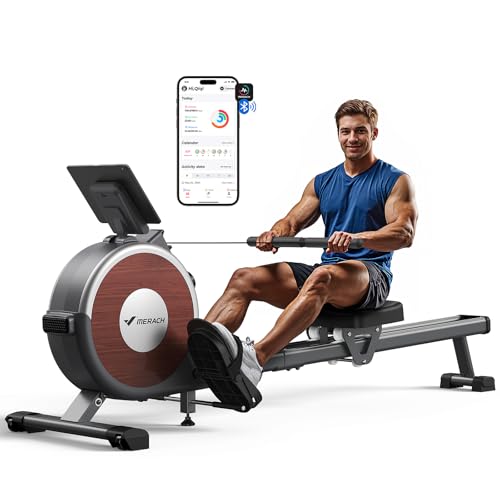
The Merach Q1S brings quiet magnetic resistance and a strong weight rating to a home-friendly frame. Its dual-slide rail helps the seat stay steady as you move. Sixteen resistance levels give new users room to progress without making the first session too harsh. The LCD monitor keeps basic workout information close at hand.
The 350-pound stated capacity makes this model appealing to larger users, but capacity is not the same as tall-user fit. I would still check the usable rail length before purchase. The app-compatible design may help users stay on track with planned sessions. For home cardio, strength endurance, and steady calorie work, this rower offers a practical mix.
Pros:
- Quiet magnetic resistance
- Dual rail improves seat stability
- Sixteen resistance levels
- High stated weight capacity
- App-compatible design
- Compact enough for many home gyms
Cons:
- May feel short for very long inseams
- LCD data is less advanced than PM5 data
- App access may not appeal to every user
My Recommendation
I recommend the Q1S for tall users with moderate leg length who also need a sturdy, quiet machine. It is best for home cardio, weight control, and steady fitness progress. Larger users should pay close attention to both rail length and seat comfort. It is a good value choice when the measurements fit your body.
YOSUDA Quiet Magnetic Rower
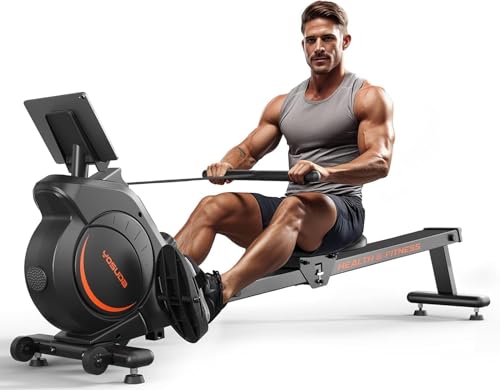
YOSUDA designed this magnetic rower for quiet home training. It provides a smooth pull and a simple way to work the legs, back, arms, and core. The app-connected setup can give casual users more workout choices. Its apartment-friendly profile is helpful when space and noise are both limited.
Tall users should treat the rail length as the deciding detail. A rower can look large in a product photo yet still limit a long stroke. I like this model for users who want gentle daily exercise rather than elite race training. It may also suit a first-time buyer who wants basic guidance without a complex console.
Pros:
- Quiet enough for shared living spaces
- Smooth magnetic motion
- App support for guided workouts
- Simple controls for beginners
- Useful full-body exercise
- Home-friendly design
Cons:
- Very tall users should verify fit first
- Monitor functions are fairly basic
- Not aimed at advanced performance testing
My Recommendation
This YOSUDA rower is best for tall beginners whose inseam falls within the listed range. It makes a good choice for low-noise cardio, light conditioning, and home use. I would not choose it blindly for a very tall athlete. When the fit is right, it offers useful features without a steep learning curve.
Merach RS3 Scull Rower

The Merach RS3 takes a different path from a standard handle-and-chain rower. Its scull-style movement aims to mimic the feel of rowing a small boat. That design can make the workout feel more engaging and may encourage a wider upper-body motion. The ergonomic seat adds comfort during longer sessions.
This model is best for users who want a more playful rowing experience. Tall buyers should study the arm path and seat travel, because scull machines do not always fit like classic ergs. I would also leave extra room on both sides for the moving handles. The result can feel natural, but it requires more attention to setup and technique.
Pros:
- Boat-like scull movement
- Ergonomic seat supports longer sessions
- Engaging alternative to a standard rower
- Works the upper and lower body
- Good choice for variety seekers
- Distinctive home gym design
Cons:
- Fit is harder to judge for tall users
- Moving arms need side clearance
- Technique may take time to learn
My Recommendation
I recommend the RS3 for tall users who want a fresh take on indoor rowing. It suits people who dislike repetitive machines and enjoy a boat-style feel. Check the full movement path before buying if you have long arms or legs. Its value is strongest for users who will use that unique motion often.
GMWD Lava Flow Air Rower

The GMWD Lava Flow uses air resistance, so the pull grows as your effort rises. It includes ten adjustment levels and a performance monitor for basic training feedback. The ergonomic seat is meant to reduce discomfort during longer rows. A device holder makes it easier to keep a phone or tablet in view.
Air rowers often give tall users a more open, athletic feel than short budget models. The fan sound is noticeable, but many people enjoy that rush because it matches their effort. This machine also supports easy storage, which matters in a garage or spare room. I would place it on a level floor and check every bolt after assembly.
Pros:
- Responsive air resistance
- Ten resistance settings
- Performance monitor tracks key data
- Comfort-focused seat
- Device holder supports entertainment
- Storage-friendly frame
Cons:
- Air fan creates workout noise
- Monitor may not show advanced metrics
- Exact tall-user fit needs confirmation
My Recommendation
This GMWD rower is best for users who want a firm, responsive pull and a more active training feel. It can suit tall beginners, home athletes, and people who prefer air resistance. Choose it when fan noise is not a problem. It offers useful value if the rail length matches your leg drive.
Sunny Health Smart Magnetic Rower

Sunny Health & Fitness offers this smart magnetic rower for users who want quiet resistance and modern tracking. The dual-rail layout helps guide the seat with a stable feel. Magnetic resistance is a good fit for homes where loud equipment is not welcome. Smart features can make it easier to record progress from one session to the next.
For a tall person, the key question remains seat travel. Dual rails improve control, but they do not automatically create a long stroke. I suggest measuring your inseam and comparing it with the product details before checkout. This rower is most appealing to buyers who want a balanced mix of comfort, technology, and price.
Pros:
- Quiet magnetic resistance
- Stable dual-rail design
- Smart workout features
- Good for home and apartment use
- Simple option for new rowers
- Smooth motion at moderate pace
Cons:
- Rail length may limit very tall users
- Smart features may need a compatible device
- Not a race-grade performance machine
My Recommendation
I recommend this Sunny model for tall users with a moderate inseam who want a stable, quiet rower. It is best for casual cardio, home workouts, and users who like digital tracking. Measure first rather than relying on the large product image. Its overall value is good when comfort and smart features matter most.
WENOKER 32-Level Magnetic Rower

The WENOKER 32-level rower gives users a wide range of magnetic resistance. Its electronic knob makes changes quick, which helps when you alternate between warm-up and hard work. The stated 350-pound capacity supports a broad range of home users. Easy assembly and a compact frame make it less intimidating for first-time buyers.
More resistance levels do not always mean a longer rail, so tall users must focus on body fit first. I like the smooth magnetic action for steady work and interval sessions. The electronic control also feels more convenient than reaching for a small manual dial. This machine is a sensible choice for users who want many settings at a moderate cost.
Pros:
- Thirty-two resistance levels
- Quick electronic resistance control
- Stated 350-pound weight capacity
- Quiet magnetic operation
- Easy assembly design
- Useful for varied workout plans
Cons:
- Very tall users should verify rail travel
- Electronic parts add a possible failure point
- Monitor details may be limited
My Recommendation
This WENOKER rower is best for tall users who need flexible resistance and simple controls. It fits beginners who want room to progress, as well as families with different fitness levels. I would choose it for home intervals rather than advanced race testing. It offers strong practical value when its dimensions suit your inseam.
WENOKER 16-Level Compact Rower

This WENOKER model keeps the controls simple with sixteen silent magnetic resistance levels. The compact shape works well in a bedroom, office, or small workout corner. Its LCD monitor shows basic workout data, while the tablet holder helps you follow a class. The stated 350-pound capacity is useful for many home users.
The smaller footprint is both its strength and its main concern for tall buyers. Compact machines often trade some rail length for easier storage. I would select this rower only after checking the seat path against your inseam. If you fit the rail, the quiet pull and low learning curve make it easy to use often.
Pros:
- Quiet sixteen-level resistance
- Compact for small rooms
- Tablet holder supports video workouts
- Simple LCD monitor
- Stated 350-pound capacity
- Easy choice for casual cardio
Cons:
- May be too short for some tall users
- Basic monitor lacks rich training data
- Compact frame may feel less substantial
My Recommendation
I recommend this model for moderately tall users who have limited floor space. It is best for light to medium home workouts, not maximum-power rowing. Check the rail before buying, especially if your inseam is long. When it fits, this is a convenient and quiet budget-friendly option.
YOSUDA R2 Air Rower
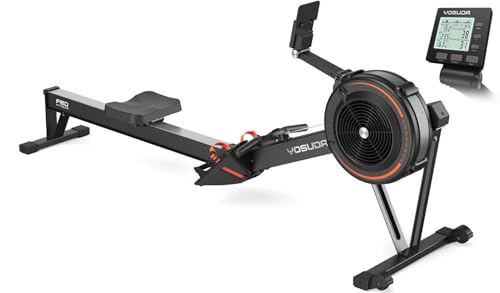
The YOSUDA R2 stands out with a listed 53.7-inch row rail, which makes it one of the more interesting choices for tall buyers. Its air resistance responds to your pace, so gentle pulls stay manageable while hard pulls feel demanding. The self-powered monitor means you do not need to rely on a wall outlet. An ergonomic seat and storage design add daily-use comfort.
I like this machine for users who want a longer stroke without jumping straight to a premium commercial rower. Air resistance creates a steady fan sound, but that sound can act like a pace guide. The rail length is promising, yet you should still compare it with your inseam. Long legs, long arms, and torso length all affect a clean catch position.
Pros:
- 53.7-inch listed row rail
- Air resistance adapts to effort
- Self-powered monitor
- Ergonomic comfort seat
- Easy storage design
- Strong option for tall home users
Cons:
- Fan noise is noticeable
- Monitor may not match premium training systems
- Large users should confirm seat comfort
My Recommendation
The YOSUDA R2 is one of my strongest budget picks for a tall person. The listed rail length gives long-legged users more room to complete each stroke. It is best for home athletes who want air resistance and simple data. If the dimensions fit you, it may deliver the best rowing machine for a tall person experience without the top-tier price.
Foldable 16-Level Magnetic Rower

This foldable magnetic rower targets homes where every inch matters. It provides sixteen quiet resistance levels, dual slide rails, an LCD monitor, and app support. The foldable frame can help clear a walkway after training. Its stated 350-pound capacity also gives it a broad user range.
Tall users should remember that folding convenience can reduce the available rail length. I would check the full open dimensions and the maximum seat travel before ordering. For a moderately tall user, the machine may balance comfort and storage very well. For a very tall athlete, a fixed long-rail rower remains the safer choice.
Pros:
- Folds for easier storage
- Quiet magnetic resistance
- Sixteen workout levels
- Dual rails support stable travel
- App-compatible monitor setup
- Stated 350-pound capacity
Cons:
- Foldable design may limit tall-user fit
- Basic display compared with premium monitors
- Needs full clearance during use
My Recommendation
I recommend this rower for tall apartment users who need to store equipment after each session. It is best for moderate-height tall users, casual cardio, and small rooms. Measure both the rail and storage space. Its value comes from its quiet workout and folding frame, not advanced performance data.
Dripex 16-Level Magnetic Rower
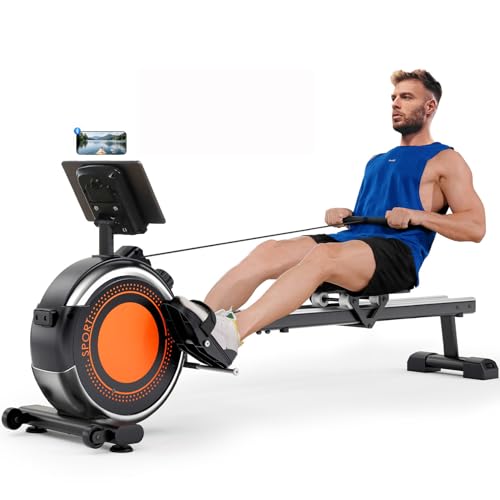
The Dripex magnetic rower offers sixteen resistance levels and a stated 360-pound maximum capacity. Its dual-slide rail is designed to keep the seat balanced during each stroke. App compatibility and an LCD monitor give users simple ways to track workouts. The magnetic system should also keep noise lower than an air fan.
This is an appealing model for larger users who also need home-friendly operation. Still, I would not confuse weight capacity with a tall-person guarantee. The rail must allow your knees to bend without crowding your chest at the catch. If your body fits the machine, the sturdy rating and quiet action create a useful training base.
Pros:
- Stated 360-pound weight capacity
- Sixteen magnetic resistance levels
- Stable dual-slide rail
- App-compatible tracking
- Quiet for indoor use
- Good for steady full-body workouts
Cons:
- Very tall users need to verify rail length
- LCD monitor has limited detail
- Heavy frame may be harder to move
My Recommendation
The Dripex is best for larger tall users who want a quiet rower with a high stated capacity. It fits home cardio, low-impact conditioning, and family use. I would place it on a shortlist after confirming your inseam. It offers strong practical value when stability matters as much as storage.
Merach R50 Pro Indoor Rower
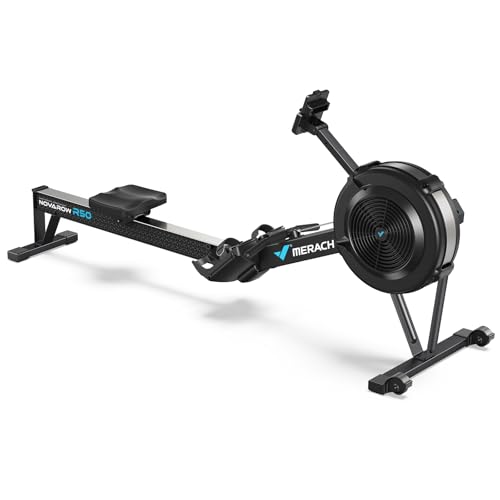
The Merach R50 Pro is aimed at users who want a more professional indoor rowing setup. Its monitor is built for focused sessions, while the frame supports repeat use. The design favors users who care about pace, effort, and training structure. It also includes easy storage for a home gym.
Tall buyers should focus on the rail and handle position before choosing this model. A professional look does not always mean a longer stroke. I would use this rower for regular workouts, intervals, and users who have already learned basic rowing form. It is less about decoration and more about building a repeatable training habit.
Pros:
- Professional-style workout monitor
- Built for regular indoor training
- Storage-friendly design
- Useful for intervals and steady rows
- Focused layout reduces distractions
- Suitable for dedicated home gyms
Cons:
- Fit details should be checked by tall users
- May cost more than basic magnetic rowers
- Advanced features may take time to learn
My Recommendation
I recommend the R50 Pro for tall users who train often and want a more serious monitor. It suits athletes, committed home rowers, and users who follow planned workouts. Confirm the rail length before purchase. Its value is strongest when you use its training tools several times each week.
MAJOR FITNESS Drone R1 Rower

The Drone R1 uses ten adjustable resistance levels and a quiet aluminum rail. Its foldable frame helps users reclaim space after a workout. The stated 330-pound capacity supports many home users. Smooth travel and a simple control layout make it approachable for new rowers.
This model fits buyers who want a clean home setup without a large commercial frame. Tall users need to check whether the rail allows a full recovery position. The foldable design is handy, but it can signal a shorter overall footprint. I see it as a practical choice for moderate training, light intervals, and daily movement.
Pros:
- Quiet aluminum rail
- Foldable for home storage
- Ten adjustable resistance levels
- Stated 330-pound capacity
- Smooth motion for beginners
- Good fit for smaller gyms
Cons:
- May not suit very long inseams
- Ten levels offer less fine control
- Foldable frame may feel less heavy-duty
My Recommendation
The Drone R1 is best for moderately tall users who need a foldable rower. It works well for general fitness and quiet home sessions. I would not make it my first choice for a very tall competitive athlete. It provides good value when storage is more important than advanced training data.
RAMXE 16-Level Magnetic Rower

The RAMXE rower combines sixteen resistance levels with a foldable frame. Its magnetic system aims to keep the workout quiet and smooth. The dual-slide rail supports stable seat movement, while app compatibility adds digital workout options. The stated 350-pound capacity makes it suitable for many family members.
For tall buyers, the most important test is whether your heels stay supported and your knees remain comfortable at the catch. A compact foldable rower can work well, but only if your proportions fit. I like the RAMXE for simple daily cardio and moderate resistance work. It offers a reasonable feature list for a home machine.
Pros:
- Sixteen quiet resistance levels
- Foldable storage design
- Stable dual-slide rail
- App-compatible setup
- Stated 350-pound capacity
- Smooth motion for regular use
Cons:
- Rail length needs careful checking
- Basic display may limit data lovers
- Not ideal for high-level race practice
My Recommendation
I recommend RAMXE for tall users who want a foldable machine with more resistance choices. It suits small homes, beginner plans, and moderate full-body workouts. Check the open dimensions before you buy. Its value comes from quiet use, simple storage, and a broad resistance range.
pooboo Foldable Magnetic Rower

The pooboo foldable rower is made for buyers who need basic exercise equipment without a large footprint. Its magnetic resistance provides a quieter pull than many fan rowers. The folding feature helps clear space after training. This type of machine can support steady cardio, warm-ups, and light full-body work.
Tall users should be cautious with any compact rower. The frame may fit a room well but still restrict the stroke of long legs. I recommend checking the product measurements, seat path, and pedal position before purchase. If those details work for you, pooboo offers a simple way to build a regular rowing habit.
Pros:
- Folds for convenient storage
- Quiet magnetic resistance
- Simple design for new users
- Works in small home gyms
- Useful for low-impact cardio
- Usually easy to place and move
Cons:
- May be too short for very tall users
- Fewer premium tracking features
- Not designed for intense daily training
My Recommendation
This pooboo rower is best for moderately tall beginners with limited space. It is a practical choice for gentle workouts and occasional use. I would choose a longer fixed rail for tall athletes who row hard. Its overall value is strongest when low cost and easy storage lead to more frequent use.
pooboo Dual Scull Rower

The pooboo Dual Scull combines wind and magnetic resistance for a rowing feel that differs from a standard single-handle machine. The dual arms can make each stroke feel more like using oars on water. Wind resistance rises with effort, while magnetic resistance adds control. This setup can make home workouts feel less dull.
Tall users should leave extra side space for the scull arms. You also need to learn the movement before trying hard intervals. The machine may appeal to people who enjoy a wider, more active upper-body pattern. As with every scull design, check arm reach and seat travel instead of judging fit by height alone.
Pros:
- Wind and magnetic resistance together
- Boat-like dual scull movement
- More engaging than a basic handle
- Resistance grows with effort
- Works the arms, back, legs, and core
- Good for users who want variety
Cons:
- Needs extra side clearance
- Movement takes practice
- Tall-user fit is harder to predict
My Recommendation
I recommend the Dual Scull for tall users who want an interesting, boat-like workout. It is best for variety seekers who will learn the movement with care. It may not be the simplest first rower, but it can keep experienced users engaged. Confirm the complete arm path and seat range before ordering.
How I Choose a Rowing Machine for Tall Users
Height alone does not tell you whether a rower will fit. Inseam length, arm length, hip mobility, and seat travel all matter. A six-foot user with long legs may need more rail than a taller user with a shorter inseam. I look for a comfortable catch, a full leg extension, and a handle that reaches the body without forcing the shoulders forward.
I also check the frame, rail, seat, footrests, and weight limit. A strong frame should stay stable when a tall user pulls hard. The footrests should let you secure the feet without twisting the knees. A generous weight rating adds confidence, but it does not replace a proper fit check. This is why I compare several details rather than picking the rower with the biggest number.
Key Features to Check Before Buying
Rail length and seat travel
This is the main fit factor. Your seat should move far enough to let your shins come near vertical without your knees crowding your chest. At the finish, your legs should extend without the seat reaching the end too soon. A long rail is helpful, but usable travel matters more than the outside frame length.
Inseam guidance
Look for a maker’s inseam range when it is available. If the listing does not show one, contact the seller and ask about seat travel. You can measure your inseam at home with a book, a wall, and a tape measure. Add your shoe thickness when thinking about foot position.
Resistance type
Magnetic rowers are often quiet and smooth. Air rowers respond well to changes in effort and suit hard training, but they make fan noise. Water rowers feel natural, though none of the listed models use a water tank. Hybrid and scull rowers can add variety but may require more skill and room.
Seat and footrest comfort
A rower can fit your legs and still feel poor after 20 minutes. Look for a seat that supports your sit bones without sharp pressure. Footrests should hold the feet firmly and allow natural movement. Tall users often notice foot angle and seat height more because their hips and knees travel farther.
Frame strength and weight capacity
Choose a rower that feels stable during both the catch and finish. A high weight limit can help larger users, but it is only one part of the build. Check the rail connection, frame width, and floor supports. If the machine rocks, your form may suffer.
Storage and room size
Measure the machine in its full rowing position. Leave room behind the seat and in front of the handle. Foldable models save space, but they may offer less legroom. A machine that stays ready to use often beats one that is perfect on paper but hard to unpack.
Best For Table
| Best for | Why |
|---|---|
| Longest proven training life | Concept2 RowErg has a strong frame, useful PM5 data, and broad workout support. |
| Quiet guided workouts | Hydrow Origin uses magnetic resistance and offers a polished connected experience. |
| Long rail at a lower cost | YOSUDA R2 lists a 53.7-inch rail and uses responsive air resistance. |
Common Tall-User Rowing Mistakes
The first mistake is choosing by total machine length. A long frame may include space that the seat does not use. The second mistake is ignoring the catch position. If your knees rise too high, you may shorten your stroke and place extra stress on your lower back.
Another mistake is setting the footrests too high or too low. Start with a position that lets your feet stay secure and your knees track over your toes. Keep your back tall, brace your core, and drive through the legs before opening the hips. The arms finish the stroke; they should not start it.
Finally, many buyers forget the room around the rower. Tall users often need more space behind the seat because they use more travel. Mark the footprint on the floor with tape before delivery. This small step can prevent a large return problem.
How to Row Safely With Long Legs
Begin with five minutes of easy movement. Then row slowly and focus on order: legs, body, arms during the drive; arms, body, legs during the return. Keep your heels connected when possible. Do not force a deep catch if your hips or ankles feel blocked.
Use a light resistance level while learning. More resistance does not always mean a better workout. A smooth stroke with good posture builds more useful fitness than a hard pull with a rounded back. If pain continues, stop and ask a qualified health professional for guidance.
FAQs Of Best Rowing Machine for Tall Person
What makes a rowing machine good for a tall person?
A tall-friendly rower needs enough seat travel for your inseam, a comfortable catch, secure footrests, and a stable frame. Check the maker’s rail or inseam guidance before buying.
Is the Concept2 RowErg good for tall users?
Yes. Its long, durable frame fits many tall users and supports a full workout stroke. Always compare your body measurements with the current fit information.
Are magnetic rowers better than air rowers for tall people?
Neither type is automatically better for height. Magnetic rowers are quieter, while air rowers respond strongly to effort. Rail length and seat travel matter more than resistance type.
Can a foldable rowing machine fit a tall person?
Some can, but folding frames often have shorter rails. Check the full seat travel and inseam range before choosing a foldable model.
How much space does a tall person need for a rowing machine?
Measure the machine when fully open and add room at both ends. You need enough space for the seat to travel freely and for your arms to finish each stroke.
Final Verdict: Which Should You Buy?
The Concept2 RowErg is my top choice for most tall users because it offers proven durability, useful data, and generous stroke room. The YOSUDA R2 is a strong lower-cost alternative with a listed 53.7-inch rail.
The best rowing machine for a tall person is the one that fits your inseam and supports your form. Measure first, then choose the rail, resistance, and storage style that match your home and goals.

