
Are you thinking about adding a trampoline to your backyard but can’t decide between a rectangular or a round one? Choosing the right shape can make a big difference in how much fun you have and how safe you feel.
You want a trampoline that matches your needs, whether it’s for jumping higher, doing tricks, or keeping kids entertained. You’ll discover the key differences between rectangular and round trampolines. By the end, you’ll know which one fits your lifestyle and brings the most joy to your family.
Keep reading to find out which trampoline shape is truly better for you.
Shape And Bounce Dynamics
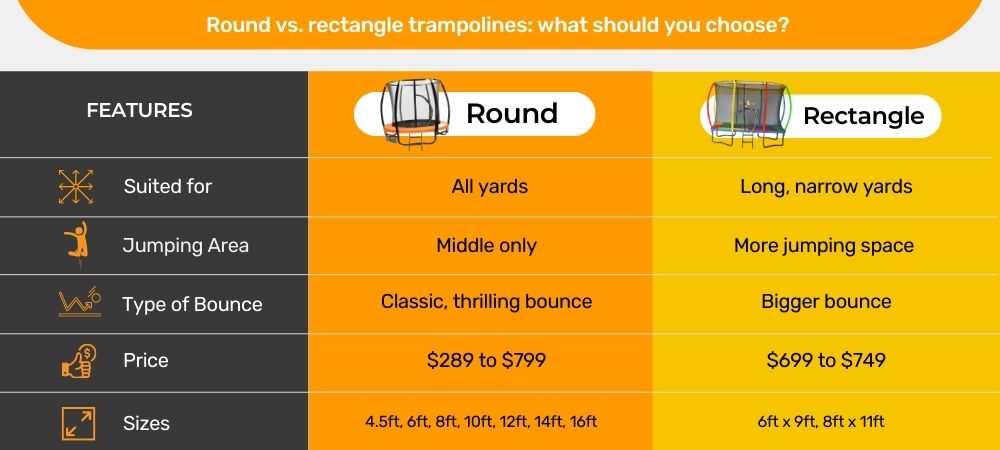
The shape of a trampoline plays a big role in how it bounces. Rectangular and round trampolines offer different bounce feelings. The design changes how the springs work and how the bounce moves. Understanding these differences can help you choose the best trampoline for your needs.
Jumping on a trampoline is fun, but the bounce quality matters most. Shape and bounce dynamics affect safety, control, and jump height. Let’s explore how shape changes the bounce and what that means for users.
How Shape Affects Bounce
Rectangular trampolines have springs spread evenly along straight sides. This setup creates a stronger, more even bounce. The bounce moves mostly up and down, giving better control. It helps athletes practice flips and tricks.
Round trampolines have springs arranged in a circle. The bounce pushes you back toward the center. This makes jumping easier and safer for kids. The bounce is softer but less powerful than rectangular ones.
Performance Differences
Rectangular trampolines offer higher bounce and more height. They suit serious jumpers and athletes. The bounce is firm and predictable. It allows precise moves and longer air time.
Round trampolines focus on safety and fun. The bounce is gentle and less intense. They work well for beginners and casual users. The trampoline naturally guides jumpers to the center, reducing falls.
Safety Considerations
Safety is the top priority when choosing a trampoline. Different shapes have different risks. Understanding these risks helps you pick the safest option. Protective features also play a big role in safety. They can reduce injuries and make jumping fun and secure.
Risk Factors By Shape
Round trampolines have springs evenly spaced around the edge. This design pushes jumpers to the center. It lowers the chance of falling off the edge.
Rectangular trampolines offer more bounce power and control. This can lead to higher jumps and tricks. The edges can be risky if not careful. Falling near the edge may cause injury more often than on round trampolines.
Rectangular trampolines are common in gyms. They encourage controlled jumps. Round trampolines are good for casual use and family fun.
Protective Features
Safety nets are a must-have for both shapes. They stop jumpers from falling off. Padding covers springs and frames to prevent scrapes and bruises.
Look for strong frames and secure springs. This keeps the trampoline steady during use. Proper installation on flat ground also increases safety.
Some trampolines include extra padding on the edges. This padding reduces injury risk from hard landings near the springs.
Space And Placement
Space and placement play a big role in choosing a trampoline. The shape affects how it fits in your yard. It also changes the look of your outdoor space. Rectangular and round trampolines need different amounts of room. Understanding this helps you pick the right one for your needs.
Fitting Trampolines In Different Areas
Rectangular trampolines use space more efficiently. Their straight edges fit well against walls or fences. This makes them easier to place in narrow or small yards. Round trampolines need more open space around them. Their shape requires clearance on all sides to be safe. This can limit where you put them in your yard.
For tight spaces, rectangular trampolines offer more options. They allow you to use corners or edges. Round trampolines work best in wide, open areas. They need room for jumping and bouncing safely.
Impact On Backyard Design
Rectangular trampolines create a modern, clean look. Their straight lines blend with patios and decks. They can fit into a structured garden design. This helps keep the backyard looking neat and organized.
Round trampolines add a softer, playful touch to a yard. Their shape stands out as a fun focal point. They fit well in casual or natural garden settings. This can make your backyard feel more relaxed and inviting.
User Experience
User experience is a key factor in choosing between rectangular and round trampolines. It shapes how users enjoy jumping and exercising. The feel, safety, and space each type offers can change the overall fun and benefits. Understanding these differences helps pick the best trampoline for your needs.
Suitability For Different Age Groups
Rectangular trampolines suit all ages but excel with older kids and adults. Their shape offers more jumping space and control. Users can jump higher and perform tricks safely. Round trampolines work well for younger children. They naturally guide jumpers to the center, reducing fall risk. Parents often prefer round trampolines for toddlers and beginners.
Training And Exercise Benefits
Rectangular trampolines provide a firmer bounce. This makes them ideal for serious training and workouts. Athletes use them for balance, strength, and coordination. The larger jumping area supports complex moves. Round trampolines offer a softer bounce. They are good for light exercise and fun play. Both types improve fitness but serve different training needs.
Durability And Maintenance
Durability and maintenance are key factors when choosing between rectangular and round trampolines. A trampoline must withstand regular use and harsh weather. Easy upkeep saves time and money. Understanding these aspects helps pick the right trampoline for long-lasting fun.
Material And Frame Strength
Rectangular trampolines often have stronger frames. They use heavy-duty steel for better support. The shape spreads tension evenly across the surface. This reduces wear and tear on the springs and mat. Many round trampolines use lighter frames. They may bend or rust faster under heavy use. Rectangular frames tend to resist damage better over time.
Ease Of Upkeep
Rectangular trampolines usually need less maintenance. Their sturdy frame holds parts tightly in place. This lowers the risk of loose bolts or broken springs. Cleaning the flat surface is simple and quick. Round trampolines can require more frequent checks. Their shape can cause uneven stress on springs. This may lead to faster wear and more repairs. Regular inspection keeps both types safe and functional.
Cost Comparison
Choosing between rectangular and round trampolines involves considering their costs. Both types have different price points and value over time. Understanding these differences helps you make a smart purchase.
Initial Investment
Rectangular trampolines usually cost more upfront. Their shape and design require stronger frames and springs. This adds to the manufacturing cost. Round trampolines tend to be cheaper. They have a simpler design and use fewer materials. This makes them easier on the budget at first.
Long-term Value
Rectangular trampolines last longer due to their sturdy build. They offer better bounce quality, which stays consistent over time. This means fewer repairs or replacements. Round trampolines may wear out faster. Their springs and frame can weaken sooner. This might increase maintenance costs later. Considering how long each type lasts is key to understanding overall value.
Expert Recommendations
Experts often choose a trampoline shape based on the user’s needs. Rectangular and round trampolines each have specific strengths. Understanding these helps pick the best trampoline for safety and fun.
Experts recommend rectangular trampolines for serious jumpers. Round trampolines suit casual users and families. This guide explains the best uses for each type.
Best Uses For Rectangular Trampolines
Rectangular trampolines offer a larger jumping surface. They provide more control and better bounce height. Gymnasts and athletes prefer them for training and tricks.
These trampolines are ideal for backflips, flips, and other complex moves. Their shape directs jumpers to the center. This reduces the risk of falling off.
Rectangular trampolines fit well in larger yards. They suit users who want a professional-style bounce. Safety nets are often recommended for extra protection.
Best Uses For Round Trampolines
Round trampolines are easier to use for beginners and kids. Their shape naturally guides jumpers to the center. This lowers the chance of injury at the edges.
These trampolines are great for family fun and casual jumping. They take up less space and fit smaller yards. Round trampolines often cost less than rectangular ones.
They work well for play and light exercise. Experts suggest round trampolines for households with young children. They provide a safer, more forgiving bounce.
Frequently Asked Questions
Are Rectangular Trampolines Safer Than Round Ones?
Rectangular trampolines offer more controlled bouncing and better edge stability. This reduces the risk of falls. Round trampolines direct users to the center, which can cause uneven landings. Overall, rectangular models are often considered safer for active jumpers.
Which Trampoline Shape Offers Better Bounce Quality?
Rectangular trampolines provide a higher and more consistent bounce. Their springs distribute force evenly, enhancing bounce performance. Round trampolines have a softer, less predictable bounce. For professional use or serious jumping, rectangular trampolines are preferred.
Do Rectangular Trampolines Fit Better In Small Spaces?
Rectangular trampolines generally require more space due to their shape. Round trampolines can fit more easily in tight or awkward spaces. Choosing depends on your available area and intended use. Measure your space before deciding.
Are Rectangular Trampolines More Expensive Than Round Ones?
Rectangular trampolines usually cost more due to their design and materials. They often include stronger frames and higher quality springs. Round trampolines are typically more affordable and suit casual use. Budget and purpose influence your choice.
Conclusion
Rectangular trampolines offer better bounce and control for tricks. Round trampolines suit casual jumping and smaller spaces. Choosing depends on your needs and space available. Think about who will use it and what they want. Both types provide fun and exercise for all ages.
Consider safety features and quality before buying. The right trampoline brings joy and active play at home.

