
Can You Do Dips Every Day?
Dips are a classic bodyweight exercise. They work your chest, shoulders, and triceps. Many people see fast progress with dips, so it’s easy to wonder—can you do dips every day? Some athletes swear by daily training, while others warn of injury and overtraining.
The truth is more complex. Whether dips daily are right for you depends on your goals, experience, and how you recover.
This guide breaks down what happens if you do dips every day. You’ll learn about the benefits, the risks, how to judge your readiness, and how to avoid common mistakes. You’ll also get real-life advice, practical tips, and answers to the most frequent questions.
By the end, you’ll know if daily dips will help you reach your goals—or hold you back.
What Are Dips?
Dips are a compound exercise. This means they work several muscle groups at the same time. The basic movement involves lowering and raising your body using parallel bars, rings, or a sturdy surface. There are two main types of dips:
- Triceps dips: Performed with your arms behind you, often on a bench or chair.
- Parallel bar dips: Done on parallel bars, focusing more on chest and shoulder muscles.
Both types build upper body strength and muscle. Dips are popular because you don’t need much equipment and you can change the movement to suit your level.
Muscles Worked By Dips
Dips are efficient because they hit several key muscle groups in one movement:
- Chest (pectoralis major and minor)
- Triceps brachii
- Front shoulders (anterior deltoids)
- Lower chest and serratus anterior (especially with a forward lean)
- Forearms, grip, and core (for stability)
The exact emphasis depends on your form and grip. Leaning forward puts more stress on the chest, while a straight-up position targets the triceps. If you want to build a strong, athletic upper body, dips are hard to beat.

What Happens If You Do Dips Every Day?
Doing dips every day can have both positive and negative effects. Understanding these will help you make the best decision for your training.
Potential Benefits
1. Faster Skill Improvement
Repeating a movement daily helps you master the technique. If you’re new to dips, this can speed up your learning curve.
2. Increased Muscular Endurance
Your muscles adapt to frequent stress. Over time, you’ll be able to do more reps and sets without getting tired.
3. Upper Body Strength Gains
Dips are a “big bang” exercise. If you recover well, daily practice can lead to a stronger chest, shoulders, and triceps.
4. Better Mind-muscle Connection
Daily practice helps you “feel” the muscles working. This is important for muscle growth and control.
5. Body Composition Changes
Frequent dips can help burn calories and build muscle. This may improve your muscle definition over time.
Potential Risks
1. Overuse Injuries
Your shoulders, elbows, and wrists take a lot of stress. Repeating dips daily can lead to pain or injuries like tendinitis.
2. Plateau Or Regression
Muscles need rest to grow. Without recovery, your progress can stall—or even go backwards.
3. Central Nervous System (cns) Fatigue
High-frequency training can tire not just your muscles, but your nerves too. This can cause tiredness, poor motivation, and even insomnia.
4. Form Breakdown
Fatigue makes it easier to use poor technique, increasing your injury risk.
5. Imbalance
Focusing only on dips can lead to uneven development. Other muscles, like your back, may get neglected.
Most beginners underestimate these risks. Soreness or mild pain is easy to ignore at first, but injuries can develop quietly over time.
Who Should (and Shouldn’t) Do Dips Every Day?
Daily dips are not for everyone. Your experience, age, and training goals matter.
Who Can Try Daily Dips?
- Advanced athletes who already have strong joints and good technique.
- Gymnasts and calisthenics practitioners who need high-specificity skill work.
- People with excellent recovery (enough sleep, nutrition, and stress management).
- Those doing “greasing the groove”—using very low reps and never training to failure.
Who Should Avoid Daily Dips?
- Beginners who lack joint strength and proper form.
- Anyone with a history of shoulder or elbow injuries.
- People with limited recovery (poor sleep, high stress, or bad diet).
- Those who train dips to failure every session.
If you’re unsure, start with every other day and watch how your body responds.
Science Behind Muscle Recovery
To understand if you can do dips every day, you need to know how muscles recover. Here’s a simple breakdown:
- Muscle fibers are stressed during exercise.
- During rest, these fibers repair and grow stronger.
- Lack of rest slows or stops this process.
Most research suggests that 48 hours is a good minimum for muscle recovery after intense training. However, frequency can be increased if you lower the intensity or volume each day.
Studies on high-frequency training show mixed results. For example, a 2016 study in the journal “Frontiers in Physiology” found that experienced lifters could recover from frequent sessions—if workouts were not all-out. But for most people, daily intense dips will lead to problems.
Comparing Daily Dips To Other Training Frequencies
How does doing dips every day stack up against less frequent routines? Here’s a side-by-side look:
| Frequency | Pros | Cons |
|---|---|---|
| Daily (7x/week) | Faster skill learning, more practice, possible endurance gains | High injury risk, slow recovery, possible burnout |
| 3-4x/week | Balanced progress, good recovery, less joint stress | Slower skill learning than daily, but safer |
| 1-2x/week | Low injury risk, good for heavy strength focus | Slowest skill development |
Most athletes get the best mix of progress and safety at 2-4 times per week.
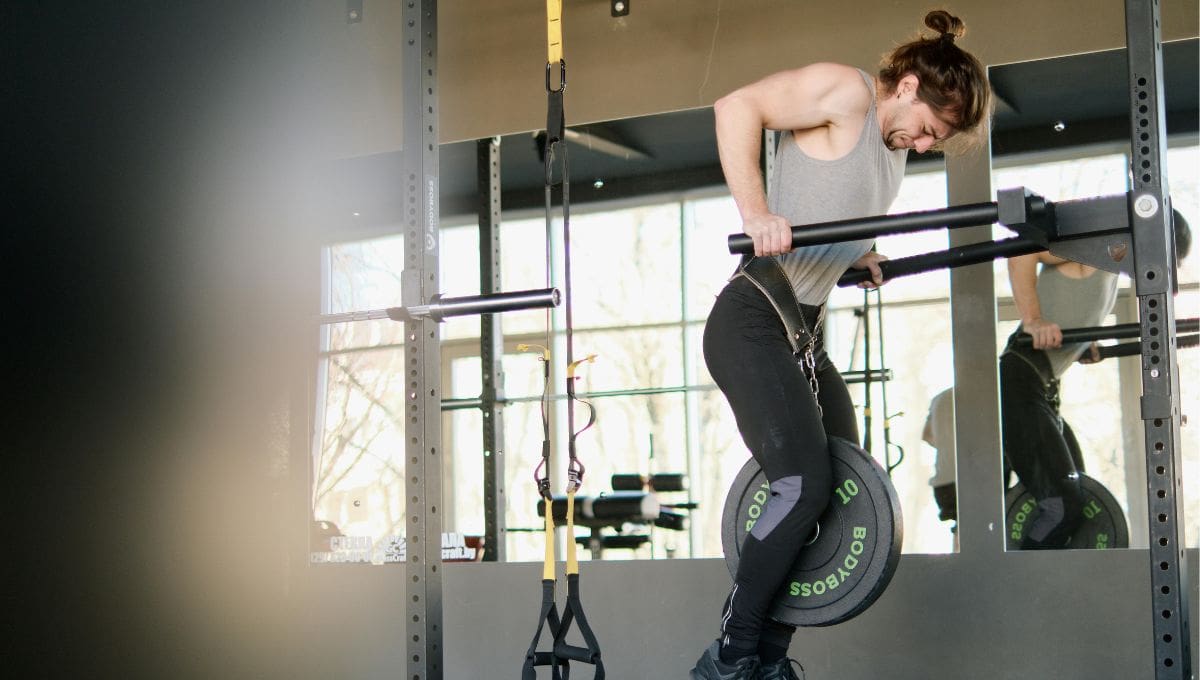
Signs You’re Doing Too Many Dips
Your body will tell you if you’re overdoing it. Watch for these warning signs:
- Joint pain (especially in the shoulders, elbows, or wrists)
- Stiffness that doesn’t go away after a day or two
- Loss of strength or reps
- Constant tiredness or poor sleep
- Reduced motivation to train
Ignoring these signs can turn small problems into long-term injuries.
How To Safely Do Dips Every Day
Some advanced athletes do dips daily without problems. Here’s how they make it work:
1. Adjust Your Volume
Don’t do maximum sets and reps each day. Instead:
- Use low reps (about 30-50% of your max) per set.
- Keep total daily volume lower than your “normal” hard workout.
2. Focus On Perfect Form
Quality matters more than quantity. Make every rep clean and controlled. Stop if your form slips.
3. Vary Intensity
Not every session needs to be hard. Try this pattern:
- Hard day: More reps or extra weight
- Easy day: Fewer reps, bodyweight only, or assisted dips
4. Include Mobility And Warm-up Work
Always warm up your shoulders, elbows, and wrists before dips. Simple arm circles, band pull-aparts, and light push-ups help prevent injury.
5. Listen To Your Body
If you feel pain or deep fatigue, take a rest day. Progress is lost faster from injury than from missing a workout.
6. Mix In Other Exercises
Balance dips with pulling movements (like rows or pull-ups). This keeps your muscles balanced and reduces injury risk.
7. Track Your Progress
Keep a training log. Write down sets, reps, and how you feel. Look for trends—improving, plateauing, or declining.
Alternatives To Daily Dips
If you want to train often but avoid injury, consider these options:
- Alternate push and pull days (dips one day, pull-ups the next)
- Do dips every other day
- Use different grips or angles to reduce overuse stress
- Add isometric holds (holding the top or bottom position)
- Train with rings for variety and joint friendliness
These approaches can keep you progressing without the risks of daily dips.
Common Mistakes When Doing Dips Every Day
Even experienced athletes make errors with daily dips. Avoid these:
1. Skipping Warm-ups
Cold muscles and joints are easy to injure. Always warm up first.
2. Training To Failure
Going to failure every session is a fast way to get hurt.
3. Ignoring Joint Pain
“No pain, no gain” does not apply here. Pain means something is wrong.
4. Neglecting Other Muscle Groups
Don’t skip back, legs, or core. Balanced training is safer and more effective.
5. Poor Recovery Habits
Sleep, nutrition, and hydration are as important as the workout. Don’t overlook them.
Sample Weekly Plan: Safe High-frequency Dips
Here’s a simple plan for frequent, but safe, dip training. This example is for someone who can do at least 10 dips in a row:
| Day | Workout | Notes |
|---|---|---|
| Monday | 3 sets x 5 dips (easy) | Focus on perfect form |
| Tuesday | 2 sets x 10 dips (moderate) | More reps, stop before failure |
| Wednesday | 3 sets x 5 dips (easy) | Active recovery, slow reps |
| Thursday | 4 sets x 8 dips (hard) | Push yourself, but not to failure |
| Friday | 2 sets x 10 dips (moderate) | Steady pace, clean reps |
| Saturday | 3 sets x 5 dips (easy) | Focus on slow negative phase |
| Sunday | Rest or gentle stretching | Full recovery, no dips |
If you feel pain or tiredness, take more rest days.
Real-life Examples: Who Does Dips Every Day?
Some groups use daily dips as part of their training:
- Gymnasts: Often do dips and push-ups daily, but with strict technique and lots of variation.
- Prison workout enthusiasts: Use dips as a mainstay because of limited equipment, but often get injuries over time.
- Advanced calisthenics athletes: Sometimes use high-frequency dips for short periods to break through plateaus.
However, most of these athletes have years of base strength and excellent recovery habits. Beginners often get hurt copying these routines.
When To Take A Break From Dips
Even if you feel good, it’s smart to take breaks. Rest periods allow joints and connective tissue to heal. Try to take one full week off every 8-12 weeks of high-frequency training. During this time, focus on stretching, mobility, and other muscle groups.
How Dips Compare To Other Push Exercises
Dips are not the only way to train your chest, shoulders, and triceps. Here’s how dips stack up against other common pushing exercises:
| Exercise | Main Muscles | Joint Stress | Equipment Needed |
|---|---|---|---|
| Dips | Chest, triceps, shoulders | High (shoulders, elbows) | Bars, rings, or bench |
| Push-ups | Chest, triceps, shoulders | Low-moderate | None |
| Bench Press | Chest, triceps, shoulders | Moderate | Barbell and bench |
| Overhead Press | Shoulders, triceps | Moderate | Barbell or dumbbells |
If dips cause pain, switch to push-ups or machines until your joints feel better.
Two Insights Most Beginners Miss
1. Joint Health Is More Important Than Muscle Soreness
Many people track muscle soreness to judge recovery. But dips stress joints more than muscles. Even if your chest feels fine, your shoulders or elbows may be quietly getting overworked. Pay attention to joint stiffness or odd pains, not just muscle soreness.
2. Progress May Be Slower Than You Think
Doing dips every day can actually slow your gains after the first few weeks. This is because your body adapts by becoming more efficient, not always by building more muscle. Sometimes, less is more—especially for strength and muscle growth.
How To Know If Daily Dips Are Working
Track your progress every week:
- Can you do more reps or sets each week?
- Are you getting stronger, or just more tired?
- Is your form improving, or are you cheating?
- Are you pain-free, or developing aches?
If you answer “yes” to the first three and “no” to the last, you’re on the right track. If not, it’s time to adjust.
Should You Do Dips Every Day?
The answer depends on your goals, experience, and body. If you want to build muscle or strength, most people do better with dips two to four times a week. If your goal is skill or endurance, very low-intensity daily dips might work—but only with perfect form and careful monitoring.
For most people, less is more. Quality and recovery are more important than frequency. But if you’re experienced, strong, and healthy, you can experiment with daily dips—just be smart, listen to your body, and adjust as needed.
For further reading on exercise recovery and injury prevention, visit the Wikipedia: Overuse Injury page.
Frequently Asked Questions
Can Beginners Do Dips Every Day?
Beginners should avoid daily dips. Your joints and tendons need time to adapt. Start with two sessions per week, focusing on form. Increase frequency only if you feel strong and pain-free.
What If I Feel Shoulder Pain When Doing Dips Daily?
Shoulder pain is a warning sign. Stop dips immediately and rest. Check your technique, warm up well, and consider switching to push-ups or other chest exercises until the pain is gone.
How Many Dips Per Day Is Safe?
There’s no single answer, but a safe range for most people is 10-30 dips per session, two to four times per week. Lower the number if you’re doing dips daily, and never go to failure every day.
Do Dips Build Muscle Or Just Endurance?
Dips can build both muscle size and endurance. How you train matters: higher reps with less rest build endurance, while lower reps with added weight build muscle and strength. Rest and nutrition are key for growth.
Is It Better To Do Dips Every Day Or Every Other Day?
Every other day is safer and more effective for most people. It allows your muscles and joints to recover and grow, while reducing injury risk. Daily dips are only for advanced athletes with good recovery habits.
Daily dips can be tempting, but smart, balanced training always wins in the long run. Listen to your body, keep your form perfect, and don’t be afraid to rest. That’s the real secret to progress.