Whey protein and plant protein are both popular choices for people who want to build muscle, lose weight, or simply add more protein to their diet. But many people wonder: what is the actual difference between whey and plant protein? Are they just two ways to get the same thing, or are there important differences you should know about before you choose? Understanding these differences can help you make smarter decisions about your health, fitness, and even your budget.
For some, picking a protein supplement is about taste or price. For others, it’s about allergies, digestion, or even personal values like veganism. But there’s more to it than just ingredients. The source of the protein, its amino acid profile, how your body digests it, and even its impact on the environment all play a role.
If you’re trying to get stronger, lose weight, or manage a health condition, the differences between whey and plant protein could make a big impact.
Let’s explore these differences in detail so you can choose the protein that fits your body, your goals, and your lifestyle.
What Is Whey Protein?
Whey protein comes from milk. When cheese is made, the liquid that separates out is called whey. After filtering and drying, this liquid becomes whey protein powder.
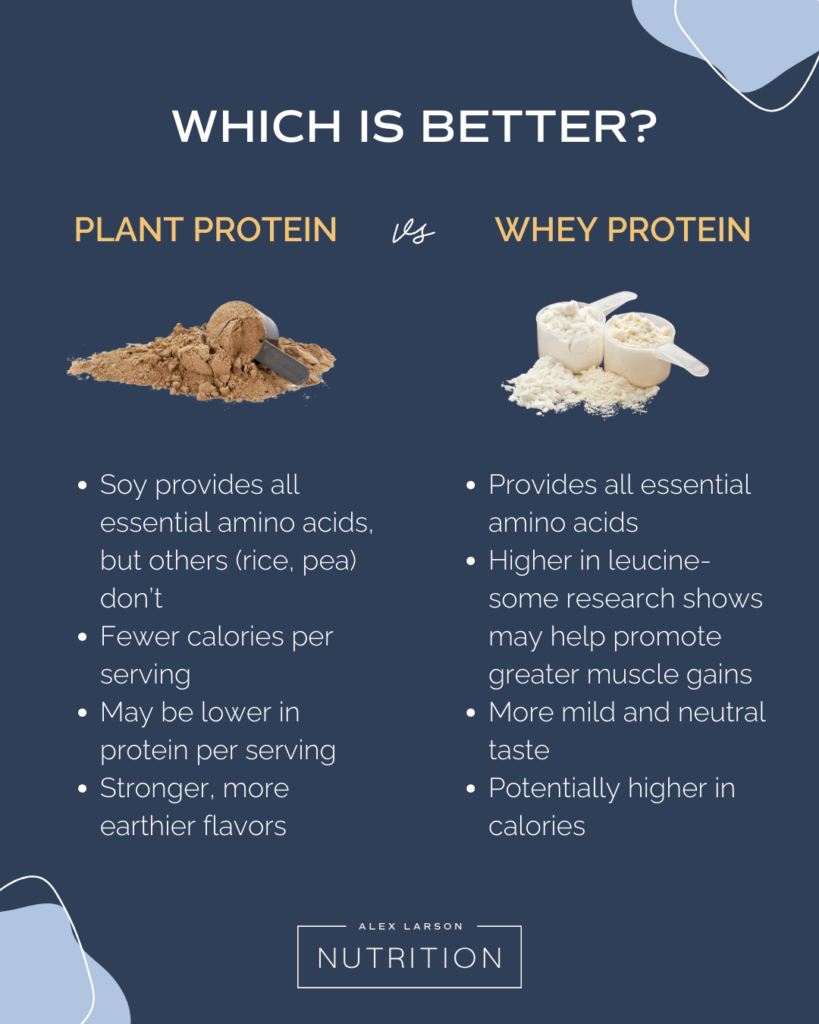
Whey is a complete protein. This means it has all nine essential amino acids your body can’t make by itself. People use whey protein to build muscle, recover after workouts, or just get more protein into their diet. There are three main types:
- Whey Protein Concentrate: Contains some fat and carbs, along with 70-80% protein.
- Whey Protein Isolate: Almost pure protein (90%+), with most fat and lactose removed.
- Whey Protein Hydrolysate: Pre-digested for faster absorption; often used in medical or infant formulas.
Whey protein is popular because it’s easy to mix, usually tastes good, and is absorbed quickly by the body. It’s especially common in fitness circles and sports nutrition.
What Is Plant Protein?
Plant protein is made from non-animal sources. The most common are peas, soy, rice, hemp, pumpkin seeds, and chia seeds. Some plant proteins are made from one source (like pea protein), while others are blends of several plants to give a better amino acid balance.
Unlike whey, not all plant proteins are complete proteins. For example, rice protein is low in lysine, while pea protein is low in methionine. That’s why many plant protein powders use a blend, so you get all the amino acids you need.
Plant protein is the main choice for vegans and people with milk allergies or lactose intolerance. It’s also popular with people who want a more eco-friendly or sustainable option.
How Are Whey And Plant Protein Made?
The way these proteins are made affects their nutrition, taste, and even price.
Whey Protein Production
Whey starts as a byproduct of cheese making. The liquid whey is filtered to remove fat and lactose, then dried into a powder. Sometimes, extra steps are used to break the protein down for faster digestion.
Plant Protein Production
Plant protein powders are made by milling the plant (like peas or soybeans), then separating out the fiber and starch. The protein is then concentrated and dried. Sometimes, flavors and sweeteners are added to improve the taste.
Non-obvious insight: The processing of plant proteins can sometimes reduce certain nutrients, like fiber or micronutrients, compared to whole plants. This is why eating whole foods alongside protein powder is still important for a balanced diet.
Amino Acid Profile: Complete Vs. Incomplete Proteins
Amino acids are the building blocks of protein. Your body needs 20 amino acids, and 9 of these are essential, meaning you must get them from food.
Whey Protein
Whey protein naturally contains all nine essential amino acids in good amounts. It is especially rich in leucine, which is important for muscle growth.
Plant Protein
Some plant proteins are complete (like soy), but many are not. They may lack one or more essential amino acids. For example, rice protein is low in lysine, while pea protein is lower in methionine.
To solve this, many plant protein powders use a blend of sources. Pea and rice, for example, make a complete protein together.
Non-obvious insight: Even if a plant protein is not complete, you can still get all the amino acids you need by eating a variety of protein sources over the day. Your body combines what you eat, so you don’t need to get all amino acids in one meal.
Protein Quality And Bioavailability
Protein quality means how well your body can use the protein. Bioavailability is how much of the protein you actually absorb and use.
Biological Value
Whey protein has a very high biological value (BV), usually around 104, meaning your body uses it very efficiently. Most plant proteins have a lower BV, often between 50 and 80, except for soy, which is similar to whey.
Digestibility
Whey is easy to digest for most people (unless you’re lactose intolerant). Plant proteins can be harder to digest because of fiber and certain compounds called antinutrients (like phytates or lectins).
Protein Digestibility-corrected Amino Acid Score (pdcaas)
This is a way to measure both the amino acid profile and digestibility. Whey protein has a PDCAAS of 1. 0 (the highest score), while most plant proteins score between 0. 5 and 1. 0.
Here’s a quick comparison:
| Protein Source | PDCAAS Score |
|---|---|
| Whey | 1.0 |
| Soy | 1.0 |
| Pea | 0.89 |
| Rice | 0.47 |
| Hemp | 0.63 |
Practical tip: If you want the highest protein quality, whey is hard to beat. But a blend of plant proteins can come close, especially if you pay attention to your overall diet.
Muscle Building And Athletic Performance
Many people use protein supplements to build muscle or improve performance. How do whey and plant proteins compare?
Whey Protein For Muscle Building
Whey is rich in branched-chain amino acids (BCAAs), especially leucine, which is key for triggering muscle protein synthesis. Studies show that whey protein supports muscle growth very well, especially when combined with resistance training.
Plant Protein For Muscle Building
Plant proteins, especially blends, can also support muscle growth. Some studies show soy protein works almost as well as whey. However, single-source plant proteins (like rice or pea alone) may be slightly less effective unless you consume more to make up for the lower amino acid content.
Real-world Example
A 2015 study compared whey and rice protein in athletes doing weight training. Both groups gained similar amounts of muscle and strength when total protein intake was equal.
Recovery
Both whey and plant protein can help with recovery after exercise. Whey is absorbed faster, which might be helpful right after a workout, but the difference is small for most people.
Non-obvious insight: If you’re vegan or allergic to milk, you can still make great progress with plant protein. Just make sure you get enough total protein and, if possible, use a blend for a better amino acid profile.

Taste, Texture, And Mixability
Taste and texture can be important, especially if you drink protein shakes every day.
Whey Protein
Whey usually mixes easily with water or milk, and most people find the taste mild or pleasant. Flavored whey proteins often taste like milkshakes.
Plant Protein
Some plant proteins, especially single-source ones, can taste earthy or gritty. Pea and hemp protein can have a “green” flavor that some don’t like. Blends and flavored powders can improve taste and texture.
Tip: If you dislike the taste of plant protein, try blending it with fruit, nut butter, or flavored plant-based milk.
Allergies And Food Sensitivities
Choosing the right protein can be important if you have allergies or sensitivities.
Whey Protein
Whey is made from milk, so it contains lactose (unless you use isolate). People with lactose intolerance may have stomach upset, gas, or bloating. Whey can also trigger allergies in people who are allergic to milk protein.
Plant Protein
Most plant proteins are dairy-free and suitable for vegans. However, soy is a common allergen, and some people may react to pea or other legumes. Always check the label if you have allergies.
Non-obvious insight: Some plant proteins may be cross-contaminated with gluten or nuts in factories. If you have severe allergies, look for certified allergen-free brands.
Environmental Impact
Many people choose plant proteins for environmental reasons. The production of protein has a big effect on the planet, including land use, water use, and greenhouse gas emissions.
Whey Protein
Whey comes from the dairy industry, which uses a lot of resources. Cows need land, water, and food, and they produce methane, a greenhouse gas.
Plant Protein
Plant proteins usually have a lower environmental footprint. They use less water, need less land, and produce fewer emissions.
Here’s a look at resource use:
| Protein Source | Water Use (L/kg protein) | CO2 Emissions (kg/kg protein) |
|---|---|---|
| Whey | ~1,800 | ~11 |
| Pea | ~400 | ~4 |
| Soy | ~1,100 | ~2 |
| Rice | ~2,500 | ~3 |
If you want the most eco-friendly option, pea protein or other legumes are usually best.
Cost And Availability
Price can be a big factor, especially if you use protein powder every day.
Whey Protein
Whey is widely available and often less expensive per gram of protein. Because it’s a byproduct of cheese making, there’s a large supply.
Plant Protein
Plant protein powders tend to cost more, especially blends or organic options. Single-source proteins like pea or rice may be closer in price to whey, but blends are usually more expensive.
Tip: If you’re on a budget but want plant protein, buying in bulk or choosing a single-source powder can save money.
Suitability For Different Diets
Your personal diet or health needs can affect which protein is best.
Whey Protein
Best for people who:
- Eat dairy
- Want fast, complete protein for muscle building
- Have no milk allergies or lactose intolerance
Plant Protein
Best for people who:
- Are vegan or vegetarian
- Have lactose intolerance or milk allergies
- Want a more sustainable option
- Prefer allergen-free or gluten-free products (check labels)
Non-obvious insight: Some people with sensitive digestion find that plant proteins (without artificial sweeteners) are easier on their stomach than whey protein concentrate.
Nutritional Differences Beyond Protein
Protein powders contain more than just protein. Some have extra nutrients, others do not.
Whey Protein
Contains small amounts of calcium, potassium, and B-vitamins. Isolate has less fat and lactose than concentrate.
Plant Protein
May contain fiber, iron, magnesium, and antioxidants (depending on the plant). Blends may offer a wider variety of micronutrients. Some plant proteins add vitamins and minerals to improve nutrition.
Tip: Always check the nutrition label. If you need extra iron or fiber, plant protein might help. If you want low carbs and fat, choose whey isolate.
Side Effects And Digestion
Most people tolerate protein powders well, but some may have side effects.
Whey Protein Side Effects
- May cause gas, bloating, or diarrhea in those with lactose intolerance
- Rarely, allergic reactions in people sensitive to milk proteins
- Overuse can stress kidneys in people with existing kidney disease
Plant Protein Side Effects
- Possible gas or bloating, especially with high-fiber types
- Allergic reactions possible (especially with soy or peas)
- Some powders may contain higher levels of heavy metals (rare, but check third-party testing)
Non-obvious insight: Some people do better when they start with small servings and slowly increase, giving their digestive system time to adjust to new protein powders.
Common Myths And Misunderstandings
Some ideas about protein powders are based on myths.
- Myth: Plant protein can’t build muscle.
Fact: With enough total protein and a good amino acid blend, plant protein supports muscle growth.
- Myth: Whey is bad for your kidneys.
Fact: For healthy people, whey protein in normal amounts is safe. Only those with kidney disease need to limit protein.
- Myth: Plant protein always tastes bad.
Fact: New flavors and blends taste much better than older products.
- Myth: You need to get all essential amino acids in one meal.
Fact: Your body can combine amino acids from different meals over the day.
Which Protein Should You Choose?
Choosing between whey and plant protein depends on your needs, preferences, and values.
- For rapid muscle building: Whey protein (especially isolate) is a top choice, but a high-quality plant blend works well too.
- For people with allergies or sensitivities: Plant protein is best if you’re lactose intolerant or allergic to milk. Check for soy or legume allergies.
- For vegans and vegetarians: Plant protein is the only option.
- For environmental impact: Plant protein, especially pea or other legumes, has a lower footprint.
- For taste and mixability: Whey usually tastes smoother, but plant blends are improving.
- For cost: Whey is usually cheaper, but single-source plant proteins can be competitive.
Your body’s needs, your diet, and your beliefs matter. You may even choose to use both types at different times.
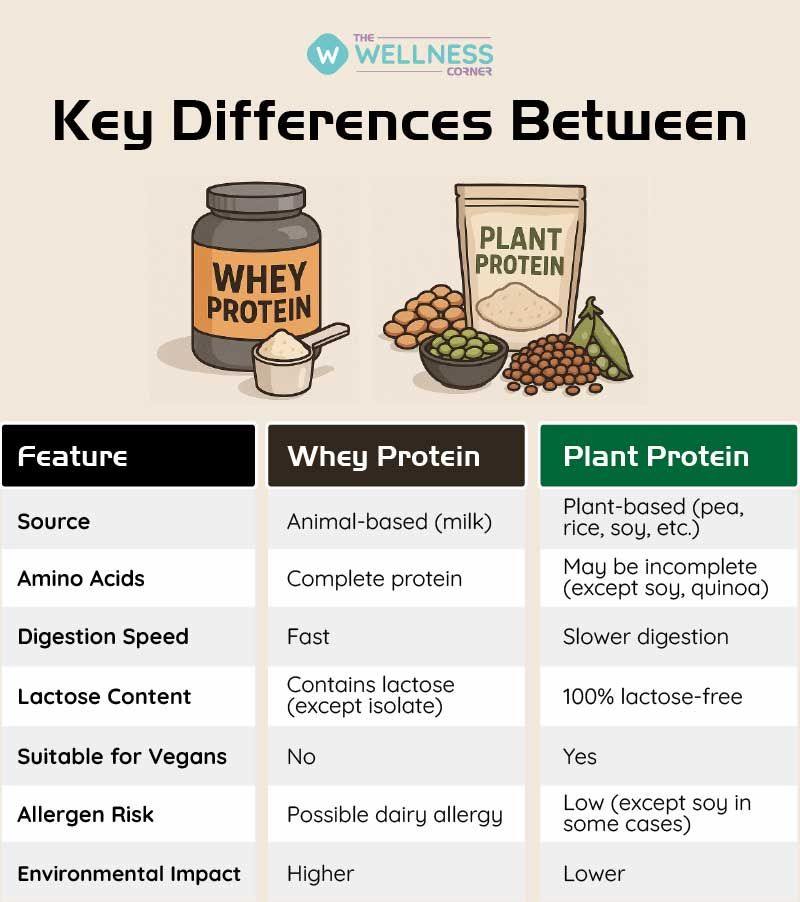
Summary Comparison Table
Here’s a quick summary of key differences:
| Factor | Whey Protein | Plant Protein |
|---|---|---|
| Source | Dairy (milk) | Plants (pea, soy, rice, etc.) |
| Complete Protein | Yes | Varies (soy: yes, others: no/blend needed) |
| Bioavailability | High | Medium to high |
| Allergens | Lactose, milk protein | Soy, peas (check labels) |
| Vegan-friendly | No | Yes |
| Environmental Impact | Higher | Lower |
| Taste/Texture | Creamy, smooth | Varies, may be gritty |
| Cost | Lower | Higher (blends) |
Practical Guidance For Choosing
- Check your diet—If you eat dairy and want fast results, start with whey.
- Check for allergies—If you have lactose intolerance or follow a vegan diet, plant protein is safer.
- Set your goals—For muscle building, both work with enough total protein.
- Think about sustainability—Plant protein is better for the environment.
- Try different brands—Taste and digestibility vary, so sample before you commit.
If you’re interested in more technical details about protein quality, you can visit this Wikipedia page on protein quality.
Frequently Asked Questions
What Does “complete Protein” Mean?
A complete protein contains all nine essential amino acids your body cannot produce on its own. Whey protein is always complete. Some plant proteins, like soy, are also complete, but many others need to be combined with other sources to provide all essential amino acids.
Can I Build Muscle With Plant Protein?
Yes, you can build muscle with plant protein. Studies show that when you get enough total protein, and use blends that provide a full amino acid profile, plant protein works as well as whey for muscle growth and recovery.
Is Plant Protein Healthier Than Whey Protein?
Both can be healthy. Plant protein is lower in saturated fat and cholesterol, has more fiber, and is better for the environment. Whey is absorbed faster and is often richer in certain amino acids. The best choice depends on your needs, allergies, and preferences.
Does Whey Protein Cause Stomach Problems?
Whey protein can cause stomach issues for people with lactose intolerance or milk allergies. If you have these issues, try whey isolate (which has less lactose), or switch to a plant protein.
How Do I Know Which Protein Powder Is Best For Me?
Think about your diet, allergies, fitness goals, and values. If you can have dairy and want a fast, complete protein, whey is a top choice. If you are vegan, have allergies, or care about sustainability, plant protein is best. Try small amounts to find what works for your taste and digestion.
Choosing between whey and plant protein is not just about science—it’s about what works for your body and your life. By understanding the real differences, you can make a choice that helps you reach your goals and feel your best every day.