
Bench dips and dip station dips are two popular exercises you often see in gyms and home workouts. Both moves look similar: you lower and lift your body using your arms. But once you try them, you notice they feel very different. Many people wonder which one is better, how they work your muscles, and if you should choose one over the other. Understanding the true differences can help you train smarter, avoid injuries, and reach your fitness goals faster.
At first glance, both exercises seem to target the same muscles—mainly your triceps, chest, and shoulders. But when you look closer, each dip style has its unique form, benefits, risks, and technique requirements. These differences affect your muscle activation, joint safety, progress options, and even the kind of equipment you need.
This article dives deep into bench dips and dip station dips. You’ll learn exactly how each exercise works, which muscles are hit hardest, the risks and rewards, and how to know which is best for your needs. You’ll also see practical tips, common mistakes, and advanced variations for both moves.
By the end, you’ll have a clear understanding of when and how to use each dip for the best results.
What Are Bench Dips?
Bench dips are a bodyweight exercise where you use a bench (or any sturdy elevated surface) to support your hands. Your feet usually rest on the floor or on another bench. You lower your body by bending your elbows, then push back up to the starting position.
This move is simple and doesn’t require much equipment—just a bench, chair, or box. It’s often used in home routines and beginner workouts, but it’s also popular in gyms as a triceps finisher.
How To Do Bench Dips
- Sit on the edge of a bench or chair.
- Place your hands next to your hips, fingers pointing forward.
- Slide your hips off the bench so only your hands support your upper body.
- Extend your legs forward, heels on the floor (bent knees for easier, straight legs for harder).
- Lower your body by bending your elbows to about a 90-degree angle.
- Push through your palms to lift yourself back up.
Key Muscles Worked
Bench dips mainly target the triceps. But they also involve the anterior deltoids (front shoulders), pectoralis major (chest), and some upper back muscles for stability.
Why People Like Bench Dips
- Easy to set up almost anywhere.
- Good for beginners to learn basic pushing movement.
- Quick way to hit triceps after chest or shoulder workouts.
- Can increase difficulty by elevating feet or adding weight.
What Are Dip Station Dips?
Dip station dips (also called parallel bar dips or straight bar dips) are performed on a dip station or parallel bars. Here, your body is suspended in the air, held up by your arms. You lower your entire body by bending your elbows, then press up again.
This exercise is a classic test of upper body strength. You’ll see it in gyms, calisthenics parks, and fitness tests around the world. It’s a favorite for building muscle and functional pushing power.
How To Do Dip Station Dips
- Grab the parallel bars with both hands, arms straight.
- Support your body above the bars, legs hanging or crossed.
- Keep your chest up, shoulders down and back.
- Bend your elbows to lower your body until your upper arms are parallel to the ground (or slightly deeper).
- Push back up to the starting position.
Key Muscles Worked
Dip station dips target the triceps, pectoralis major (chest), and anterior deltoids. Because your body is fully suspended, you also use core muscles, forearms, and scapular stabilizers for balance.
Why People Like Dip Station Dips
- Very effective for building upper body strength and size.
- Engages more muscles than bench dips.
- Can add extra weight for progressive overload.
- Foundation for advanced moves like muscle-ups.
Main Differences Between Bench Dips And Dip Station Dips
Although both exercises are called “dips,” they are quite different in how they work your body, the equipment they need, and the level of difficulty. Here’s a breakdown of the key differences:
| Feature | Bench Dips | Dip Station Dips |
|---|---|---|
| Body Position | Feet on floor or bench, torso near bench | Body fully suspended, feet off the ground |
| Equipment | Bench, chair, or box | Dip bars, parallel bars, or dip station |
| Main Muscles | Triceps (main), chest and shoulders (assist) | Chest, triceps, shoulders (all heavily involved) |
| Difficulty | Beginner to intermediate | Intermediate to advanced |
| Joint Stress | High stress on shoulders (especially at bottom) | Less shoulder stress with good form |
| Progression | Limited: elevate feet, add weight | Wide: add weight, advanced variations |
| Range of Motion | Limited by bench and body position | Greater, more natural movement |
Key Takeaways
- Bench dips are easier for most people but put more stress on the shoulders.
- Dip station dips engage more muscles and allow for better progress, but are harder to start with.
Muscle Activation: Which Muscles Work Harder?
Both dips hit your triceps, but the way your body moves changes which other muscles get the most work.
Bench Dips: Triceps Emphasis
Bench dips put your upper arms behind your body. This increases the stretch and tension on your triceps. The chest and front shoulders help, but the triceps do most of the lifting. Because your feet are on the ground (or another bench), your core and lower body are less involved.
However, this arm-behind-body position is not natural for the shoulder joint. For some people, it can feel uncomfortable or even painful, especially at the bottom of the movement.
Dip Station Dips: Chest And Shoulders Join In
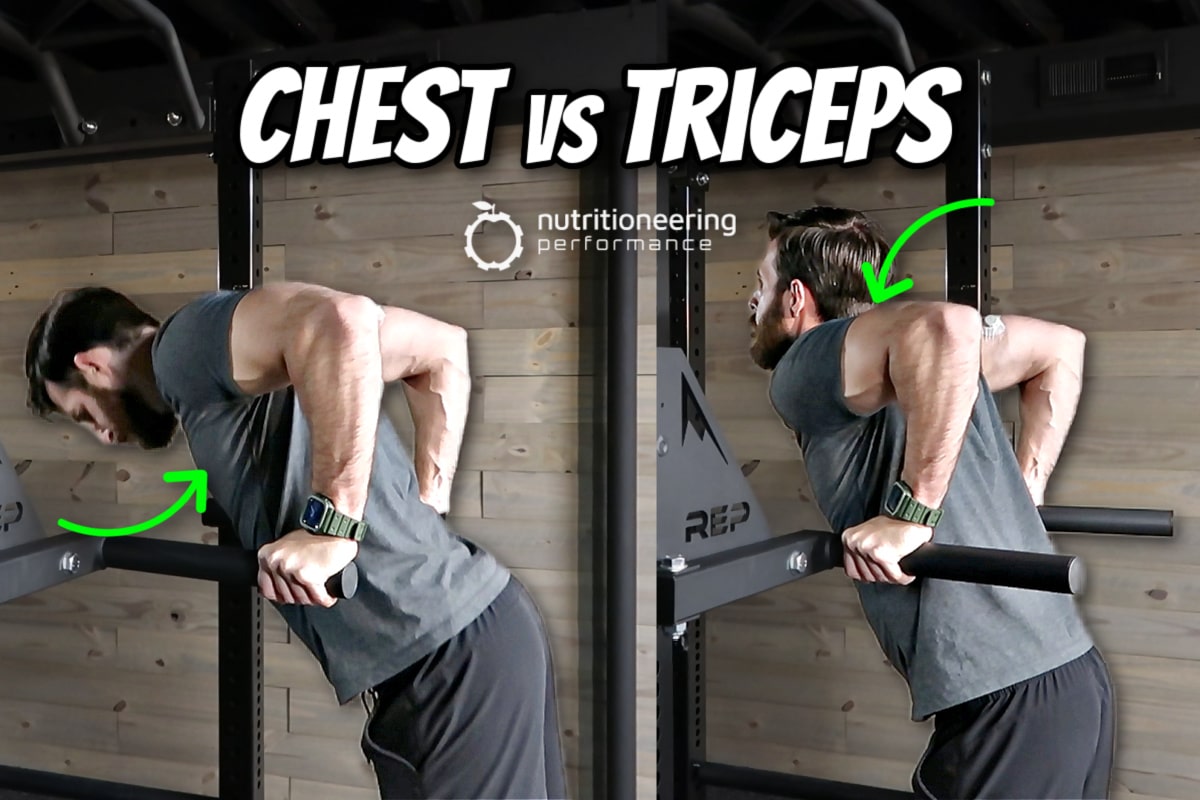
With dip station dips, your arms stay closer to your sides. You can lean forward slightly, which brings more chest into the movement. The anterior deltoids (front shoulders) also work hard to stabilize and lift your body. Plus, your core has to keep your body from swinging.
Studies show that dip station dips activate the pectoralis major and anterior deltoids more than bench dips. This makes them better for overall upper body muscle growth and strength.
Comparison Of Muscle Activation
| Muscle Group | Bench Dips | Dip Station Dips |
|---|---|---|
| Triceps | Very high | High |
| Chest | Moderate | Very high |
| Front Shoulders | Moderate | Very high |
| Core | Low | High |
Non-obvious insight: Many people use bench dips to “isolate” triceps, but they don’t realize that the risky shoulder position often limits their progress more than muscle fatigue.

Safety And Injury Risk
Safety is a big topic when comparing these two exercises. Both dips can cause injury if done wrong, but bench dips are known for causing shoulder problems in some people.
Bench Dips: Shoulder Risk
Because your shoulders are forced into deep extension (arms far behind your body), there is a high risk of shoulder impingement or even muscle tears. This is especially true if you go very deep, use poor form, or already have tight shoulders.
Older adults and those with previous shoulder injuries should be extra careful with bench dips. A study published in the Journal of Strength and Conditioning Research found that bench dips put more stress on the anterior shoulder capsule than many other triceps exercises.
Dip Station Dips: Safer With Proper Form
Dip station dips can also hurt your shoulders if you go too deep or use a jerky motion. However, since your arms stay closer to your body, and the movement is more natural, the risk is lower if you use good form.
To stay safe:
- Don’t go lower than where your upper arms are parallel to the floor.
- Keep your shoulders down and back.
- Start with a small range of motion and build up slowly.
Non-obvious insight: Many advanced lifters avoid bench dips not because they’re “easy,” but because the joint risk outweighs the muscle benefit.
Equipment Needed And Accessibility
One reason bench dips are so popular is that you only need a bench or chair. Almost everyone has access to something similar at home or in public parks. You can also use stairs or a low wall if you’re creative.
Dip station dips require parallel bars, a dip station, or gym equipment. Some playgrounds and outdoor fitness parks have suitable bars. Many gyms have dedicated dip stations. If you’re training at home, you can buy a dip stand, but it takes up more space and costs more.
Equipment Summary
- Bench dips: Any sturdy, flat surface (bench, chair, box, step)
- Dip station dips: Parallel bars, dip station, or two sturdy surfaces at the right height and width
Progression And How To Make Each Dip Harder
Progression is the key to building muscle and strength. Let’s look at how you can make each dip type harder as you improve.
Progressing Bench Dips
Bench dips have limited ways to increase the challenge:
- Leg position: Start with knees bent and feet flat. Move to straight legs for more load.
- Elevate feet: Place your feet on another bench or box to increase the load on your arms.
- Add weight: Hold a plate or dumbbell on your lap.
- Slow tempo: Lower slowly and pause at the bottom.
But even with these options, you may outgrow bench dips quickly. Plus, adding weight increases shoulder risk.
Progressing Dip Station Dips
Dip station dips have more options:
- Bodyweight: Start with just your body weight.
- Weighted dips: Use a dip belt with plates, or wear a weighted vest.
- Change angle: Lean forward for more chest, stay upright for more triceps.
- Pause reps: Pause at the bottom for extra difficulty.
- Advanced variations: Try ring dips, Korean dips, or explosive dips.
Non-obvious insight: If your goal is long-term muscle growth, dip station dips offer more progression and variety than bench dips.
Technique Tips For Each Dip
Proper form is essential to get the benefits and stay safe. Here’s how to do each exercise with good technique.
Bench Dips: Form Tips
- Keep your shoulders down, not hunched up to your ears.
- Only lower until your upper arms are parallel to the floor.
- Don’t let your elbows flare out too wide.
- Keep your back close to the bench.
- Avoid rapid, bouncing motions.
Dip Station Dips: Form Tips
- Start with arms straight, shoulders packed down and back.
- Cross your ankles behind you for balance.
- Lean forward slightly for more chest, stay upright for more triceps.
- Lower slowly, don’t go too deep.
- Press up until elbows are straight, but don’t lock them harshly.

Common Mistakes And How To Fix Them
Both exercises have pitfalls that can make them less effective or even dangerous.
Bench Dips Mistakes
- Going too deep: Increases shoulder strain.
- Letting shoulders roll forward: Adds joint stress.
- Flaring elbows out: Reduces triceps activation.
- Using a soft or unstable surface: Increases injury risk.
Dip Station Dips Mistakes
- Dropping too low: Can damage your shoulders.
- Swinging or using momentum: Reduces muscle work.
- Shrugging shoulders: Leads to neck and joint pain.
- Not controlling the lowering phase: Increases injury risk.
When To Choose Bench Dips Vs Dip Station Dips
The best choice depends on your goals, equipment, and body.
Choose Bench Dips If:
- You’re a beginner and can’t do full dip station dips yet.
- You have no access to dip bars.
- You want to isolate triceps with light weight.
- You don’t have shoulder pain or injury history.
Choose Dip Station Dips If:
- You want to build overall upper body strength and size.
- You can do at least 5–10 bodyweight dips with good form.
- You want to progress with added weight or advanced variations.
- You care about functional, athletic movement.
Practical example: If you’re a beginner training at home, start with bench dips (and push-ups). As you get stronger, move to dip station dips for better results.
How To Add Dips To Your Workout
You can use both exercises in your routine, but usually not on the same day. Here are some ideas:
- Bench dips: End of arm or chest workout, high reps (12–20) to finish triceps.
- Dip station dips: Main movement for upper body push day, 3–5 sets of 5–12 reps.
If you’re advanced, use weighted dip station dips as your main lift, and save bench dips for light, high-rep finishers.
Bench Dips Vs Dip Station Dips: Which Builds More Muscle?
For most people, dip station dips are better for building size and strength. They use more muscle groups, allow heavier loads, and can be progressed further.
Bench dips are useful for beginners or as a light triceps finisher, but they reach their limit quickly. Plus, the shoulder risk is not worth it for long-term heavy training.
A 2012 study in the Journal of Strength and Conditioning Research found that parallel bar dips activated the pectoralis major and anterior deltoid more than bench dips, while both worked the triceps well.
Real-life Examples And Case Studies
- Beginner transformation: Emma started with bench dips at home, doing 3 sets of 10 reps. In 6 weeks, she could do 3 sets of 20 reps. But her progress slowed, and her shoulders started to ache. She switched to dip station dips using parallel bars at a park. Her upper body strength improved, and her shoulder pain disappeared.
- Bodybuilder’s routine: Omar, an experienced lifter, used weighted dip station dips as his main chest builder. He added 20 kg using a dip belt, doing 4 sets of 8 reps. He found his chest and triceps grew faster than with bench dips or even push-ups.
- Injury case: Priya loved bench dips for triceps, but after several months she developed pain in the front of her shoulders. A physical therapist told her to switch to push-ups and dip station dips with a shallow range of motion. Her pain went away, and she could train harder again.
Advanced Variations
If you want to challenge yourself further, here are some advanced options:
Bench Dip Variations
- Feet-elevated bench dips: Feet on another bench for more resistance.
- Weighted bench dips: Place a plate or dumbbell on your lap.
- Single-arm bench dips: For balance and extra triceps work (very tough).
Dip Station Dip Variations
- Weighted dips: Use a dip belt or weighted vest.
- Ring dips: Adds instability, works more stabilizers.
- Explosive dips: Push up fast, even with a clap at the top.
- Korean dips: Performed behind the bar for extra shoulder and triceps activation.
Research And Expert Opinions
Fitness experts generally agree that dip station dips are safer and more effective for building muscle and strength, especially if you have healthy shoulders. Bench dips are okay for beginners but should be used with caution.
The American Council on Exercise and other authorities warn about the risk of shoulder injuries with bench dips, especially when done deep or with heavy weight. They recommend stopping when your upper arms are parallel to the ground and focusing on control, not speed.
For more on exercise safety and muscle activation studies, see this research review.
Frequently Asked Questions
What If I Can’t Do Any Dip Station Dips Yet?
Start with bench dips or assisted dip station dips (use resistance bands or a partner to help). Build strength with push-ups and negative dips (lower down slowly, use legs to help up) until you can do at least one full dip.
Are Bench Dips Bad For Your Shoulders?
Bench dips can strain your shoulders, especially if you go too deep or have poor shoulder mobility. If you feel pain, stop and use other triceps exercises like push-ups, triceps extensions, or dip station dips with a limited range.
Which Dip Is Better For Triceps Size?
Both dips work the triceps, but bench dips isolate them more. However, dip station dips allow heavier loads and more total muscle growth, including chest and shoulders, which can help overall arm size.
Can I Do Both Exercises In The Same Workout?
You can, but it’s usually not needed. Pick the one that matches your goal for the day. If you want variety, use dip station dips as your main exercise and bench dips as a light finisher.
How Often Should I Train Dips?
Most people can train dips 1–3 times per week, depending on recovery and other upper body work. Allow at least one day of rest between hard dip sessions.
Bench dips and dip station dips both have their place in training. Understanding their differences helps you choose the right one for your goals, stay safe, and make real progress. Use the right form, listen to your body, and enjoy your stronger, more muscular upper body.

