
Smartwatches and fitness trackers are everywhere these days. You see them on wrists at the gym, in offices, and even on the street. Many people wonder what makes these two types of wearables different. Are they basically the same, or do they serve unique purposes?
If you’re thinking about buying one, or just want to understand the difference, you’re in the right place. The gap between a smartwatch and a fitness tracker is bigger than most people think. Their designs, features, and even the reasons people choose them can be very different.
Let’s break down these differences step by step. You’ll learn what each device does, how they compare, and what really matters when choosing between them. If you’re looking for clear answers, practical advice, and a few hidden details many beginners overlook, keep reading.
What Is A Smartwatch?
A smartwatch is a digital watch that does more than just show the time. It connects to your smartphone and gives you access to notifications, apps, and even calls right from your wrist. Think of it as a mini-computer for your arm. Brands like Apple Watch, Samsung Galaxy Watch, and Garmin Venu are some of the most popular smartwatches today.
Smartwatches are made for people who want to stay connected and manage their digital lives without always reaching for their phones. They often look stylish and can be customized with different watch faces and straps.
Common Features Of Smartwatches
- Notifications: Get calls, texts, and app alerts right on your wrist.
- Apps: Use mini versions of apps for weather, maps, music, and more.
- Voice Assistants: Ask Siri, Google Assistant, or Bixby for help.
- Music Controls: Play, pause, or skip songs without your phone.
- Contactless Payments: Pay with your watch using Apple Pay, Google Pay, or Samsung Pay.
- Fitness Tracking: Track steps, heart rate, and workouts (but with more focus on everyday use than deep fitness data).
- Customizable Watch Faces: Change the look of your watch to match your style.
Popular Smartwatch Examples
- Apple Watch Series 9
- Samsung Galaxy Watch 6
- Garmin Venu 3
- Google Pixel Watch
Each of these models blends advanced tech with health and lifestyle features.
What Is A Fitness Tracker?
A fitness tracker (sometimes called an activity band) is a device designed mainly to monitor your physical activity and health. It’s lighter, simpler, and usually cheaper than a smartwatch. Fitness trackers focus on counting steps, tracking sleep, and measuring exercise. They may also measure your heart rate, calories burned, and sometimes even your blood oxygen level.
Popular fitness trackers include the Fitbit Charge 6, Xiaomi Mi Band 8, and Garmin Vivosmart 5.
Common Features Of Fitness Trackers
- Step Counting: Tracks how many steps you take each day.
- Heart Rate Monitoring: Measures your heart rate during rest and activity.
- Sleep Tracking: Analyzes your sleep patterns.
- Calorie Counting: Estimates how many calories you burn.
- Exercise Recognition: Detects different activities like walking, running, or cycling.
- Water Resistance: Can be worn in the shower or pool.
- Long Battery Life: Often lasts a week or more on a single charge.
Popular Fitness Tracker Examples
- Fitbit Charge 6
- Xiaomi Mi Band 8
- Garmin Vivosmart 5
- Amazfit Band 7
These devices are focused almost entirely on health and activity tracking.
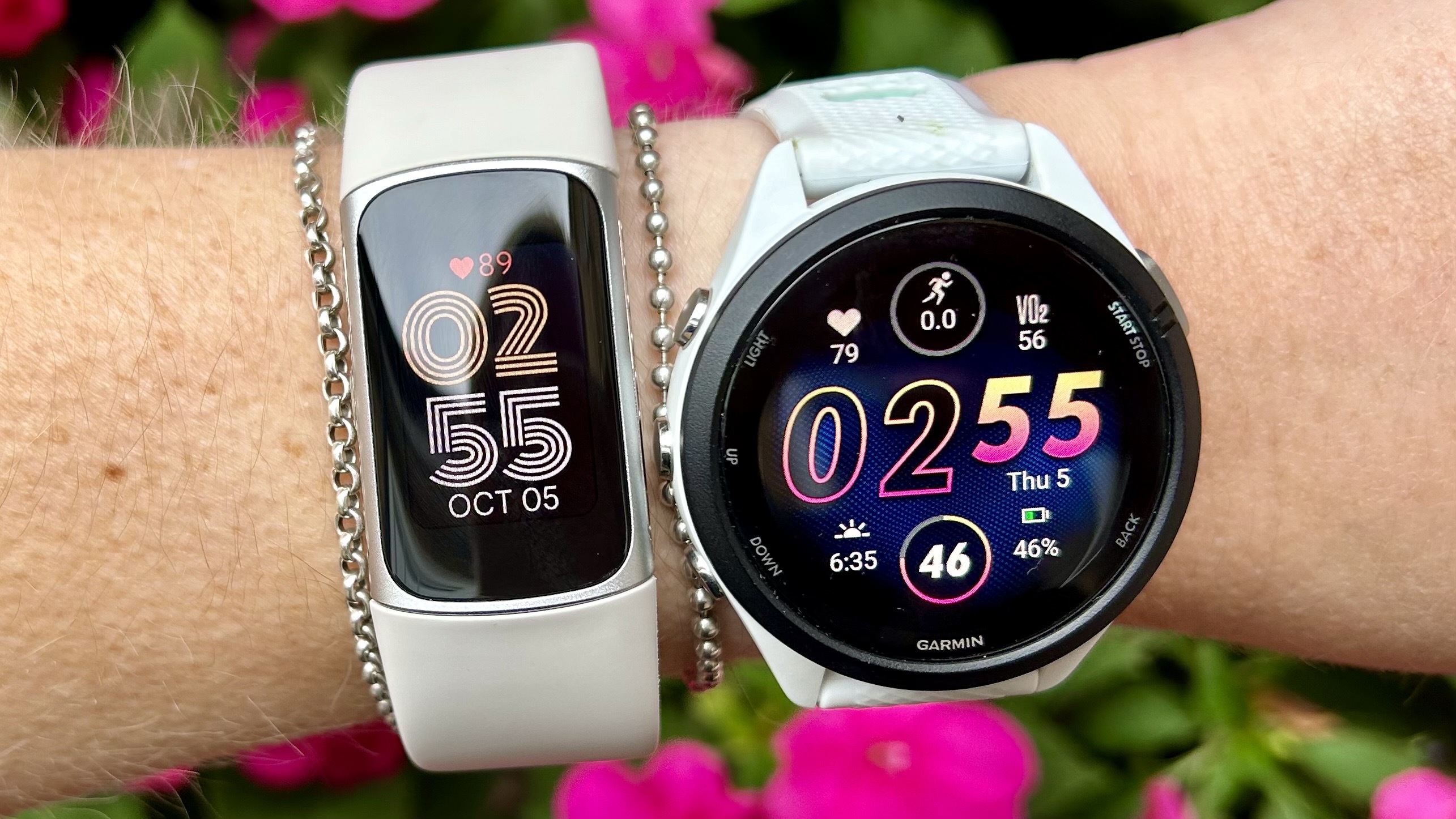
Key Differences: Smartwatch Vs Fitness Tracker
Now that you know what each device is, it’s time to look at how they really differ. Many people assume they do the same things, but there are some important differences.
1. Purpose And Design
- Smartwatches are designed as multi-purpose devices. They combine communication, organization, and fitness features. Their screens are bigger, and the designs often look like regular watches or even jewelry.
- Fitness trackers are focused on health and activity. They are smaller, lighter, and have simpler screens (sometimes just black and white).
Insight: A smartwatch can replace your watch and sometimes even your phone for simple tasks. A fitness tracker is mainly for people who care more about activity data and less about phone features.
2. Features And Functions
Smartwatches usually offer more advanced features:
- Apps for weather, maps, email, music, and more
- Make and answer calls (on some models)
- Voice assistants
- NFC for contactless payments
Fitness trackers focus on:
- Step and distance tracking
- Sleep and heart rate monitoring
- Basic notifications (sometimes just calls and texts)
Non-obvious insight: Some fitness trackers now include a few smartwatch features, like showing notifications. But the experience is often limited—just reading messages, not replying.
3. Battery Life
One area where fitness trackers almost always win is battery life. Because they have smaller screens and fewer features, they can last much longer on a single charge.
Here’s a quick comparison:
| Device | Average Battery Life |
|---|---|
| Apple Watch Series 9 | ~18 hours |
| Fitbit Charge 6 | ~7 days |
| Samsung Galaxy Watch 6 | 1-2 days |
| Xiaomi Mi Band 8 | 10-14 days |
Example: If you hate charging devices, a fitness tracker is a better choice.
4. Screen And Controls
Smartwatches have bright, colorful touchscreens. They show detailed notifications, animations, and even pictures. Some even have rotating crowns or bezels for easier control.
Fitness trackers usually have smaller screens—often black and white or simple color. The screens show basic data, like steps or heart rate, with simple icons.
Tip: If you like reading longer messages or checking your calendar, a smartwatch screen is more comfortable.
5. App Ecosystem
Smartwatches have their own app stores. You can add new apps for running, meditation, shopping lists, and more. This makes them more flexible.
Fitness trackers usually do not have app stores. The software is fixed, and you get only the features built in by the manufacturer.
Hidden detail: Some fitness trackers can sync with third-party fitness apps (like Strava or Google Fit), but you can’t download apps directly to the device.
6. Price
Fitness trackers are usually much cheaper. You can find good models for $30–$150. Smartwatches often cost $200–$800, with luxury models going over $1,000.
Here’s a snapshot of current prices:
| Device | Approximate Price (USD) |
|---|---|
| Fitbit Charge 6 | $160 |
| Xiaomi Mi Band 8 | $50 |
| Apple Watch Series 9 | $399 |
| Samsung Galaxy Watch 6 | $299 |
Mistake to avoid: Don’t assume a higher price always means better fitness tracking. Some smartwatches cost more because of extra tech (like LTE or high-end materials), not better health sensors.
7. Health And Fitness Tracking Accuracy
Both types of devices offer heart rate monitoring, step counting, and sleep tracking. But there are differences in how accurate and detailed this data is.
Fitness trackers are often more accurate for basic activities (steps, distance, sleep) because that’s their main focus. Some smartwatches offer advanced health features (like ECG or blood oxygen monitoring), but their step tracking can be less precise due to the heavier design and bigger screen.
Example: Garmin and Fitbit fitness trackers are trusted by many athletes for accuracy. Apple Watch has advanced health sensors but is sometimes less comfortable to wear overnight.
Non-obvious insight: Wearing your device too loosely, or on your dominant arm, can reduce accuracy on both types.
8. Customization And Style
Smartwatches are made to look good. You can swap bands, change watch faces, and sometimes even pick between different case materials (aluminum, steel, titanium).
Fitness trackers are usually more simple. They often come with a soft silicone band and maybe a choice of a few colors.
Tip: If you want your device to match your outfit, smartwatches offer more options.
9. Compatibility With Your Phone
Most smartwatches need to be paired with a compatible smartphone. For example, the Apple Watch only works fully with iPhones. Samsung and Google watches work best with Android but can connect to iPhones with limited features.
Fitness trackers are usually more flexible. Fitbit, Garmin, and Xiaomi work with both Android and iPhone, with almost all features available on both.
Mistake to avoid: Always check compatibility before buying. Some features, like replying to messages or using voice assistants, might not work if your phone brand doesn’t match.
10. Making And Receiving Calls
This is where smartwatches shine. On many models, you can make and answer calls directly from your wrist (especially if your watch has cellular support). This is very helpful if your phone is in your bag or another room.
Fitness trackers rarely have this feature. Most can only show you who’s calling and let you reject or silence the call.
11. Fitness And Sports Modes
While both devices track activity, smartwatches often have more sports modes. For example, you can track swimming, cycling, HIIT workouts, and even yoga with detailed data. Some watches use GPS to map your runs.
Fitness trackers cover the basics: walking, running, cycling, and sometimes swimming. Advanced sports (like golf or skiing) are almost always found on smartwatches.
Example: The Garmin Forerunner series (a mix between a tracker and a watch) is chosen by runners because of its deep running analysis.
12. Standalone Functionality
Some smartwatches work even without your phone. If you buy a model with LTE (cellular), you can stream music, use maps, or send messages without your phone nearby.
Fitness trackers almost always need your phone to access full features or sync data.
Hidden detail: If you want to leave your phone at home during a run, only a smartwatch with built-in GPS and cellular can do it all.
13. Software Updates And Support
Smartwatches usually get regular software updates. This means new features and better security over time.
Fitness trackers sometimes get updates, but not as often. Older models might stop getting updates after a couple of years.
Tip: If long-term support is important, check how often the brand updates its devices.
14. Storage And Music
Many smartwatches let you store music or podcasts and listen offline with Bluetooth headphones. This is great for the gym or running outside.
Fitness trackers rarely have music storage. Some may only control the music playing on your phone.
15. Voice Control
Voice assistants (like Siri, Google Assistant, or Alexa) are common on smartwatches. You can set reminders, ask questions, or control smart home devices with your voice.
Fitness trackers usually don’t have microphones or speakers, so voice control isn’t possible.
Which One Is Right For You?
Choosing between a smartwatch and a fitness tracker isn’t just about features. It depends on your lifestyle, needs, and budget. Here’s how to decide:
Choose A Smartwatch If:
- You want to stay connected (calls, texts, calendar, apps) without your phone in hand.
- You like customizing your watch’s look and feel.
- You want advanced features like mobile payments, voice assistants, or offline music.
- You want detailed tracking for a variety of sports or outdoor activities.
- You don’t mind charging your device every day or two.
Choose A Fitness Tracker If:
- Your main goal is health and activity tracking.
- You prefer something light, simple, and easy to use.
- You want a device that lasts a week or more on one charge.
- You have a smaller budget.
- You don’t care about advanced apps or phone features.
Real-world example: If you’re a busy professional who wants to check messages at meetings without your phone, a smartwatch is better. If you’re a runner who just wants to track workouts and not worry about charging, a fitness tracker is perfect.
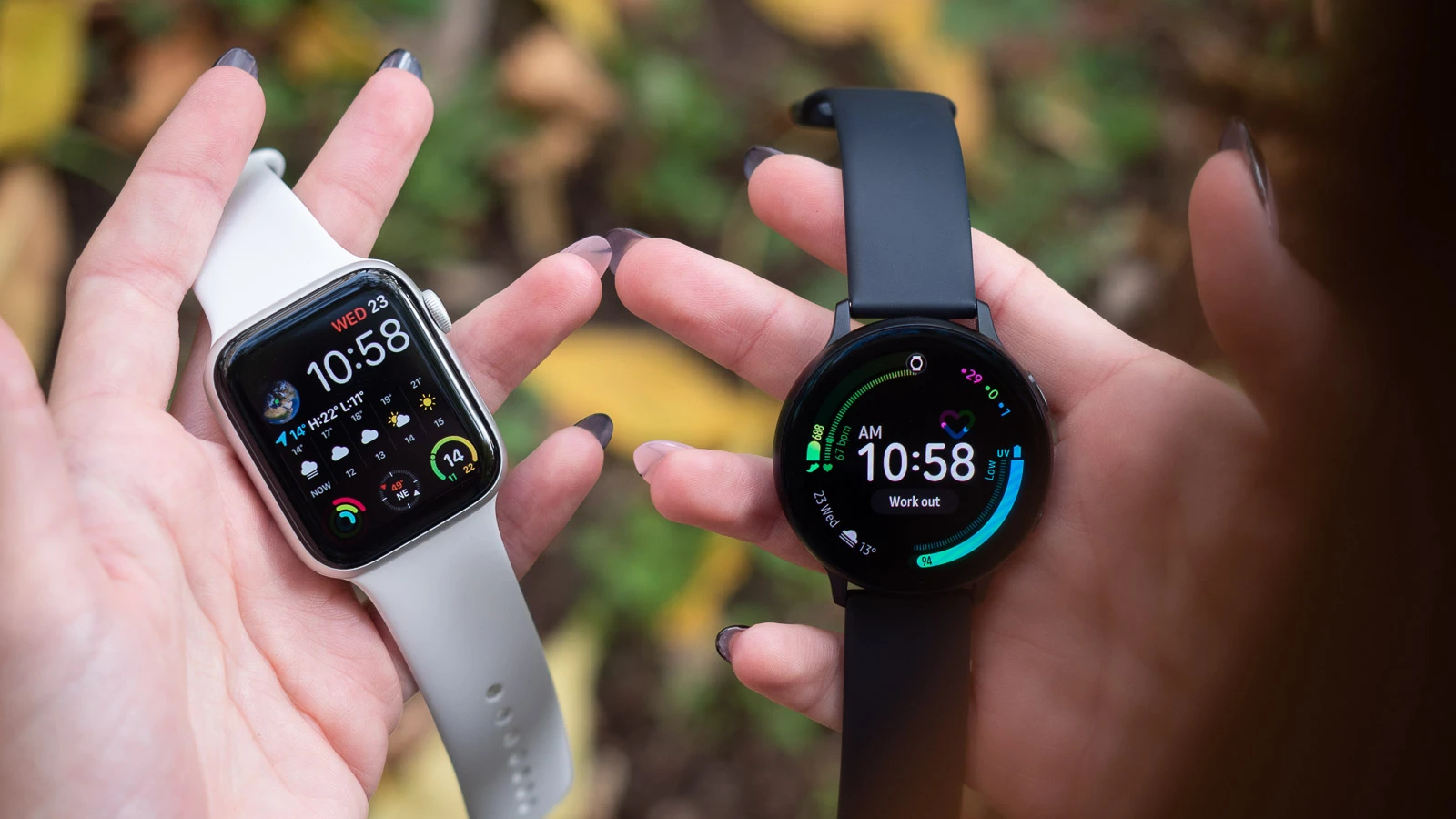
Smartwatch And Fitness Tracker: Feature Comparison
Here’s a side-by-side look at the most important features:
| Feature | Smartwatch | Fitness Tracker |
|---|---|---|
| Notifications | Full (read, reply, calls) | Basic (read only) |
| Fitness Tracking | Good, often less accurate for steps | Excellent, focused on accuracy |
| Battery Life | 1–2 days (average) | 5–14 days |
| Price | $$$ | $$ |
| Screen | Large, color, touch | Small, simple |
| App Store | Yes | No |
| Music Storage | Yes | No |
| Voice Assistant | Yes | No |
| Customization | High | Low |
Common Mistakes When Choosing
Many people make the same mistakes when choosing a wearable for the first time. Here’s what to watch out for:
- Buying the most expensive model: Higher price doesn’t always mean better tracking or features for your needs.
- Ignoring compatibility: Some devices don’t work well with all smartphones.
- Underestimating battery life: If you hate charging, avoid smartwatches with short battery life.
- Missing health features: Not all models have the same sensors. Check for things like GPS, SpO2, or ECG if those matter to you.
- Expecting all notifications: Fitness trackers often only show limited alerts.
Practical Tips For Choosing
- Try before you buy: If you can, visit a store and wear the device. Comfort matters more than you think.
- Read recent reviews: Look for reviews from users with similar needs.
- Think about upgrades: Do you want a device that will get better with software updates?
- Battery life: Think about how often you want to charge your device.
- Check water resistance: If you swim or shower with your device, make sure it’s truly waterproof.
Emerging Trends And The Future
The line between smartwatches and fitness trackers is slowly fading. Modern fitness trackers like the Fitbit Charge 6 now show notifications and control music. Some smartwatches, like the Apple Watch SE, focus more on fitness.
In the future, expect more hybrid devices—simple designs with advanced health sensors, or smartwatches with battery-saving modes. Some brands are also working on non-invasive blood glucose monitors and new stress tracking features.
Insight: Don’t just buy based on current features. Think about what you’ll need in the next 2–3 years.
If you want to see more technical details on wearable technology, the Wikipedia page on wearable technology is a solid resource.
Frequently Asked Questions
What Is The Main Difference Between A Smartwatch And A Fitness Tracker?
The main difference is their focus. A smartwatch is designed for communication, apps, and daily convenience—like a mini phone on your wrist. A fitness tracker is focused on health data like steps, heart rate, and sleep, with fewer extra features.
Can A Fitness Tracker Do Everything A Smartwatch Can?
No. Fitness trackers offer basic notifications and activity tracking. They do not support advanced apps, phone calls, or voice assistants like most smartwatches do.
Are Fitness Trackers More Accurate Than Smartwatches For Health Data?
Fitness trackers are often more accurate for steps and sleep because they are lighter and designed to be worn all day and night. However, smartwatches can offer more advanced health measurements (like ECG), but they may not always be as comfortable or focused.
Do I Need A Smartwatch If I Only Want To Track My Steps And Sleep?
No, you do not need a smartwatch for basic tracking. A fitness tracker is usually cheaper, simpler, and has longer battery life—perfect for just steps and sleep.
Will A Smartwatch Or Fitness Tracker Work With Any Phone?
Not always. Check compatibility before buying. For example, the Apple Watch only works fully with iPhones. Most fitness trackers work with both Android and iPhones but always check if all features are supported on your phone.
Both smartwatches and fitness trackers can help you live a healthier, more organized life. The right choice depends on your lifestyle and what features matter most to you. If you know what you want, it’s easy to choose a device you’ll actually enjoy wearing every day.

