
Every CrossFit athlete remembers the first time they hit a Personal Record (PR). That feeling of lifting heavier, moving faster, or achieving something that seemed impossible a few months ago is one of the biggest motivators in the sport. But what does a PR really mean in CrossFit? And why do so many people chase it so hard? If you’re new to CrossFit or still trying to understand the lingo, this article will break down exactly what a PR is, why it matters, and how you can use it to get better results in the gym.
What Is A Pr In Crossfit?
A PR stands for Personal Record. It’s your best-ever performance in a specific workout, exercise, or movement. In CrossFit, a PR could be the most weight you’ve ever lifted in a deadlift, your fastest time completing the “Fran” workout, or even the most double-unders you’ve ever done without stopping.
PRs are not about beating someone else. They’re about beating your old self. Every time you set a new PR, you prove that you are getting fitter, stronger, or faster compared to your past efforts.
People often confuse PR with PB, which stands for Personal Best. In most cases, these terms mean the same thing in CrossFit. However, PR is the more common term in the CrossFit community, while PB is used more in running or cycling.
Types Of Prs In Crossfit
There isn’t just one kind of PR. In CrossFit, you can set a PR in almost anything you do. Here are the main types:
- Strength PRs: Your heaviest successful lift in movements like back squat, clean and jerk, or snatch.
- Benchmark Workout PRs: Beating your best time or score on classic CrossFit workouts like Fran, Murph, or Grace.
- Gymnastics PRs: Achievements like your first pull-up, most toes-to-bar in a row, or longest handstand hold.
- Endurance PRs: Fastest time on a 1-mile run, 2,000-meter row, or maximum calories on the bike in a set time.
- Skill PRs: Getting your first muscle-up, stringing together double-unders, or nailing a new movement standard.
Let’s look at some specific examples:
- If you back squat 120 kg for the first time, that’s a strength PR.
- If you complete Fran in 4: 15, beating your old time of 4:30, that’s a workout PR.
- If you finally link 10 unbroken double-unders, that’s a skill PR.
Why Prs Matter In Crossfit
Chasing PRs is a big part of what makes CrossFit exciting. Here’s why they are so important:
- Measure Progress: PRs are clear evidence that your training is working. You can see real numbers improve over time.
- Set Goals: Having a target PR keeps you motivated and focused in the gym.
- Boost Confidence: Breaking through a plateau or hitting a new best is a huge confidence boost.
- Drive Community: Sharing PRs with others creates support and friendly competition.
- Spot Plateaus: If you stop hitting PRs, it may signal that you need to change your training or recovery.
Some beginners miss a key point: PRs come in many forms. You don’t need to only look for big weightlifting numbers. Improving your technique, adding one more rep, or shaving off a few seconds all count as PRs.
How To Track And Record Your Prs
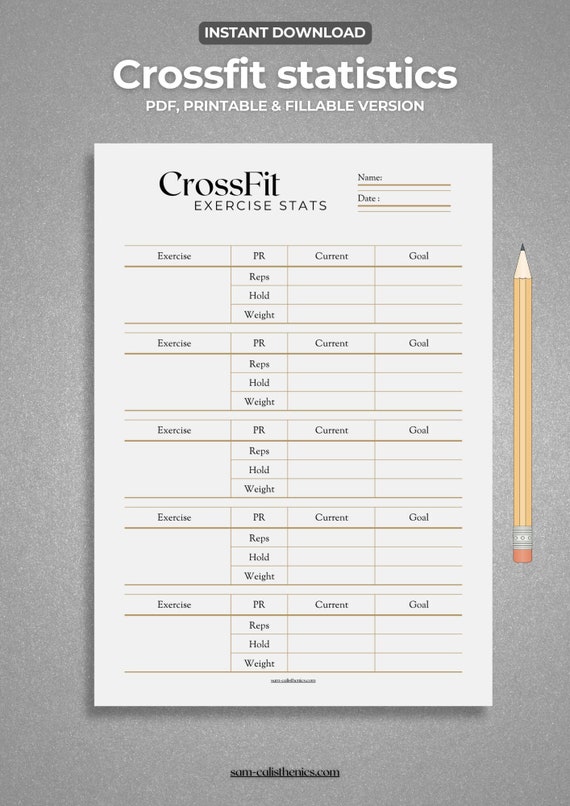
Keeping track of your PRs is critical for long-term progress. Without records, you won’t know if you’re actually improving. Here are common ways to record PRs:
- Training Journal: Write down the date, movement, and numbers after each workout.
- Mobile Apps: Apps like SugarWOD or Beyond the Whiteboard are popular in CrossFit gyms.
- Whiteboard at the Gym: Many gyms have a PR board for members to add their latest achievements.
- Spreadsheets: Some athletes prefer a simple Excel or Google Sheet for tracking.
A practical tip: Always note the conditions of your PR. Was it in a competition? Were you feeling 100%? The more details you add, the easier it is to spot trends.
Here’s a sample PR tracking table for a CrossFit athlete:
| Date | Movement/Workout | Result | Notes |
|---|---|---|---|
| 2024-03-10 | Deadlift | 180 kg | Felt strong, wore belt |
| 2024-04-02 | Fran | 4:12 | No breaks on thrusters |
| 2024-04-16 | Double-Unders (unbroken) | 52 | First time over 50 |
How To Set And Achieve New Prs
If you want to keep improving, you need a strategy for hitting new PRs. Here’s what works best:
1. Set Specific Goals
“I want to deadlift 200 kg” is more powerful than “I want to get stronger. ” Make your goals detailed and measurable.
2. Follow A Training Plan
Consistent, structured programming is essential. Random workouts rarely lead to steady PRs.
3. Practice Good Technique
Solid form is key for safety and progress. Don’t rush to add weight if your movement quality isn’t there.
4. Prioritize Recovery
Many athletes underestimate rest and sleep. Muscles grow and repair outside the gym.
5. Track Your Progress
Review your results every few weeks. Adjust your plan if you’re not seeing improvement.
6. Celebrate Small Wins
Not every PR will be big. Even small improvements matter and keep you motivated.
7. Ask For Coaching
A good coach can spot weaknesses and help you break through plateaus.
8. Address Weak Points
Don’t avoid movements you struggle with. Working on weaknesses often leads to surprising PRs.
9. Stay Patient
Progress is not always linear. Some PRs come quickly, others take months or years.
Many beginners think you need to test for a PR every week. In reality, testing too often can lead to burnout or injury. Experienced athletes test a major lift or benchmark workout every 6–12 weeks.
Common Mistakes When Chasing Prs
Trying to set new PRs is exciting, but there are risks if you’re not careful. Here are common mistakes:
- Poor Warm-Up: Skipping a proper warm-up raises your injury risk and reduces performance.
- Bad Technique: Trying to lift heavier with poor form can lead to injury and poor movement patterns.
- Chasing Numbers Too Soon: Adding weight or intensity before you’re ready may cause setbacks.
- Ignoring Recovery: Overtraining without enough rest can stall progress or lead to injury.
- Comparing to Others: Your journey is unique. Focus on your own progress, not your training partner’s numbers.
- Not Logging Results: If you forget your old numbers, you won’t know when you’ve hit a new PR.
Here’s a quick comparison of smart vs. risky PR habits:
| Smart PR Habits | Risky PR Habits |
|---|---|
| Progressive overload | Jumping weight too fast |
| Good technique | Rushing form for bigger numbers |
| Listening to your body | Ignoring pain or fatigue |
| Regular tracking | No record keeping |
How Often Should You Test For Prs?
There’s no single answer, but here are some guidelines:
- Strength Lifts (squat, deadlift, snatch): Every 6–12 weeks is common.
- Benchmarks (Fran, Grace, Murph): Every 2–3 months.
- Gymnastics Skills: Whenever you feel strong and recovered, but don’t overdo it.
- Endurance: Every 1–2 months, depending on your focus.
Testing too often can actually slow your progress. Most improvement comes from consistent, quality training—not always pushing for a new max. If you’re a beginner, you may see PRs every few weeks. Advanced athletes might see new PRs only every few months.
How Prs Are Celebrated In Crossfit Gyms
One of the best parts of CrossFit is the community spirit around PRs. Many gyms have special traditions:
- Ringing a PR Bell: When you hit a new PR, you ring a bell so everyone can cheer.
- PR Boards: Gyms display member PRs on a wall or board for recognition.
- Social Media Shoutouts: Coaches or athletes post PRs to inspire others.
- Stickers or Shirts: Some gyms reward PRs with special gear.
These celebrations build excitement and help everyone stay motivated. They also remind you that every athlete, no matter their level, has something to work toward.

How Prs Fit Into Crossfit Competitions
PRs are a big part of CrossFit competitions, both local and global. In the CrossFit Open, athletes often hit new PRs under the pressure of competition. For example, you might lift your heaviest clean and jerk ever during a scored workout.
But competition PRs are not always the same as training PRs. The adrenaline, crowd, and environment can help you push further. However, some athletes find that nerves or fatigue make it harder. Either way, competitions are a great place to test your limits.
Here’s a comparison of PRs in training vs. competition:
| Training PRs | Competition PRs |
|---|---|
| Controlled environment | High energy, more pressure |
| Standard rest and warm-up | May have less rest between attempts |
| Can re-try if you miss | Usually one shot per attempt |
Non-obvious Insights About Prs
Most CrossFitters focus only on the “big” PRs, like a heavy lift. But there are smaller, equally important PRs:
- Consistency PRs: Attending the gym 20 days in a month for the first time is a big achievement.
- Mental PRs: Completing a workout you used to avoid, or pushing through a tough moment, is a mental breakthrough.
- Technical PRs: Performing a technically perfect rep at a lower weight can set you up for bigger future gains.
Another insight beginners miss: PRs should reflect your overall health. If you set a new lifting PR but get injured or feel terrible, it’s not a true sign of good progress.
Frequently Asked Questions
What Does Pr Mean In Crossfit?
A PR in CrossFit means your Personal Record—the best you’ve ever performed in a specific movement or workout. It could be your fastest time, heaviest lift, or most reps.
How Do I Know If I Hit A Pr?
You hit a PR when you do better than your previous best in a workout, lift, or skill. Always track your results so you know your numbers.
How Often Should I Try To Set A Pr?
Beginners might set PRs every few weeks. Experienced athletes should aim for new PRs every few months. Testing too often can slow your progress.
Is A Pr The Same As A Pb?
Yes, in CrossFit, PR (Personal Record) and PB (Personal Best) usually mean the same thing. PR is more common in the CrossFit community.
Where Can I Find More About Crossfit Terms?
You can check the official CrossFit Wikipedia page for more terms and definitions.
Striving for PRs gives your CrossFit journey purpose and excitement. Whether you’re lifting heavier, moving faster, or mastering new skills, each PR is a step forward. Track your progress, celebrate your wins, and remember that the real competition is with yourself.
That’s what makes chasing PRs in CrossFit so powerful.

