
Most people walking into a gym or health store quickly discover two names: whey protein and casein. Both come from milk, both are popular among athletes, and both promise muscle growth and better recovery. But is one really better than the other? Understanding the differences is important not just for bodybuilders, but for anyone who cares about health, weight management, or getting the most from their workouts.
Some say whey is the fast-track to muscle. Others swear by casein’s slow, steady release. But the reality isn’t that simple. Each protein type has strengths, weaknesses, and situations where it shines. If you’ve ever been confused by the shelves full of protein tubs—or wondered what’s actually best for your goals—this guide breaks it all down in clear, practical terms.
What Are Whey And Casein?
Both whey and casein are proteins found in cow’s milk. When milk is turned into cheese, it separates into solid curds (mainly casein) and liquid whey. These proteins are then filtered, dried, and turned into powders.
- Whey protein: Comes from the liquid part of milk. It’s fast-digesting, quickly absorbed by the body, and usually has a light taste.
- Casein protein: Comes from the curd part. It digests slowly, creating a steady release of amino acids over several hours. It’s often thicker and creamier.
Both contain all the essential amino acids your body cannot make on its own, making them “complete” proteins.
How Your Body Digests Whey And Casein
One of the biggest differences is how quickly your body uses each protein.
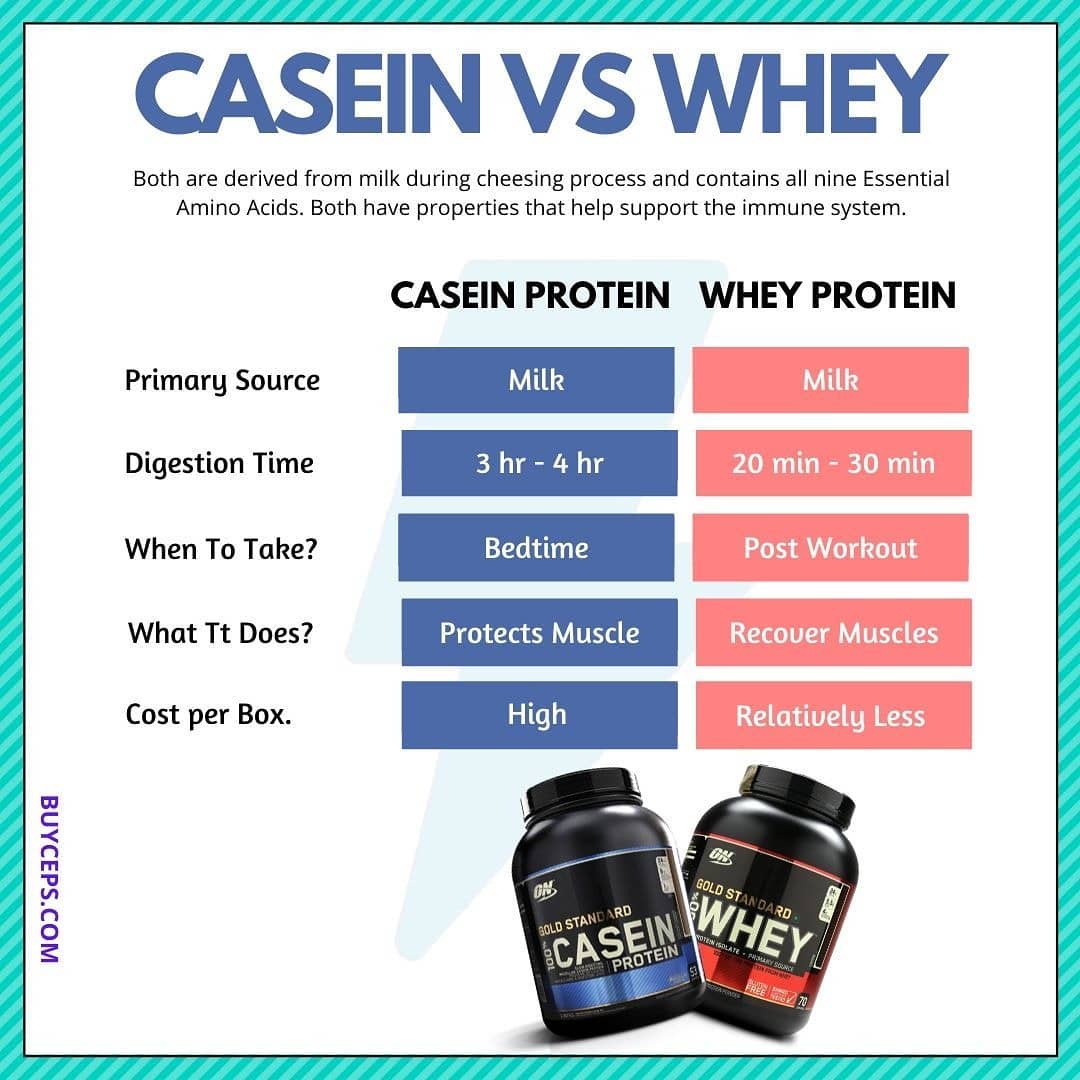
- Whey is absorbed fast—within 1 to 2 hours. This makes it great for after a workout when your muscles need quick repair.
- Casein clots in your stomach and takes much longer to break down—releasing amino acids for up to 7 hours. This slow feed helps prevent muscle breakdown, especially overnight or during long gaps between meals.
It’s like the difference between a quick snack and a slow-cooked meal. Both provide nutrition, but the timing is different.
Nutritional Comparison: Whey Vs. Casein
Both proteins offer high-quality nutrition, but there are small differences you should know.
| Nutrient (per 30g serving) | Whey Protein | Casein Protein |
|---|---|---|
| Calories | 110-130 kcal | 110-130 kcal |
| Protein | 23-27g | 22-26g |
| Carbohydrates | 1-3g | 1-4g |
| Fat | 0.5-2g | 0.5-2g |
| Calcium | 10-15% RDA | 40-60% RDA |
| Lactose | Low (lowest in isolates) | Low (but usually higher than whey) |
Key point: Both are lean protein sources, but casein usually has more calcium. Whey isolates tend to have the least lactose.
Amino Acid Profiles: What Sets Them Apart
All proteins are made up of amino acids. Some are especially important for building and repairing muscle.
- Leucine: Triggers muscle growth. Whey has more leucine (about 2.5g per 25g protein) compared to casein (about 2.2g).
- BCAAs (Branched Chain Amino Acids): Help muscle repair and reduce soreness. Both whey and casein contain all three BCAAs (leucine, isoleucine, valine), but whey has slightly higher amounts.
- Glutamine: Supports recovery and immune function. Casein contains more glutamine, which may help reduce muscle breakdown.
So, whey is king for quick muscle building, while casein excels at preventing muscle loss over long periods.
Benefits Of Whey Protein
Whey protein has become a favorite for athletes, fitness enthusiasts, and even those just trying to eat healthier. Here’s why:
1. Fast Muscle Recovery
After exercise, your muscles need protein fast. Whey is absorbed quickly, delivering amino acids right when your body can use them best.
2. Supports Muscle Growth
Studies show that consuming whey after resistance training leads to more muscle gain compared to not supplementing at all.
3. Helps With Weight Loss
Whey protein can help you feel full, eat less at meals, and preserve muscle while losing weight.
4. Boosts Immune System
Whey contains unique proteins like lactoferrin and immunoglobulins that may support your immune health.
5. Versatile And Mixes Easily
Whey dissolves quickly in water or milk and has a mild taste, making it easy to add to shakes, yogurt, or even oats.
Non-obvious insight: Not all whey is the same. Isolate and hydrolysate forms digest even faster and have less lactose—ideal for those sensitive to dairy.
Benefits Of Casein Protein
While whey gets most of the attention, casein has unique strengths that shouldn’t be ignored.
1. Long-lasting Amino Acid Supply
Casein forms a gel in your stomach, releasing protein for up to 7 hours. This steady supply is useful at night when you’re not eating.
2. Reduces Muscle Breakdown
For people who want to avoid losing muscle—during dieting, aging, or long fasts—casein’s slow release is a major advantage.
3. Supports Fat Loss
Casein keeps you full for longer periods, which can help reduce snacking and overeating.
4. High In Calcium
Casein is naturally rich in calcium. Just one serving can provide up to 60% of your daily needs, supporting bone health.
5. Better For Cooking
Casein’s thick texture is ideal for puddings, protein bars, or baked snacks. It creates a creamy consistency that whey cannot match.
Non-obvious insight: If you train late at night or go many hours without eating, taking casein before sleep can help prevent your body from breaking down muscle overnight.
When To Choose Whey Protein
Whey protein works best when you need a fast protein source.
- After workouts: Muscles are ready to absorb nutrients. Whey delivers amino acids quickly, supporting muscle repair and growth.
- In the morning: After a night of fasting, a whey shake can kickstart recovery and stop muscle loss.
- Quick snacks: When you need something light and fast-digesting, like before running out the door.
Whey is also a good option if you struggle with lactose intolerance. Whey isolates have almost no lactose and are often better tolerated than casein.
When To Choose Casein Protein
Casein protein is a smart choice for slow, steady nourishment.
- Before bed: Casein slowly releases amino acids overnight, protecting muscles during sleep.
- Long gaps between meals: If you know you won’t eat for several hours, casein helps keep you full and reduces muscle breakdown.
- During weight loss: Casein’s thicker texture and longer digestion time can help you feel satisfied, making it easier to stick to a diet.
Casein is also the better pick for recipes that need a thicker consistency, like protein desserts or pancakes.
Which Is Better For Muscle Growth?
Most research shows both proteins can support muscle gain, but there are differences in how they work.
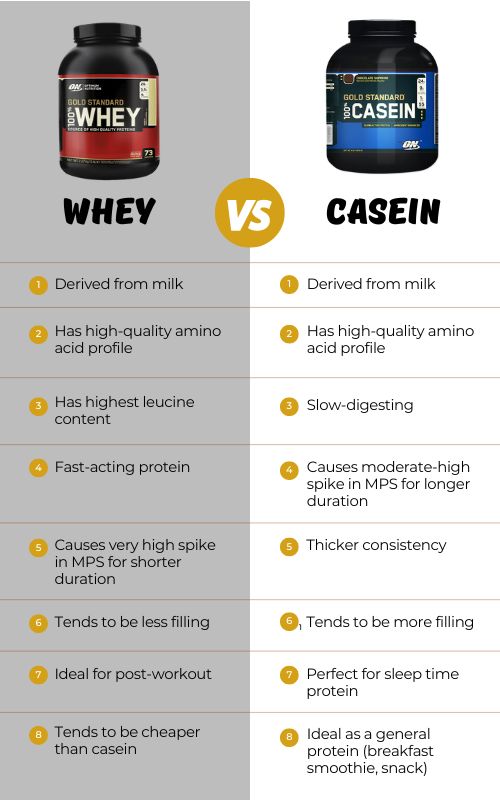
- Whey protein: Faster muscle protein synthesis (MPS) after workouts. Ideal for quickly starting the muscle-building process.
- Casein protein: Slower, but longer-lasting increase in amino acids in the blood. Best for reducing muscle breakdown over time.
In a well-known study, men who took whey protein after weight training gained more muscle than those who took carbohydrates or casein alone. However, combining both proteins might actually deliver the best results. Whey gives a quick boost, and casein provides a lasting supply of building blocks.
Which Is Better For Weight Loss?
Both proteins can help with fat loss, but there are subtle differences.
- Whey protein: Helps maintain muscle while dieting, which is important for keeping your metabolism high. It’s light and mixes easily, making it good for meal replacements or snacks.
- Casein protein: Keeps you full for longer, which can help control hunger. Its slow digestion prevents nighttime cravings and muscle breakdown.
A study found that people who added casein to their evening routine lost more fat and kept more muscle compared to those who didn’t use it.
Pro tip: For best weight loss results, focus on overall calorie balance first, then choose the protein type that fits your schedule and appetite.
Common Misconceptions
There are a lot of myths about whey and casein. Here’s what you should know:
- “Whey is always better than casein.”
Not true. Each has its strengths. Whey is better right after exercise; casein is better before fasting or sleep.
- “Casein is bad for your kidneys.”
For healthy people, there’s no evidence that casein or whey harms kidney function.
- “You can’t mix them.”
In fact, many blends use both proteins to offer fast and slow benefits.
- “More protein always means more muscle.”
Extra protein only helps if you’re also training hard and eating enough calories.
Who Should Avoid Whey Or Casein?
Both proteins are safe for most people, but there are a few exceptions.
- Milk allergy: Both are dairy proteins and can cause reactions in people with true milk allergies.
- Severe lactose intolerance: While whey isolate is very low in lactose, some people are sensitive even to tiny amounts.
- Vegan diets: Neither whey nor casein is plant-based. Vegan protein powders (like pea or rice) are better choices.
If you have kidney disease, speak to your doctor before using any high-protein supplement.
Cost, Taste, And Mixability
Choosing between whey and casein isn’t just about nutrition. Real-world factors matter too.
| Factor | Whey Protein | Casein Protein |
|---|---|---|
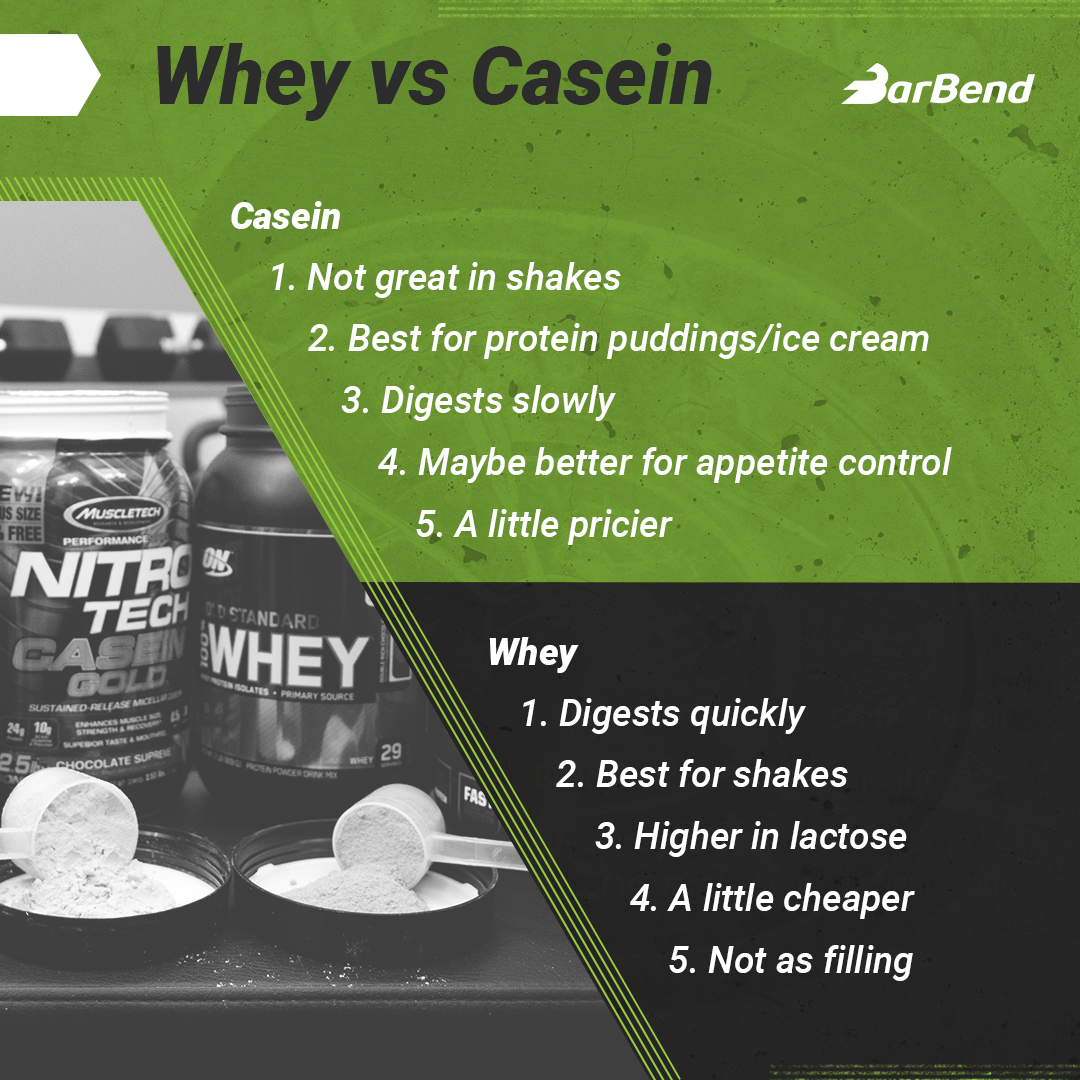
| Price (per serving) | Usually less expensive | Often more expensive |
| Taste | Mild, mixes well | Thick, creamy |
| Texture in shakes | Light, smooth | Thicker, sometimes gritty |
| Best for recipes | Shakes, smoothies | Puddings, bars, baking |
| Lactose content | Lowest in isolates | Usually higher |
If you want something quick and light, choose whey. If you want a filling snack or to make a dessert, casein is your friend.
Combining Whey And Casein: Is It Worth It?
Many advanced athletes use both types of protein to get the benefits of each.
- Whey after workouts: Fast recovery and muscle growth.
- Casein before bed: Prevents muscle loss and keeps you full.
Some products even blend both proteins into one powder. This gives you a “time-release” effect—fast amino acids from whey, and a slow drip from casein.
Practical tip: If you can only buy one, pick based on when you need protein most (post-workout = whey; before bed = casein). If budget allows, using both at different times covers all your bases.
What Does Science Say?
Research continues to compare whey and casein for muscle gain, fat loss, and recovery. Here are some key findings:
- Muscle gain: Whey leads to faster increases in muscle protein synthesis after exercise, but casein helps prevent muscle breakdown over time. Combining both is often best.
- Fat loss: High-protein diets (with either whey or casein) help preserve muscle while losing fat. Casein may help reduce nighttime hunger.
- Recovery: Whey helps muscles recover quickly after intense workouts. Casein supports recovery during long periods without food.
- Older adults: Both proteins help prevent age-related muscle loss, but casein may be especially useful at night.
A review by the International Society of Sports Nutrition concluded that both proteins are effective, and the best choice depends on timing, goals, and individual needs. For more details, see this peer-reviewed summary.
How To Choose The Right Protein For You
Here’s how to decide which protein fits your needs:
- Your goals
- Build muscle fast? Choose whey for post-workout.
- Prevent muscle loss overnight? Use casein before bed.
- Your routine
- Short on time? Whey is quick and light.
- Need a filling snack? Casein keeps you full longer.
- Food sensitivities
- Trouble with dairy? Try whey isolate or a plant-based powder.
- Budget
- Whey is usually cheaper and available in more flavors.
- Taste preference
- Like creamy desserts? Casein is best for puddings and baking.
- Training schedule
- Early morning or late-night workouts? Use protein right after training, with whey being best post-exercise and casein before sleep.
Remember: Even the best protein powder is only a supplement. Whole foods like chicken, fish, eggs, beans, and dairy should be your main protein sources.
Frequently Asked Questions
Is Whey Protein Safe For Daily Use?
Yes, for most healthy people, using whey protein daily is safe. It’s a convenient way to meet your protein needs, especially if you’re active or have trouble eating enough protein from food. If you have kidney issues or allergies, consult your doctor first.
Can I Mix Whey And Casein Together?
Absolutely. Mixing both proteins gives you the benefits of each—fast and slow digestion. Some athletes mix whey and casein in their shakes or buy blended powders for a “time-release” effect.
Which Protein Is Better For Women?
There’s no major difference between men and women for protein type. Both whey and casein support muscle health, weight control, and recovery. Choose the one that fits your schedule, taste, and goals.
Is Casein Harder To Digest Than Whey?
Casein digests more slowly because it forms a gel in your stomach. This isn’t usually a problem for healthy people, but those with sensitive digestion or lactose intolerance may find it heavier. Whey is lighter and digests faster.
Are There Plant-based Alternatives To Whey And Casein?
Yes, there are high-quality plant-based proteins like pea, soy, and rice protein. These are suitable for vegans or people with dairy allergies. Look for blends that provide all essential amino acids.
The Bottom Line
Whey and casein are both excellent protein sources, each with their own strengths. Whey is your best friend after exercise, giving muscles what they need right away. Casein is your overnight protector, feeding your muscles while you sleep or during long breaks. You don’t have to choose only one—many people benefit by using both at different times.
Think about your goals, your daily routine, and what feels best for your body. Real success comes from consistency, not chasing the “perfect” supplement. Use protein powders to fill gaps—not as a replacement for real, whole foods. And remember, the best protein is the one you’ll actually use and enjoy.
For deeper reading on protein types and health, check out this comprehensive resource.
No matter which you choose, making protein a regular part of your diet is a smart step toward a stronger, healthier you.

