
Many people who want to build strength at home turn to freestanding dip stations. These compact devices promise a gym-quality workout without needing to bolt equipment to walls or floors. But a common question comes up: *How stable are freestanding dip stations, really?* If you’re considering one for your home, stability isn’t just about comfort—it’s about safety, progress, and protecting your floor and body.
You might see videos of users doing impressive dips or leg raises on them, but those clips rarely show the full story. Stability depends on many factors, from the design and the materials to your own body weight and how you train.
In this article, we’ll break down what makes a freestanding dip station stable or wobbly, who they’re best for, and how to choose a model that supports your fitness goals safely. If you want confidence every time you step up to your dip bars, read on.
What Is A Freestanding Dip Station?
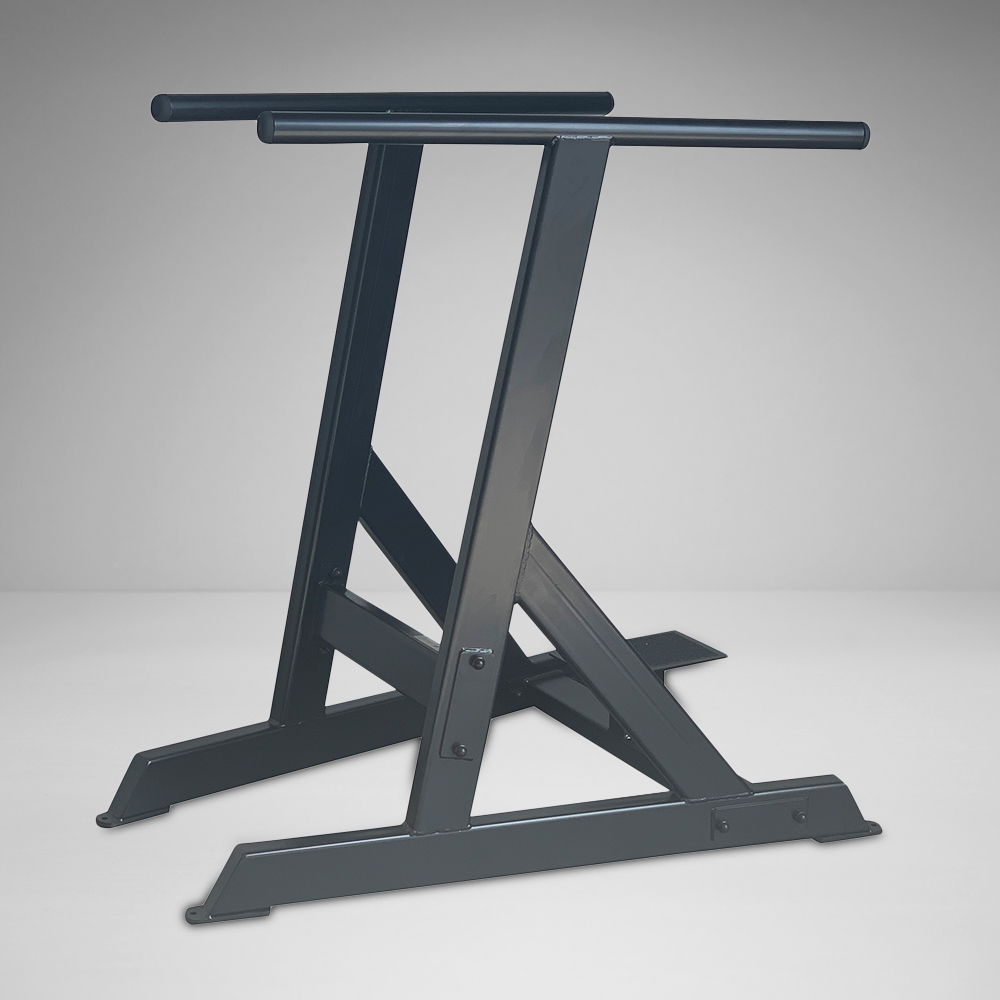
A freestanding dip station is a piece of exercise equipment designed to help you perform dips, leg raises, and sometimes other bodyweight exercises. Unlike fixed dip bars at the gym, these stations stand alone on the floor, with no bolts or attachments to walls.
Most models feature two parallel bars, often with rubber grips. The frame can be made from steel or heavy-duty aluminum. Some dip stations are a single welded frame, while others come as two separate bars you can move around. Portability and ease of setup are major selling points.
People use these stations to work their triceps, chest, shoulders, and core muscles. They’re popular for home gyms, apartments, and even for outdoor workouts.
The Main Factors That Affect Stability
Stability is not just about how heavy or wide the dip station is. Several elements combine to determine whether it feels solid or shaky when you exercise.
1. Base Width And Footprint
The base width—how far apart the feet are—plays a huge role. The wider the station, the harder it is to tip over. Some models have extra-long support bars on the bottom, while others keep things compact for small spaces.
A narrow base might fit better in your room, but it can rock side-to-side or tip if you lean too far. A wider base gives more confidence, especially for beginners or heavier users.
2. Frame Material And Build Quality
Steel is the most common material for dip stations. Thicker steel tubing adds strength and reduces flex. Aluminum is lighter and easier to move, but may feel less solid if not designed well.
Weld quality and how the bars are joined together also matter. Cheaper models may have weak joints that wobble or loosen over time. Look for seamless welds and reinforced areas where the frame meets the base.
3. Weight Capacity
Every dip station has a maximum user weight. Exceeding this limit increases wobbling and risk of failure. Most good-quality stations support at least 250–300 lbs (113–136 kg). Some heavy-duty models can hold 500 lbs (227 kg) or more.
It’s smart to choose a station that supports at least 50 lbs (23 kg) more than your current weight, especially if you plan to add weighted dips.
4. Floor Contact And Grip
If the station’s feet are covered in rubber or non-slip pads, they grip the floor better. This helps on smooth surfaces like tile or wood. Bare metal feet can slide, especially if you sweat or push off sideways.
Some high-end stations use suction cups for extra grip, but these only work on very smooth floors. Check the type of feet before you buy.
5. Height And Bar Spacing
The height of the bars affects leverage and tipping risk. Tall, narrow stations can feel wobbly for taller users or when doing explosive moves. Lower stations with wider spacing tend to be more stable.
Bar spacing matters for comfort and safety. If the bars are too close, you might sway side-to-side as you move. If they’re too far apart, the station takes up more room but usually feels sturdier.
6. Assembly And Fasteners
Some dip stations come pre-welded, others need assembly. Loose bolts or poorly fitted connections create wobble. Retighten bolts after setup and periodically check them.
If the design allows, choose stations with locking pins or welded joints over models that use just friction or simple screws.

Stability In Real-life Use: What To Expect
You might be wondering, “Are all freestanding dip stations unstable?” The answer is: it depends—mainly on the combination of the factors above, your body, and how you train.
Light Vs. Heavy Users
Heavier users naturally put more force on the station. If you weigh over 200 lbs (90 kg), a lightweight station may shift or flex, especially during dynamic movements or weighted dips.
Lighter users (under 150 lbs / 68 kg) can often use compact models safely, but should still check the weight limit.
Type Of Exercises
Dips are the main use, but some people do knee raises, L-sits, or even handstand practice. Moves that involve swinging, side-to-side motion, or explosive power test stability more than slow, controlled dips.
If you plan to use the station for advanced calisthenics, look for extra-sturdy models with a wide footprint.
Floor Surface
Carpet can help reduce sliding but may allow some “bounce” if the frame is light. Hard floors require good rubber feet for grip. Outdoor use on uneven surfaces is riskier and usually not recommended unless the station is extra heavy.
Assembly Quality
Even the best design won’t help if you don’t assemble the station correctly. Always follow instructions, use all washers and bolts, and check for tightness before each session.
Comparing Popular Freestanding Dip Stations
Let’s look at three popular models to see how their specs affect stability:
| Model | Base Width | Weight Capacity | Material | Foot Type | Approx. Weight |
|---|---|---|---|---|---|
| Lebert Fitness Equalizer | 21.5 in (55 cm) | 400 lbs (181 kg) | Steel | Rubber caps | 8 lbs (3.6 kg) each bar |
| ProsourceFit Dip Stand | 24 in (61 cm) | 400 lbs (181 kg) | Steel | Rubber feet | 23.5 lbs (10.7 kg) |
| Ultimate Body Press Dip Bar | 26 in (66 cm) | 350 lbs (159 kg) | Steel | Rubber end caps | 10 lbs (4.5 kg) |
Heavier stations with wider feet, like the ProsourceFit, usually feel more stable. Lightweight models can be easier to move but might shift if you use them energetically. Always compare the specs to your weight and workout style.
Common Stability Problems (and Solutions)
Freestanding dip stations aren’t perfect. Here are the most frequent stability issues people face—and how to fix or avoid them:
1. Wobbling During Dips
If the station rocks forward or backward, it’s often because the base is too narrow or the frame is light. Try placing the station on a yoga mat for more grip, or move more slowly to reduce rocking.
2. Sliding On Smooth Floors
Rubber feet help, but sometimes they still slide. A cheap fix is to put the station on a rug or a dedicated fitness mat. If your station has bare metal feet, add adhesive rubber pads.
3. Squeaking Or Loosening Joints
Over time, bolts can loosen. Use a wrench to check them every month. Lubricate joints with silicone spray if they squeak. For models with locking pins, make sure they’re fully engaged.
4. Tipping During Advanced Moves
Handstand or explosive exercises can tip a station if the base isn’t wide enough. Never attempt these on a lightweight dip station. For such moves, consider a wall-mounted or floor-anchored solution.
5. Uneven Surfaces
If your floor is not flat, the station may rock. Level the area before use or add shims under the feet to stabilize.
Freestanding Vs. Fixed Dip Bars: Which Is More Stable?
A common comparison is between freestanding and fixed dip bars (wall- or floor-mounted). Here’s a look at key differences:
| Feature | Freestanding Dip Station | Fixed Dip Bars |
|---|---|---|
| Installation | No drilling, portable | Requires mounting, permanent |
| Stability | Good if heavy/wide, but varies | Very high, almost no movement |
| Space Needed | Can move or store away | Fixed in one spot |
| Weight Limit | 250–500 lbs typical | Often 500+ lbs |
| Floor Protection | Rubber feet help, but can mark floors | Usually off the floor |
If you want *maximum stability*, fixed bars are the clear winner. But for renters, small spaces, or people who move often, a freestanding station is much more practical.
Who Should (and Should Not) Use A Freestanding Dip Station?
A freestanding dip station is best for:
- People who need portable or removable equipment
- Beginners who want to start bodyweight training at home
- Users under 250 lbs (113 kg) for most models, or up to 400 lbs (181 kg) for heavy-duty versions
- Those who do controlled dips, knee raises, and static holds
It may *not* be ideal for:
- Very heavy users (unless using a commercial-grade station)
- People who want to do explosive calisthenics (like muscle-ups or dynamic swings)
- Anyone planning to add a lot of extra weight (e.g., weighted dips with 100 lbs / 45 kg)
- Users with uneven or very smooth floors unless they add extra grip
If you’re in the first group, a stable freestanding station is enough for years of progress. If you’re in the second group, consider wall-mounted bars or a power tower with a large base.
How To Make Your Dip Station More Stable
If you already own a dip station and want it to feel more solid, try these tips:
- Place on a rubber mat – Reduces sliding and vibration.
- Tighten all bolts – Do this regularly, especially after the first week.
- Add weight plates – Some stations allow you to hang weight plates on the base. This anchors them better.
- Adjust your form – Move slowly and keep your body centered between the bars.
- Check your floor – Uneven floors create rocking. Move to a flatter spot if possible.
- Add sandbags – Placing sandbags or kettlebells on the base can help, especially for lightweight models.
- Upgrade foot pads – You can buy better non-slip pads if the originals wear out.
These upgrades don’t cost much but can make a big difference in stability and confidence.
Safety Tips For Using Freestanding Dip Stations
Even a stable dip station requires good habits to stay safe:
- Warm up before you start, to prevent muscle strains.
- Test stability every time before use, especially if you move the station.
- Don’t overload – Stay well under the max weight limit, especially if you use a backpack or dip belt.
- Keep hands dry – Sweat can make the grips slippery and increase risk of slipping.
- Progress slowly – Start with basic dips and only add reps or difficulty as you get stronger.
- Supervise children – Kids may see the station as a jungle gym. Keep them safe.
Signs Your Dip Station Is Unsafe
If you notice any of these signs, stop using the dip station until you fix the problem:
- Visible cracks in the frame or welds
- Bent or warped bars
- Loose or stripped bolts that can’t be tightened
- Excessive rocking even on a flat floor
- Rubber feet that are missing or badly worn
It’s better to replace or repair than risk injury.
What The Experts And Users Say
Fitness experts generally agree that a good freestanding dip station is stable enough for most home workouts—if you pick the right model. For example, trainers often recommend the Lebert Equalizer for beginners up to 250 lbs (113 kg), while heavier users or advanced athletes are pointed toward bigger, heavier stations or wall-mounted bars.
User reviews tell a similar story. People who stick to slow, controlled movements rarely report problems. Most complaints come from those who try explosive calisthenics or use stations far above their rated weight.
A recent survey of home gym users (2023) found that 74% of respondents were “satisfied” or “very satisfied” with their freestanding dip station’s stability for everyday use. Only 8% felt their station was “unsafe” or “too wobbly,” and most of those had bought very lightweight or low-cost models.
What Beginners Often Miss About Stability
Many first-time buyers assume that any dip station with a high weight limit must be stable. But weight limit only tells you how much it can hold before breaking, not how solid it feels during use.
Another common mistake is ignoring floor type. Even a heavy station can slide on tile or wood without good rubber feet. If you rent, ask your landlord before using heavy equipment on soft floors, as it may leave marks.
Some users also forget that bar spacing matters for stability. Bars too close together will sway more, especially for bigger athletes.
Cost Vs. Stability: Does Price Matter?
Often, more expensive dip stations are made from thicker steel and have wider bases. But not always. Some brands charge for design or color, not strength.
Here’s how price compares with stability, based on real models:
| Price Range (USD) | Base Width | Material | Stability (User Rated) |
|---|---|---|---|
| $50–$80 | 20–22 in | Thin steel | Low to Medium |
| $80–$150 | 22–26 in | Medium steel | Medium to High |
| $150+ | 24–30 in | Thick steel, welded | High |
If you’re serious about stability, it usually makes sense to spend a bit more. But always check specs, not just brand or price.
Alternatives To Freestanding Dip Stations
If you need more stability than a freestanding dip station can provide, consider:
- Wall-mounted dip bars – Permanent, very stable, but need drilling.
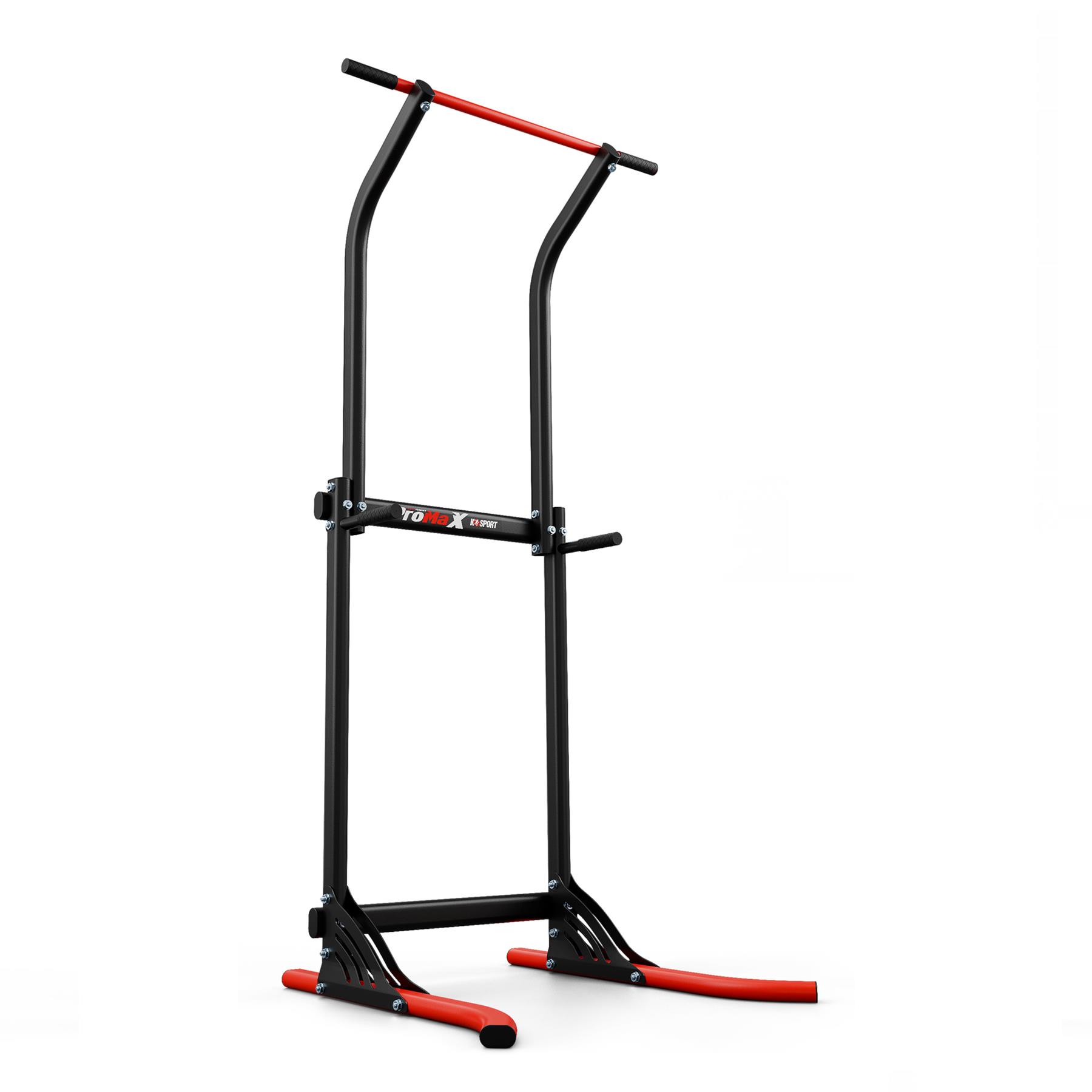
- Power towers – Multi-exercise stations with large bases, more stable but take up more space.
- DIY solutions – Some people build wooden dip stations for extra weight and width.
- Outdoor parallel bars – Found in parks, usually set in concrete.
Each has pros and cons for space, cost, and portability. For most home users, a quality freestanding station is the best blend of convenience and stability.
When To Replace Your Dip Station
Stability drops as equipment wears out. Replace your freestanding dip station if:
- The frame is visibly bent or cracked
- You outgrow the max weight capacity
- The base becomes wobbly and repairs don’t help
- You need to do advanced moves not supported by your current model
Don’t risk injury by using an unsafe station—upgrade when needed.
Final Thoughts: Are Freestanding Dip Stations Stable Enough?
For most home gym users, a well-chosen freestanding dip station is stable enough for dips, knee raises, and many bodyweight moves. The key is to match your size, strength, and workout style to the right model—and use smart setup and safety habits.
If you need maximum stability for advanced calisthenics or heavy weighted dips, consider fixed bars or a power tower. For everyone else, focus on base width, frame quality, and floor grip. With a little care, your dip station will support years of safe, effective training.
For more on home gym equipment safety, see this Physical Fitness overview.
Frequently Asked Questions
How Much Weight Can A Typical Freestanding Dip Station Hold?
Most quality freestanding dip stations support 250–400 lbs (113–181 kg). Some heavy-duty models are rated up to 500 lbs (227 kg). Always check your station’s official limit and stay below it for the best stability and safety.
Why Does My Dip Station Wobble Even Though It’s New?
Common reasons include a narrow base, loose bolts, or using it on an uneven or slippery floor. Check all connections, move to a flat area, and consider adding a mat or extra weight on the base for better stability.
Can I Do Weighted Dips On A Freestanding Station?
Yes, but with caution. Make sure your station’s weight limit is well above your body plus the added weight. Move slowly, avoid swinging, and stop if the frame shifts or feels unstable.
Are Freestanding Dip Stations Safe For Beginners?
They are generally safe if you pick a model that matches your size and use good form. Beginners should start with slow, controlled dips and check stability before each session.
What’s The Difference Between A Dip Station And Parallel Bars?
Dip stations are usually shorter, portable, and designed for dips and knee raises. Parallel bars are longer, often fixed, and used for gymnastics or advanced calisthenics. Parallel bars offer more stability but take up more space.

