
Fitness trackers have become a familiar sight on wrists everywhere. These small devices promise to measure your steps, track your heart rate, analyze your sleep, and give you a picture of your daily activity. But how do these compact gadgets actually work?
The technology inside is more advanced than it looks, and understanding it can help you make the most of your tracker—or decide if you need one at all.
Let’s dive deep into the world of fitness trackers. You’ll discover what sensors they use, how they turn raw data into meaningful insights, the differences between models, and some surprising facts that most users don’t know. If you want a clear, complete guide to fitness tracker technology, you’re in the right place.
The Core Sensors Inside Fitness Trackers
Every fitness tracker relies on a combination of sensors to collect information about your body and movement. These sensors are the building blocks of all the features you see in your fitness app.
Accelerometer
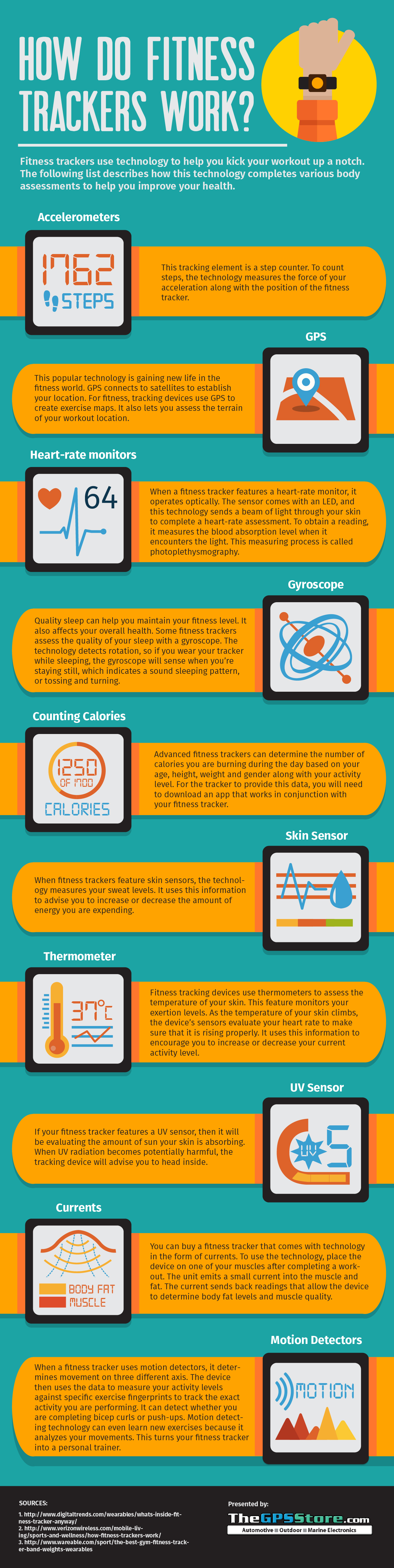
The most important sensor is the accelerometer. This tiny device measures acceleration forces in three directions: up/down, left/right, and forward/backward. When you walk, run, or move your arm, the accelerometer senses the changes and records them as data points.
Fitness trackers use this data to:
- Count steps
- Measure distance traveled
- Estimate calories burned
Not all accelerometers are the same. Some cheaper models only measure one or two axes, which can make them less accurate. High-end fitness trackers use 3-axis accelerometers for more reliable results.
Gyroscope
Many advanced trackers add a gyroscope. This sensor detects rotation and helps the device understand the direction you’re moving. For example, a gyroscope can tell if you’re climbing stairs or cycling, not just walking.
Gyroscopes improve the accuracy of:
- Activity recognition (e.g., walking vs. running)
- Motion tracking during workouts like yoga or HIIT
- Sleep movement analysis
Optical Heart Rate Sensor
Most modern fitness trackers have a green light on the back. This is the optical heart rate sensor. It uses a technology called photoplethysmography (PPG), which shines light into your skin and measures changes in blood flow.
Here’s how it works:
- The green LED lights flash rapidly.
- Light reflects off your blood vessels.
- A sensor measures how much light is absorbed, which changes as blood pulses through your wrist.
The tracker uses these pulses to calculate your heart rate. While convenient, wrist-based heart rate sensors can be less accurate during intense exercise or if the band fits loosely.
Other Sensors
Some advanced fitness trackers include extra sensors for more detailed data:
- Altimeter: Measures changes in altitude to count stairs climbed.
- Barometer: Detects air pressure changes, useful for outdoor activities.
- Thermometer: Monitors skin temperature.
- SpO2 Sensor: Estimates blood oxygen levels using red and infrared light.
Each sensor adds a new layer of information, but also increases battery use and cost.
How Fitness Trackers Turn Data Into Insights
Collecting data is just the start. The real magic happens when your fitness tracker translates raw sensor readings into useful information.
Step Counting
Step tracking may seem simple, but it’s actually based on complex algorithms. The tracker looks for a specific pattern—an up-and-down movement that matches how humans walk. It ignores random hand movements, like waving or clapping, using filters and pattern recognition.
Some common challenges include:
- False steps: Movements like brushing your teeth can trick the sensor.
- Missed steps: Slow walking or pushing a cart may not register.
- Stride length estimation: Trackers estimate your stride based on your height or calibrate it over time.
Sleep Tracking
Fitness trackers try to estimate your sleep stages using both movement (from the accelerometer) and heart rate variability.
They divide your night into:
- Awake
- Light sleep
- Deep sleep
- REM sleep
While this can give a general picture, consumer devices can’t match the accuracy of a professional sleep study. Factors like sleeping with your arm under your pillow or wearing the band too loose can affect results.
Calorie Estimation
Estimating calories burned is more difficult than it seems. Trackers use formulas that consider:
- Steps or movement intensity
- Heart rate data
- Personal factors (age, weight, gender, height)
However, these are only estimates. For example, studies show that calorie counts can be off by 20% or more, depending on the brand and activity.
Activity Recognition
Many trackers automatically detect different activities, like running, biking, or swimming. They do this by analyzing motion patterns and heart rate trends. For example, a sudden rise in heart rate plus repetitive movement may signal a run.
Some advanced devices can even recognize sports like tennis or golf. This feature works best after you’ve worn the device for a while, as it learns your unique movement style.
Health Monitoring
Newer fitness trackers go beyond counting steps. They monitor:
- Resting heart rate: A low resting rate usually means better fitness.
- Heart rate variability (HRV): Used to detect stress or recovery needs.
- Blood oxygen (SpO2): Helps spot breathing issues or sleep apnea.
- ECG (electrocardiogram): High-end models can check for irregular heart rhythms (like Apple Watch Series 8).
These health features can be helpful, but they are not a replacement for medical advice.
How Fitness Trackers Sync And Store Data
Fitness trackers don’t just collect information—they store, process, and share it with your phone or computer.
On-device Storage
Most trackers have limited memory. They can usually store a few days of data without syncing. When you connect to your phone, the tracker uploads the data and frees up space.
Some smartwatches, like the Apple Watch or Garmin Fenix, have more storage and can keep data for weeks.
Bluetooth And Wireless Sync
Trackers use Bluetooth Low Energy (BLE) to connect to your smartphone. This technology is power-efficient, so your battery lasts longer.
When you open the fitness app, the tracker:
- Finds your phone via Bluetooth.
- Uploads all new data.
- Updates settings or software if needed.
Some advanced trackers also support Wi-Fi or even cellular connections for instant syncing.
Cloud Storage And Analysis
Once your data is on your phone, it’s often uploaded to the cloud. This lets you access your history, see trends, and compare yourself to others.
Benefits of cloud analysis:
- Backups: You won’t lose your data if you lose the device.
- Deeper insights: AI algorithms can spot trends, like your best running days or sleep problems.
- Sharing: You can send results to friends, coaches, or doctors.
But there are privacy concerns. Always check what data your fitness tracker collects and who can see it.
What Makes Fitness Trackers Different From Smartwatches?
Many people confuse fitness trackers with smartwatches. While they share some features, there are key differences.
| Feature | Fitness Tracker | Smartwatch |
|---|---|---|
| Design | Slim, lightweight, focused on activity | Larger, often with color screens |
| Battery Life | 5-14 days average | 1-3 days average |
| Notifications | Basic (calls, texts) | Full phone functions, apps |
| Sensors | Essential sensors, health focus | More sensors, sometimes GPS, ECG |
| Price | Usually $30-150 | $150-500+ |
Fitness trackers are great for people who want simplicity, long battery life, and a focus on health. Smartwatches do more, but need charging more often and are usually bulkier.
How Accurate Are Fitness Trackers?
No fitness tracker is perfect. Accuracy depends on the sensors, algorithms, and how you wear the device.
Steps And Distance
Most trackers are good at counting steps—usually within 5-10% error for average users. However, activities like pushing a stroller, cycling, or using an elliptical can confuse the sensors.
Distance estimates are based on stride length, which varies by person and speed. Some devices let you manually enter your stride for better accuracy.
Heart Rate
Wrist-based heart rate sensors are usually accurate at rest or during light activities. But during intense workouts or when your arm moves a lot, readings can jump or lag behind.
Chest straps, which use electrical signals, are still the gold standard for heart rate measurement.
Sleep Stages
Trackers do a fair job estimating sleep/wake times but can struggle with sleep stages. Light and deep sleep are hard to separate without brainwave data. If you want clinical-grade sleep tracking, you’ll need a medical device.
Calories Burned
Calorie estimates are always rough. They depend on formulas, not direct measurement. Two people doing the same workout can burn very different calories due to genetics, muscle mass, and metabolism.
Spo2 And Ecg
Blood oxygen (SpO2) and ECG features are recent additions. They work best when you sit still. For health monitoring, these are useful early warning tools, but not replacements for professional tests.
Popular Fitness Tracker Brands And Models
There are many brands offering fitness trackers, each with its strengths. Here’s a comparison of some well-known models:
| Model | Main Features | Battery Life | Price Range (USD) |
|---|---|---|---|
| Fitbit Charge 5 | Heart rate, SpO2, ECG, GPS, Sleep | Up to 7 days | 130-180 |
| Xiaomi Mi Band 7 | Heart rate, SpO2, Sleep, 110+ sports modes | Up to 14 days | 50-70 |
| Garmin Vivosmart 5 | Pulse Ox, Sleep, Stress tracking, GPS via phone | Up to 7 days | 120-150 |
| Whoop Strap 4.0 | Heart rate, HRV, Sleep, Recovery, No screen | Up to 5 days | Monthly subscription |
Each model has its own strengths. For example, the Fitbit Charge 5 offers advanced health features, while the Mi Band 7 is affordable with long battery life. The Whoop Strap 4.0 is popular among athletes for recovery tracking, but requires a subscription.
Advanced Features In Modern Fitness Trackers
Today’s fitness trackers do much more than count steps. Here are some features you’ll find in high-end models:
- GPS Tracking: Built-in GPS lets you map your runs or rides without carrying your phone. Some trackers use connected GPS, relying on your phone’s signal.
- Contactless Payments: NFC chips allow you to pay at stores with your wrist.
- Music Storage and Controls: Store songs or control playback from your tracker.
- Menstrual Health Tracking: Some apps let users log cycles, symptoms, and get predictions.
- Stress Monitoring: By analyzing heart rate variability, trackers estimate stress levels and suggest breathing exercises.
- Body Battery/Readiness Scores: Devices like Garmin’s Body Battery or Whoop’s Recovery Score analyze your sleep, activity, and heart rate to show if you’re ready for a workout.
These extras make trackers more useful, but also drain the battery faster.
Limitations And Common User Mistakes
Even the best fitness tracker has limits. Here are some common mistakes and how to avoid them:
- Wearing too loose: Sensors need to touch your skin. A loose band can give inaccurate heart rate or SpO2 readings.
- Ignoring device setup: Not entering your real height, weight, or age can lead to wrong calorie and distance estimates.
- Trusting single-day data: Fitness trackers are most useful for spotting trends over weeks, not judging one day.
- Believing all numbers are exact: Treat data as estimates, not absolute truth.
- Skipping updates: Regularly update your tracker’s software for better accuracy and new features.
One insight many beginners miss: trackers learn from your habits. The more you wear your device, the better it understands your typical movement and rest patterns.
Another overlooked detail: battery life often suffers with features like SpO2 or GPS turned on. Turn off functions you don’t need to extend battery life.
How Fitness Trackers Motivate And Change Habits
Fitness trackers aren’t just about data—they’re designed to help you change your behavior. Here’s how they work as motivational tools:
- Daily goals: Most trackers set a target (like 10,000 steps). Reaching it triggers a vibration or celebration.
- Reminders to move: If you’ve been sitting too long, the device buzzes to prompt activity.
- Social sharing: Competing with friends or joining challenges can boost motivation.
- Progress reports: Weekly summaries show trends and improvements.
Studies show that people who use fitness trackers walk more and are more aware of their habits. But motivation can fade over time. Setting realistic goals and using the data for self-reflection works better than chasing badges or streaks alone.
Privacy And Security Concerns
Fitness trackers collect sensitive health data. Here’s what you should know:
- Data sharing: Some brands share data with third parties or use it for research.
- Location tracking: GPS-enabled trackers record your routes. Check your app’s privacy settings.
- Account protection: Always use strong passwords and enable two-factor authentication if available.
- Exporting data: Most brands let you export your data or delete your account if you switch devices.
Before buying a tracker, read the privacy policy. If you’re concerned, look for brands that let you store data locally or offer strong privacy controls. For more on privacy, see the Wikipedia entry on fitness trackers.
The Future Of Fitness Trackers
Fitness tracker technology is evolving quickly. Here’s what’s coming next:
- More accurate sensors: Future devices will better track hydration, blood pressure, and even blood sugar.
- Smaller, less visible designs: Some trackers will fit in rings, earrings, or clothing.
- Personalized coaching: AI will offer tailored advice based on your unique data.
- Better integration with medical care: Trackers could share data directly with doctors for faster health interventions.
- Mental wellness tracking: Future features may monitor mood, stress, or even early signs of depression.
These advances will make fitness trackers even more useful for health, not just fitness.
Frequently Asked Questions
How Do Fitness Trackers Count Steps?
Fitness trackers use an accelerometer to detect up-and-down movement patterns typical of walking. Algorithms filter out random movements, so only steps are counted. However, some activities with similar wrist movement can result in false steps, and pushing a stroller might result in missed steps.
Are Fitness Trackers Accurate For Monitoring Heart Rate?
Wrist-based heart rate sensors are fairly accurate at rest or during steady activities. Accuracy drops during intense exercise or rapid arm movement. For the most reliable readings, ensure the band is snug and consider using a chest strap for high-intensity workouts.
Can Fitness Trackers Really Track Sleep?
Fitness trackers estimate sleep based on movement and sometimes heart rate. They can identify when you fall asleep and wake up, and give a general idea of sleep stages. However, they are not as precise as medical devices and can be influenced by how you wear them.
Is My Data Safe With A Fitness Tracker?
Most brands use encryption and let you set privacy controls. However, some share data with third parties. Always review the privacy policy, use strong passwords, and update your device regularly to protect your health data.
What Should I Look For When Buying A Fitness Tracker?
Consider your main needs: step counting, heart rate, GPS, battery life, and price. Check if the tracker is compatible with your phone, offers the health features you want, and has a good privacy policy. Reading user reviews and expert comparisons can also help you choose the best model for your lifestyle.
Fitness trackers are powerful tools for understanding and improving your daily habits. Knowing how they work lets you use them more effectively and get the most value from your investment. Whether you’re just curious or ready to pick your first tracker, understanding the technology on your wrist puts you one step ahead.


