
When people start bodyweight training, two exercises quickly come up: dips and push-ups. Both are classic moves, needing little or no equipment. But which is better? Are dips a step above push-ups, or is it the other way around? The answer is not simple. It depends on your goals, your experience, and even your injury history. Understanding the real differences and strengths of each exercise is key if you want the best results from your workouts.
Let’s break down how dips and push-ups compare in building strength, muscle, and real-world fitness. You’ll also learn where each exercise shines, their unique risks, and how to choose the right one for your needs. By the end, you’ll know which move deserves the top spot in your training—and why the choice might not be the same for everyone.
What Are Dips And Push-ups?
Before comparing, it helps to define each exercise and understand the basic movement.
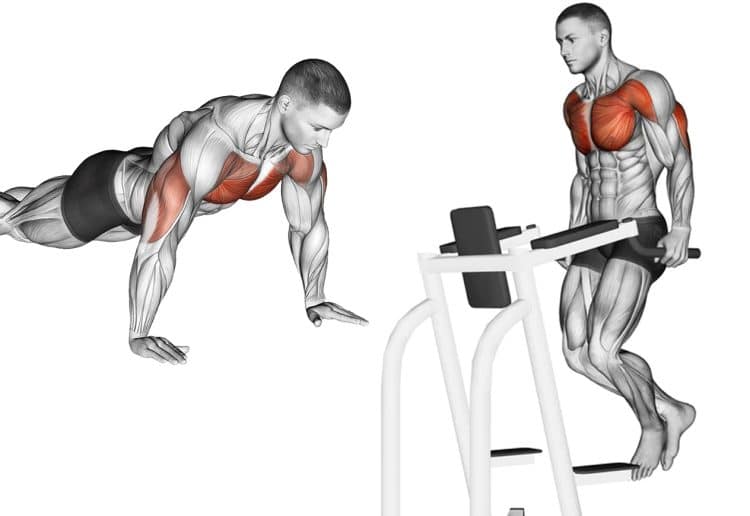
Dips are a bodyweight exercise where you support yourself on parallel bars or a sturdy surface, lower your body by bending your elbows, then push back up. Most people do them on dip bars, gym rings, or even between two benches. Dips mainly target the chest, triceps, and shoulders.
Push-ups are done on the floor. You start in a plank position, hands under your shoulders, lower your chest to the ground, and push back up. The main muscles worked are the chest, triceps, and front shoulders.
At first look, both exercises seem similar. But a closer look shows big differences in muscle activation, difficulty, and injury risk.
Muscles Worked: Dips Vs Push-ups
Both dips and push-ups are called compound exercises. This means they use many muscle groups at once. But the way they use these muscles is not the same.
Muscles Targeted By Dips
- Chest (Pectoralis major and minor)
- Triceps (Triceps brachii)
- Shoulders (Anterior deltoids)
- Lower chest and front shoulders get extra focus
Dips also work supporting muscles like the rhomboids, trapezius, and sometimes the core (especially if done on rings).
Muscles Targeted By Push-ups
- Chest (Pectoralis major)
- Triceps
- Shoulders (Front deltoids)
- Core muscles (abs and lower back)
- Serratus anterior (under your armpit, helps move your shoulder blade)
Push-ups use the core much more than dips because you must keep your body straight. They also train stability, especially with harder variations.
Which Builds More Muscle?
Dips usually allow you to move more weight—your full body plus extra (if you add a belt and plates). This means more tension for the triceps and lower chest. Push-ups are easier to start with but can be made harder by elevating your feet, using one arm, or wearing a weight vest.
But muscle growth depends on progressive overload—making the movement harder over time. Both dips and push-ups can be adjusted for this.

Difficulty And Progression
The difficulty level of dips and push-ups is not the same, especially for beginners.
- Push-ups are easier to start. Most people can do a few push-ups, even if their form is not perfect. There are also many ways to make push-ups easier—like doing them on your knees or against a wall.
- Dips require more strength, especially in the shoulders and triceps. Many beginners cannot do even one dip with good form. The movement also puts more stress on the shoulders.
When you get stronger, dips can be made harder by adding weight, using gymnastic rings, or slowing down the movement. Push-ups also have many advanced variations.
Here’s a quick look at how each exercise can be progressed:
| Exercise | Beginner Variation | Intermediate | Advanced |
|---|---|---|---|
| Push-Ups | Knee Push-Ups, Wall Push-Ups | Standard, Decline, Diamond | Archer, One-arm, Weighted |
| Dips | Bench Dips (feet on floor) | Parallel Bar Dips | Weighted, Ring Dips |
Strength Gains: Which Is Better?
Both dips and push-ups build upper body strength. But the way they challenge your body is different.
- Dips move your entire bodyweight and can be loaded with extra weight. This makes them a strong tool for increasing pushing strength in the chest, triceps, and shoulders.
- Push-ups are easier to start and are great for building base strength. They are also very good for muscular endurance.
One study from the Journal of Strength and Conditioning Research found that dips activate the triceps more strongly than standard push-ups, while push-ups offer better core activation.
If your main goal is raw pushing strength—especially for sports or activities like gymnastics—dips often win. If you want to build a solid strength base and improve total body stability, push-ups are hard to beat.
Chest Development: Dips Vs Push-ups
Chest growth is a big reason people do these exercises. But which is better for a bigger, stronger chest?
- Push-ups target the upper and middle chest more. If you want to work the upper chest, try decline or feet-elevated push-ups.
- Dips focus more on the lower chest. Leaning forward during dips increases chest activation.
Advanced lifters often use both exercises to hit the chest from different angles. For full chest development, doing both is smart.
Example: Chest Activation In Studies
Research shows that dips can produce about 15-25% higher lower chest activation compared to standard push-ups. However, push-ups are easier to do for high reps, which helps with muscle growth through volume.
Triceps Growth: Which Exercise Wins?
Both dips and push-ups work the triceps hard. But dips have a slight edge.
- Dips force the triceps to push your whole body up and down. There’s a longer range of motion and more load.
- Push-ups hit the triceps well, especially if you use variations like diamond push-ups (hands close together).
If you want bigger triceps, dips—especially weighted—are usually more effective. But for endurance, push-ups are great.
Shoulder Health And Injury Risk
This is where the two exercises are very different.
- Push-ups are generally safe for most people. The shoulder stays in a stable position and the movement is easy to control.
- Dips can put the shoulder joint in a risky position. Going too low (past a 90-degree angle at the elbow) increases the chance of shoulder strain or injury, especially if you have poor mobility or past injuries.
If you have shoulder problems, push-ups are safer. Dips require more flexibility and should be done carefully—never lower yourself too far.
A non-obvious insight: Many people hurt their shoulders doing dips because they drop below parallel. Keeping your upper arms parallel to the ground (not lower) protects the joint.
Core And Stability
Push-ups require you to keep your body straight, which means the core (abs and lower back) works hard. Dips use the core less, except when done on unstable surfaces like rings.
If your goal is a stronger midsection, push-ups offer more core benefits. You can also try unstable push-up variations (like on a medicine ball) for extra challenge.

Equipment And Accessibility
- Push-ups require nothing but the floor. You can do them anywhere, anytime.
- Dips need parallel bars, rings, or sturdy surfaces. This limits where you can do them.
For travel, busy schedules, or limited space, push-ups are the clear winner.
Real-world Strength And Sports Performance
Push-ups and dips both help with functional strength—the kind you use in daily life and sports. But the way they help is different.
- Push-ups build pushing strength used in sports like football, wrestling, and martial arts. They improve coordination and core stability.
- Dips are great for climbing, gymnastics, and any activity that needs strong downward pushing.
If you play sports or need practical upper body strength, doing both exercises gives you the best results.
Fat Loss And Conditioning
Neither dips nor push-ups burn huge amounts of calories on their own. But both can be used in high-intensity workouts (like circuits) to boost calorie burn.
Push-ups are better for longer, high-rep sets, which helps with muscular endurance and conditioning. Dips, being harder, are better for short, intense sets.
If you want to build muscle while losing fat, combine push-ups and dips in supersets (doing one after the other with little rest).
Comparing Dips And Push-ups Side By Side
It helps to see the key differences at a glance. Here’s a direct comparison:
| Factor | Dips | Push-Ups |
|---|---|---|
| Main Muscles | Chest (lower), triceps, front shoulders | Chest (upper/mid), triceps, front shoulders, core |
| Equipment Needed | Bars, rings, or sturdy surfaces | None (just floor) |
| Difficulty | Moderate to advanced | Beginner to advanced |
| Shoulder Safety | Higher risk if done wrong | Low risk for most people |
| Progression Options | Weighted, ring, slow tempo | One-arm, decline, weighted |
| Core Activation | Low (unless on rings) | High |
| Best For | Muscle size, pushing strength | Endurance, stability, accessibility |
Common Mistakes And How To Avoid Them
No matter which exercise you choose, doing them wrong can limit your results and cause injuries. Here are common mistakes:
Dips
- Going too deep – This strains the shoulders and increases injury risk.
- Flaring elbows out – Can hurt the shoulders. Keep elbows closer to your body.
- Using momentum – Swinging your body takes tension off the muscles.
- Shrugging shoulders – Shoulders should stay down and away from your ears.
Push-ups
- Sagging hips or arching back – This reduces core activation and can cause back pain.
- Elbows too wide – This stresses the shoulder joint.
- Not going low enough – Chest should almost touch the floor for full range of motion.
- Neck strain – Keep your neck in line with your spine.
A non-obvious tip: For both exercises, squeezing the glutes and abs helps protect your spine and increases total-body tension.
When To Choose Dips Over Push-ups
Dips might be better for you if:
- You want to focus on lower chest and triceps size and strength.
- You are at an intermediate or advanced level.
- You have healthy, mobile shoulders.
- You want to add extra weight for more challenge.
Dips are also great for breaking plateaus if push-ups have become too easy.
When Push-ups Are The Better Choice
Push-ups are ideal if:
- You are a beginner or coming back from injury.
- You want an exercise you can do anywhere.
- You have shoulder issues or limited mobility.
- You want to build core strength as well as upper body power.
Push-ups are also safer for high-rep workouts and can be progressed in many creative ways.
How To Include Both In Your Training
The best approach for most people is not “either/or” but “both.” Here’s how you can combine dips and push-ups for balanced development:
- Start with push-ups if you are new. Focus on perfect form and build up reps.
- Add dips when you can do 20+ perfect push-ups and your shoulders feel strong.
- Use different push-up variations (decline, diamond) and dip variations (leaning forward, rings).
- For muscle growth, try supersets—do dips, then push-ups with little rest.
- Adjust frequency to your recovery. Two to three times per week is enough for most people.
A sample upper body workout could look like:
- Push-Ups: 3 sets of 15-20 reps
- Dips: 3 sets of 8-12 reps
- Rest 1-2 minutes between sets
Scientific Research And Real-life Examples
Studies support using both exercises for the best results. For example, a 2017 study published in the Journal of Human Kinetics found that both dips and push-ups increased upper body strength, but dips led to greater triceps growth, while push-ups improved core stability more.
In practice, many athletes and personal trainers recommend combining both for a complete upper body routine. Gymnasts, known for powerful chests and triceps, use both moves regularly.
For more scientific detail, you can check out this Wikipedia page on dips.
Adapting To Your Goals And Body Type
No two bodies are the same. The best choice depends on your unique needs:
- Tall people sometimes find dips hard on the shoulders but can do push-ups more comfortably.
- Heavier people may struggle with dips at first but can build up with assisted versions.
- People with long arms might find dips more challenging; push-ups can be easier to control.
Listening to your body and adjusting form is key. Never push through sharp pain, especially in the shoulders.
Advanced Variations For Progress
Once you master basic dips and push-ups, try these variations:
For Dips
- Weighted dips: Use a belt and plates.
- Ring dips: Builds even more stability and core strength.
- Korean dips: A harder version done behind the body.
For Push-ups
- One-arm push-ups: Extreme strength and balance.
- Plyometric push-ups: Push off the ground with force (like clapping).
- Archer push-ups: One arm does most of the work.
Mixing up variations keeps training fresh and targets muscles in new ways.
Recovery And Overtraining
Both dips and push-ups can cause overuse injuries if done too often without rest. Look out for pain in the shoulders, elbows, or wrists.
- Take at least one rest day between hard pushing workouts.
- Stretch the chest, shoulders, and triceps after training.
- Build up volume slowly—don’t jump from 10 dips to 50 in one week.
Quick Summary Table: Dips Vs Push-ups
Here’s a fast overview to help you decide:
| Dips | Push-Ups | |
|---|---|---|
| Strength Gain | High (especially triceps) | Moderate to high |
| Muscle Growth | Great for chest/triceps | Good for chest/core |
| Injury Risk | Higher (shoulders) | Low |
| Beginner Friendly | No | Yes |
| Core Work | Low | High |
| Equipment | Needed | None |
Final Thoughts: Which Is Truly Better?
As you’ve seen, the question “Are dips better than push-ups?” has no single answer. Dips are better for advanced lifters who want to push for maximum chest and triceps strength, and who have healthy shoulders. Push-ups are ideal for all levels, safer, and build better core strength and endurance.
For most people, the best plan is to include both. Start with push-ups to master basic strength and form. Add dips when your body is ready. Mix in different variations to avoid boredom and plateaus.
Remember, the “better” exercise is the one that matches your goals, respects your body, and keeps you training safely for the long term.
Frequently Asked Questions
How Many Dips Or Push-ups Should I Do Per Workout?
It depends on your level. Beginners can start with 2-3 sets of 8-12 reps for each. Advanced athletes might do 4-5 sets of 15-25 reps for push-ups and 8-15 reps for dips. Always focus on quality over quantity.
Can I Do Dips And Push-ups On The Same Day?
Yes. Many programs combine both in the same workout. Just be careful not to overdo it, especially if you’re new. Listen to your body and allow time for recovery.
Are Dips Dangerous For Shoulders?
Dips can be risky if done wrong, especially if you lower too far or use poor form. If you have shoulder pain or past injuries, use caution or stick to push-ups.
Do Push-ups Build Muscle As Well As Dips?
Push-ups can build plenty of muscle, especially for beginners. As you get stronger, you may need harder variations or added weight to keep growing.
Which Exercise Is Better For Fat Loss?
Both help with fat loss as part of a total workout plan. Push-ups are better for high-rep, calorie-burning workouts. But true fat loss comes from a mix of strength training, cardio, and diet.

