
Many people want to understand their sleep better, but not everyone likes wearing gadgets at night. The idea of a sleep tracker that works without strapping something to your wrist or finger is appealing. Maybe you find wearables uncomfortable, or your skin gets irritated. Perhaps you just dislike sleeping with devices. The question is: can sleep trackers still do their job if you don’t actually wear them?
There’s a lot to explore here. Sleep tracking technology has grown quickly in recent years, and new options appear all the time. Some of these promise accurate results without touching your body. But how well do they really work? And what are their limits? This article dives deep into the world of non-wearable sleep trackers. You’ll learn what’s available, how these devices work, how they compare with wearables, and what to expect if you want to track your sleep—hands-free.
How Do Sleep Trackers Usually Work?
Most people think of wearable sleep trackers first. These are usually smartwatches, fitness bands, or rings. They use sensors to measure your body’s movements, heart rate, and sometimes blood oxygen or skin temperature. The data collected helps estimate your sleep stages, how long you sleep, and how often you wake up.
However, tracking sleep from the body is not the only method. Some trackers can monitor your sleep from a distance, using different technology. These are the main categories:
- Wearables: Devices you wear on your wrist, finger, or head.
- Nearables: Devices placed near (but not on) your body, like under your mattress or on a bedside table.
- App-based: Smartphone apps that use your phone’s microphone or movement sensors.
Each type has strengths and weaknesses, and the choice often depends on your needs and comfort.
Non-wearable Sleep Trackers: What Are Your Options?
If you don’t want to wear anything to bed, you still have choices. Non-wearable sleep trackers use different methods to monitor your sleep. Here are the most popular types:
1. Under-mattress Sleep Trackers
These devices slip under your mattress or sheet. They usually use sensors to detect body movement, heart rate, breathing, and sometimes snoring.
Examples: Withings Sleep Analyzer, Beddit (by Apple)
How they work: They use piezoelectric sensors or pressure sensors to measure slight changes as you move, breathe, or shift in bed. Some models can even tell the difference between you and someone else in the bed.
Pros:
- No physical contact
- Set and forget
- Tracks heart and breathing rates
Cons:
- Accuracy can drop with thick or memory foam mattresses
- May struggle with more than one person in bed
2. Bedside Sleep Trackers
These sit on your nightstand and use radar or ultrasound to sense your movement and breathing from a distance.
Examples: Google Nest Hub (2nd Gen), ResMed S+ (discontinued but influential)
How they work: They emit low-power radar or sound waves that bounce off your body and return to the device. By analyzing the patterns, they estimate your sleep stages and movements.
Pros:
- Zero contact
- Easy setup
- No mattress compatibility issues
Cons:
- Can be affected by pets or another person
- Needs a clear line of sight
3. Smartphone Apps (contactless Mode)
Some sleep apps can run in contactless mode. You place your phone near your pillow, and it uses the microphone and sometimes sonar to detect movement and sounds.
Examples: Sleep Cycle, Sleep as Android
How they work: The phone listens for breathing, movement, and snoring. Advanced apps use the speaker to send out silent sound waves (inaudible to humans) and use the microphone to capture the echo.
Pros:
- No new device needed
- Affordable or free
Cons:
- Accuracy lower than dedicated devices
- Needs correct phone placement
- Battery drain
4. Smart Home Devices
Some smart speakers or displays come with built-in sleep tracking features that use similar technology to bedside trackers.
Examples: Google Nest Hub, Amazon Halo Rise
These devices offer extra features like sleep environment monitoring (light, temperature, air quality).
5. Bed-based Sensors In Medical Devices
In hospitals, bed-based sensors are sometimes used to monitor sleep in a non-intrusive way. These are not usually for home use but show that non-wearable tech can be very advanced.

How Accurate Are Non-wearable Sleep Trackers?
Accuracy is a main concern for anyone tracking sleep. Compared to wearable trackers, non-wearable options can be both impressive and limited, depending on what you expect.
What Non-wearables Do Well
- Detecting sleep vs. wake: Most under-mattress and bedside trackers are good at recognizing if you are asleep or awake.
- Measuring sleep duration: They can usually estimate when you fall asleep and wake up.
- Tracking breathing and heart rate: High-quality under-mattress sensors can monitor basic vital signs.
Where They Can Struggle
- Sleep stages: Estimating REM, deep, and light sleep is harder without body contact. Results may be less reliable than with a wearable.
- Multiple sleepers: If you share your bed, the tracker might confuse your movements with your partner’s or pet’s.
- Unusual sleep habits: If you move a lot, sleep in odd positions, or sleep outside your bed, non-wearables may lose accuracy.
What Studies Say
A 2020 study found that under-mattress sensors were within 10% of polysomnography (the gold standard sleep test) for sleep duration but less accurate for deep sleep stages. Bedside radar devices were 75-85% accurate at detecting sleep periods but sometimes misread short awakenings.
Comparing Wearable Vs. Non-wearable Sleep Trackers
Here’s a side-by-side look at the key differences:
| Feature | Wearable | Non-Wearable |
|---|---|---|
| Comfort | May be uncomfortable | No contact |
| Accuracy | High for heart rate, movement | Good for sleep/wake, varies for stages |
| Setup | Must wear every night | Set up once, forget it |
| Multiple Sleepers | Tracks only wearer | Can be confused by bed partners |
| Extra Features | Fitness, notifications | Room environment, snore detection |
Who Should Use Non-wearable Sleep Trackers?
Non-wearable trackers are not for everyone, but they are a great choice for people who:
- Hate wearing devices to sleep
- Have skin sensitivities or allergies
- Want a set-and-forget system
- Share data with a doctor or partner (if accuracy needs are not medical-grade)
- Want to monitor sleep environment (light, temp, noise)
However, if you need detailed sleep stage tracking or have a diagnosed sleep disorder, a wearable or medical test may still be better.
How To Choose The Right Non-wearable Sleep Tracker
If you want to avoid wearing a device, here’s what matters when picking a tracker:
- Sensor Type: Under-mattress sensors are usually more accurate than phone-only apps.
- Compatibility: Make sure the tracker works with your bed, phone, or smart home system.
- Data Privacy: Some devices send data to the cloud. Check privacy policies.
- Ease of Use: The best trackers are set-and-forget, with no daily charging needed.
- Extra Features: Some track snoring, room temperature, or can integrate with smart lights.
- Price: Non-wearable trackers range from free apps to $100-$300 for advanced devices.
Example Comparison
Here’s a quick comparison of some popular non-wearable options:
| Device | Type | Main Features | Approx. Cost |
|---|---|---|---|
| Withings Sleep Analyzer | Under Mattress | Heart rate, snore, sleep stages | $100-$130 |
| Google Nest Hub (2nd Gen) | Bedside Radar | Breathing, movement, environment | $70-$100 |
| Sleep Cycle App | Smartphone | Snore, movement, alarm | Free/$30 per year |
Common Mistakes And Tips For Better Sleep Tracking
Mistakes To Avoid
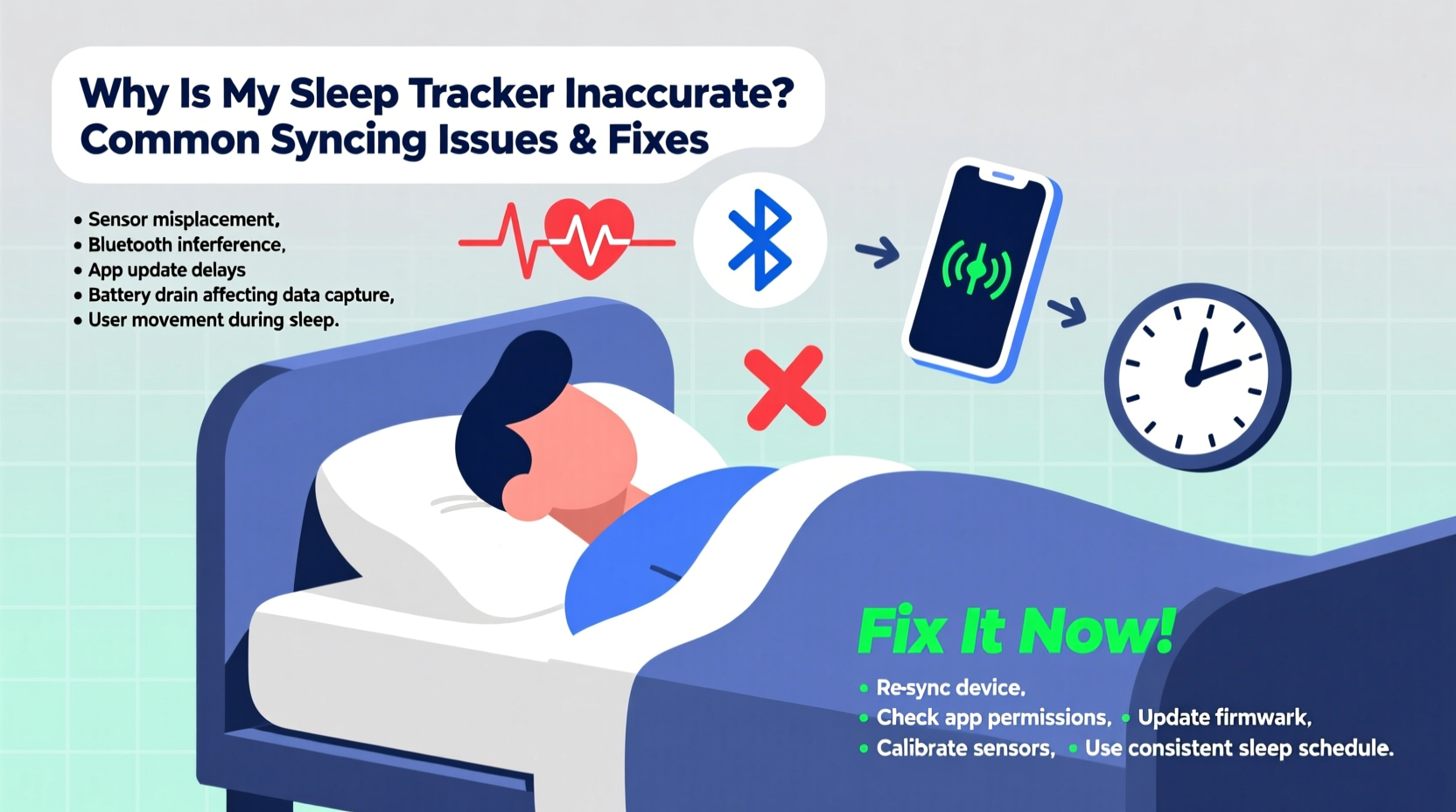
- Wrong placement: Under-mattress sensors must be directly under your chest area; phone apps need the phone near your pillow.
- Ignoring calibration: Some devices need setup to recognize your sleeping style. Skipping this step can hurt accuracy.
- Not updating software: Outdated apps or devices may have bugs or lower accuracy.
- Using with heavy pets: Large pets sleeping on the bed may confuse the device.
Tips For Best Results
- Use the same side of the bed each night if you share with a partner.
- Keep bedside trackers pointed at your sleeping area, not blocked by lamps or books.
- Try to pair sleep tracking with a sleep diary for extra insight.
- Remember: No consumer sleep tracker replaces medical sleep studies if you have serious problems.
What Sleep Trackers Without Wearing Actually Tell You
Non-wearable trackers can give you valuable data, but you need to know what to expect. They are best for:
- Trends: Over weeks or months, you’ll see patterns—late nights, short sleep, noisy nights.
- Basic sleep quality: Total sleep time, number of awakenings, snoring.
- Environment: Light, temperature, noise—factors that affect your sleep.
However, they are less reliable for:
- Exact sleep stages: Only medical devices are truly accurate here.
- Diagnosing disorders: If you suspect sleep apnea or insomnia, always see a doctor.

Who Should Avoid Non-wearable Sleep Trackers?
Some people may find these devices unhelpful, such as:
- Those with severe sleep disorders needing medical testing
- People who move beds often (guests, hotels)
- Those who want detailed fitness and health tracking from a device
Real-world Experiences And User Feedback
Many users love non-wearable sleep trackers for their simplicity and comfort. People with sensitive skin often switch to under-mattress or bedside options and find them “good enough” for tracking trends and making small lifestyle changes.
However, several users report frustration when sharing a bed with a partner, especially if both move a lot. Some find that results are less detailed than with a smartwatch or ring, but they accept the tradeoff for comfort.
One non-obvious insight: Some people combine a non-wearable tracker with a simple sleep diary. This helps explain why you might sleep poorly on certain nights—even if the tracker can’t tell you everything.
Another tip: If you’re using a phone app, airplane mode helps avoid notifications and reduces battery drain.
The Future Of Non-wearable Sleep Tracking
The technology is improving fast. Radar-based devices are getting better at telling the difference between people (and pets). Integration with smart home systems lets you automatically adjust lighting or temperature based on your sleep.
Some experts believe that, in a few years, non-wearable trackers may rival wearables for accuracy, especially as AI improves data analysis. For now, they offer a great, comfortable way to track your sleep—just know their limits.
For more on how these devices work, check out the Wikipedia article on sleep monitors.
Frequently Asked Questions
Can Sleep Trackers Really Work Without Touching My Body?
Yes, many non-wearable trackers use sensors under your mattress, on your nightstand, or even your smartphone’s microphone to monitor your sleep. While not as precise as wearables for sleep stages, they are good for tracking sleep length and quality.
How Accurate Are Under-mattress Sleep Trackers Compared To Wearables?
Under-mattress trackers are usually quite accurate for total sleep time and basic trends. They may be less reliable for detecting sleep stages compared to wearables that measure your heart rate directly.
Will A Non-wearable Sleep Tracker Work If I Share My Bed?
Results can be mixed. Some devices are designed to focus only on your side of the bed, but movement or snoring from a partner (or a pet) can sometimes confuse the sensor.
Do Non-wearable Trackers Help With Diagnosing Sleep Problems?
They can highlight patterns or issues, such as frequent awakenings, but they cannot diagnose medical sleep disorders. If you think you have a serious issue like sleep apnea, see a healthcare professional.
Are There Any Privacy Risks With Using These Devices?
Some non-wearable trackers upload data to the cloud for analysis. Always check the privacy policy and choose devices from reputable companies that let you control your data.
Non-wearable sleep trackers are a practical solution for those who want to monitor their sleep without discomfort. While they have some limits, new technology is making them better every year. If you value comfort and want to learn more about your sleep, these devices are worth exploring.

