
Getting enough good sleep is vital for your health, memory, and mood. But many people don’t actually know how well they sleep each night. That’s where sleep trackers come in. These devices promise to help you understand your sleep patterns, find out if you’re getting enough rest, and even improve your sleep quality. But how do sleep trackers work? Are they accurate? What technology do they use? This article dives deep into the science and technology behind sleep trackers, so you can decide if one is right for you and know what to expect.
What Is A Sleep Tracker?
A sleep tracker is a device or app that records and analyzes your sleep. It can be a wristband, a smart watch, a ring, or even a smartphone app. Some sleep trackers are built into mattresses or placed under your pillow. They aim to give you insights like:
- How long you sleep
- When you fall asleep and wake up
- How many times you wake up during the night
- Your sleep stages (light, deep, REM)
- Your movement, heart rate, breathing, and sometimes even snoring
The goal is to help you understand your sleep quality and make better choices for healthier sleep.
The Main Technologies Behind Sleep Trackers
Sleep trackers use several types of technology to measure your sleep. Let’s look at the most common ones:
Motion Sensors (accelerometers)
Most sleep trackers use motion sensors called accelerometers. These sensors detect movement while you sleep. If you toss and turn or get up, the tracker records that as wakefulness. If you stay still for a long time, it records that as sleep.
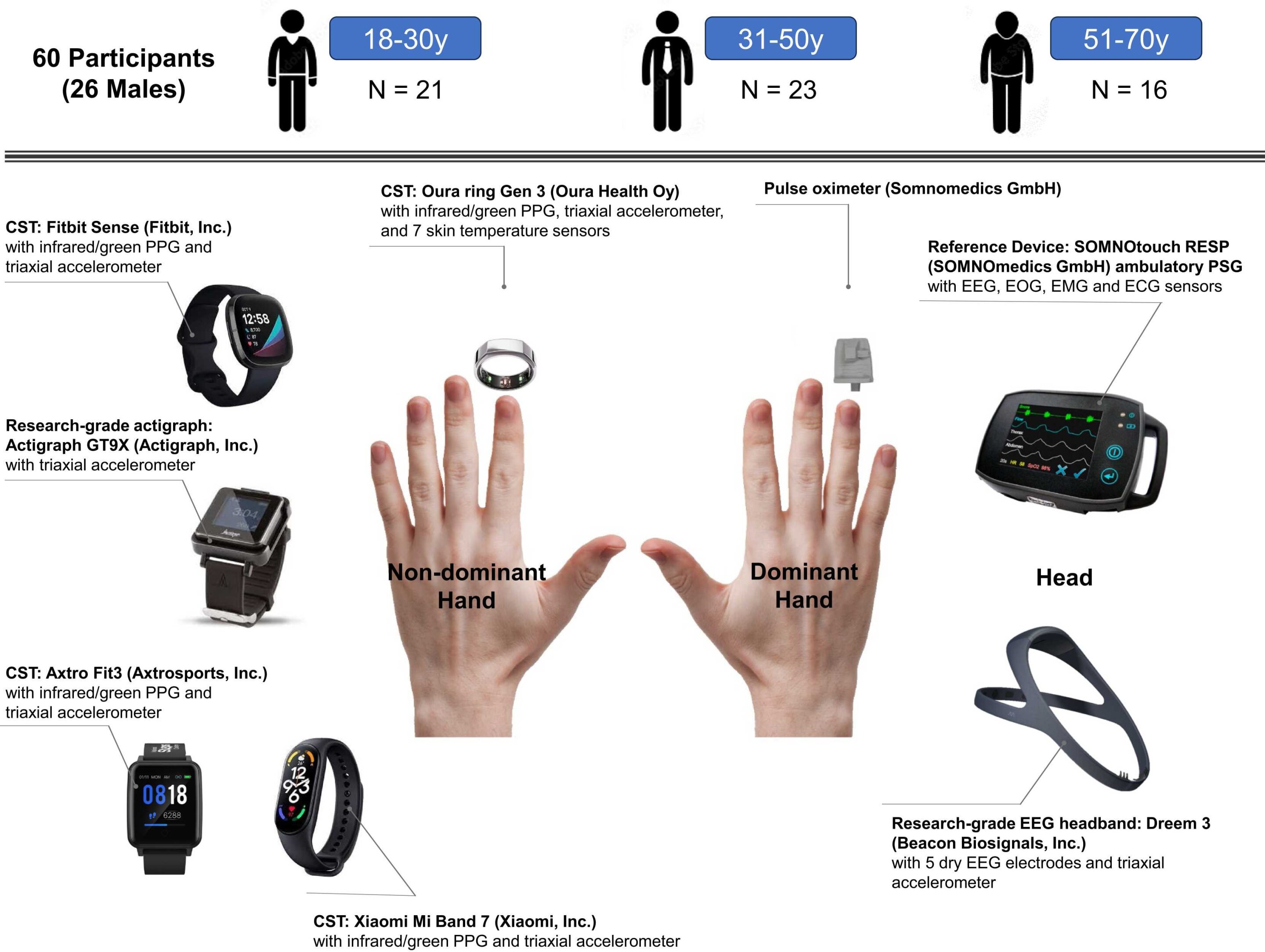
- Wrist-based trackers: Devices like Fitbit and Garmin use accelerometers in the wristband.
- Smartphones: Apps use your phone’s sensors if placed on your bed.
Accelerometers can’t see your brain activity. They only guess sleep based on movement, so their accuracy is limited.
Heart Rate Monitors
Many modern sleep trackers also monitor heart rate. Your heart rate changes during different sleep stages.
- Light sleep: Heart rate is a bit higher.
- Deep sleep: Heart rate drops.
- REM sleep: Heart rate becomes irregular.
Devices use LEDs that shine light through your skin and sensors that measure changes in blood flow. This is called photoplethysmography (PPG).
Breathing Rate And Oxygen Saturation
Some advanced trackers measure breathing rate and oxygen saturation (SpO2). This helps detect issues like sleep apnea.
- Pulse oximeters: Built into some smartwatches and rings.
- Mattress sensors: Some mattresses use pressure sensors to track breathing.
Sound Analysis
A few sleep trackers listen for snoring or other sounds with microphones. This can help spot breathing problems or disturbances.
- Apps: Phone apps may record sounds and analyze patterns.
- Smart speakers: Devices like Google Nest Hub use microphones to measure sleep.
Temperature And Environment Sensors
Some devices track skin temperature, room temperature, humidity, and light levels. These factors affect sleep quality.
- Smart rings: Like Oura ring, measure skin temperature.
- Mattress sensors: Can monitor room environment.
Eeg (electroencephalogram)
The most accurate way to measure sleep is with EEG, which records brain waves. Most consumer sleep trackers do NOT use EEG, but some premium headbands do.
- Medical grade: Used in sleep labs for polysomnography.
- Consumer headbands: Like Muse or Dreem.

How Sleep Trackers Detect Sleep Stages
Sleep has different stages:
- Light sleep: Easy to wake up, body relaxes, heart rate slows.
- Deep sleep: Hard to wake up, body repairs itself.
- REM sleep: Dreaming, brain activity increases.
Sleep trackers try to estimate these stages using movement, heart rate, and sometimes breathing. Here’s how:
- If you’re moving a lot: Probably awake or in light sleep.
- Low movement + slow heart rate: Likely deep sleep.
- Irregular heart rate + little movement: Possible REM sleep.
But without EEG, they can only guess. Studies show that most trackers are good at telling if you’re asleep or awake, but not perfect at identifying sleep stages.
Comparing Sleep Tracker Types
Let’s compare the main types of sleep trackers:
| Type | Placement | Main Sensors | Pros | Cons |
|---|---|---|---|---|
| Wristband | Wrist | Accelerometer, heart rate | Easy to wear, tracks daily activity | May be uncomfortable, limited accuracy |
| Smart ring | Finger | Heart rate, temperature | Small, less noticeable | Expensive, limited features |
| Mattress sensor | Under bed | Pressure, breathing | Non-intrusive, tracks environment | Can miss movement, expensive |
| Headband | Forehead | EEG | Most accurate | Uncomfortable, costly |
| App | Bedside/bed | Motion, sound | Cheap, easy | Very limited, can be inaccurate |
How Sleep Trackers Sync And Display Data
Most sleep trackers sync with your phone or computer using Bluetooth or Wi-Fi. They display your sleep data in graphs and charts. You can see:
- Total sleep time
- Sleep efficiency (percent of time asleep vs. time in bed)
- Sleep stages
- Wake times
- Heart rate patterns
Some apps offer personalized advice based on your data, like reminders to go to bed earlier or suggestions to avoid caffeine.
Example: Fitbit Data Display
Fitbit shows your sleep in a colorful graph. You see:
- Hours slept
- Time spent in each stage
- Comparison with previous nights
- Tips for improving sleep
How Accurate Are Sleep Trackers?
Sleep trackers are helpful, but not perfect. Studies show:
- Wrist trackers are about 78% accurate for total sleep time.
- They are less accurate for sleep stages (sometimes only 50–60%).
- They can miss short wake-ups, or mislabel light sleep as deep sleep.
Medical devices (EEG, polysomnography) are the gold standard. Consumer trackers are good for basic patterns, but not for diagnosing sleep disorders.
Common Accuracy Issues
- Movement confusion: If you stay still but are awake, the tracker may think you’re asleep.
- Stage estimation: Without brainwave data, stages are just guesses.
- Environmental factors: Pets, partners, or noisy rooms can confuse sensors.
Sleep Tracker Features: What Matters Most
If you’re thinking of buying a sleep tracker, consider these important features:
- Comfort: If a device is uncomfortable, you won’t wear it.
- Battery life: Some trackers last days, others only a night.
- Data privacy: Your sleep data is personal. Check how the company protects it.
- App quality: The app should be easy to use and understand.
- Sensor accuracy: More sensors usually mean better data.
- Price: Trackers range from $30 to $300+. Higher price doesn’t always mean better accuracy.
Here’s a quick comparison of popular devices:
| Device | Battery Life | Sleep Stage Tracking | Price (USD) |
|---|---|---|---|
| Fitbit Charge 5 | 7 days | Yes | ~150 |
| Oura Ring | 5-7 days | Yes | ~300 |
| Withings Sleep Mat | Plug-in | Yes | ~100 |
| SleepScore App | N/A | Yes (limited) | ~0-50 |
Practical Insights For Beginners
Many people start with a sleep tracker and expect instant results. But here are two important tips most beginners miss:
- Sleep trackers are best for trends, not single nights. Your sleep changes from day to day. Look at your data over weeks, not just one night. This helps you spot patterns.
- Lifestyle changes matter more than the tracker itself. The tracker can show you how much caffeine, screen time, or late-night eating affects your sleep. Use the data to make small changes. Tracking without action won’t improve your sleep.
Common Mistakes To Avoid
- Ignoring device placement: Wearing a tracker too loose or placing it wrong can ruin accuracy.
- Comparing data with friends: Everyone’s sleep is different. Don’t compare your numbers directly.
- Expecting medical diagnosis: Sleep trackers can’t diagnose insomnia or sleep apnea. See a doctor if you have serious problems.
Real-life Example
Anna bought a Fitbit and started tracking her sleep. She noticed she was getting only 6 hours a night, even though she thought it was 8. By shifting her bedtime and avoiding screens before bed, she improved her sleep to 7.
5 hours. The tracker showed her progress and motivated her to keep better habits.
Sleep Trackers And Health Research
Sleep trackers are not only for personal use. Scientists use them to study sleep in large groups. This helps find links between sleep and diseases like diabetes or heart problems.
One study found people who sleep less than 6 hours are more likely to develop high blood pressure. Another study used sleep trackers to show that shift workers have disturbed sleep patterns.
If you want to see more scientific studies, the Wikipedia Sleep Tracking page is a good place to start.
Do Sleep Trackers Help Improve Sleep?
Sleep trackers can help you:
- Spot bad habits (late bedtime, caffeine)
- Track progress if you’re working on better sleep
- Motivate you to stick to a routine
- Give you a sense of control
But they can’t fix sleep problems by themselves. The best use is to combine tracking with healthy habits:
- Go to bed at the same time every night
- Avoid screens before bed
- Keep your bedroom cool and dark
- Limit caffeine and alcohol

Frequently Asked Questions
How Do Sleep Trackers Know When I’m Asleep?
Most sleep trackers use motion sensors and heart rate monitors to detect when you’re asleep. They look for periods of low movement and changes in heart rate that match typical sleep patterns. Some advanced trackers also use breathing rate or sound.
Are Sleep Trackers Accurate For Sleep Stages?
Sleep trackers can estimate sleep stages (light, deep, REM) but are not 100% accurate. Without EEG (brainwave measurement), they rely on patterns in movement and heart rate, which can only guess your sleep stage.
Can Sleep Trackers Detect Sleep Apnea Or Other Disorders?
Some trackers can spot signs of sleep apnea (like irregular breathing or low oxygen levels), but they cannot diagnose medical conditions. If your tracker shows abnormal patterns, it’s best to consult a doctor.
Do I Need To Wear A Sleep Tracker Every Night?
You don’t have to wear a tracker every night, but regular tracking gives better insights. It’s useful for spotting patterns and seeing how changes in your routine affect sleep.
Will A Sleep Tracker Help Me Sleep Better?
A sleep tracker can help you understand your habits and motivate change, but it won’t fix sleep problems by itself. Combine tracking with healthy sleep practices for the best results.
Understanding how sleep trackers work can help you make smarter choices for your health. Whether you use a wristband, ring, mattress sensor, or app, remember that the device is a tool—not a magic solution. Use your data wisely, pay attention to your body, and focus on healthy habits for better sleep.

