
Swimming is a favorite exercise for people of all ages. It’s easy on the joints, builds endurance, and works almost every muscle in your body. Many swimmers want to track their performance, but it’s not always easy to measure progress in the water. This is where smartwatches come in. These small devices have changed how we measure steps, heart rate, and even sleep. But can smartwatches really track swimming, and how well do they do it?
This article explores the science, technology, and practical tips behind using smartwatches for swimming. You’ll learn which watches work best, what you can expect in terms of accuracy, and how to get the most out of your device—whether you swim for fun or train for competition.
Let’s dive in and see if smartwatches can keep up with you in the pool.
How Do Smartwatches Track Swimming?
Most smartwatches use a mix of motion sensors, gyroscopes, and sometimes heart rate sensors to track movement in the water. They measure arm strokes, detect turns, and estimate distance based on your movements. The watch’s software then uses this data to give you information about your swim.
Water Resistance Ratings
Before you use any smartwatch in the water, check its water resistance rating. Not all watches are made for swimming. Some are just splash-proof, while others are designed for serious swimmers.
The most common rating is 5 ATM (atmospheres), which means the watch can handle water pressure up to 50 meters deep. Some high-end models go up to 10 ATM or even 20 ATM. However, these numbers are not always straightforward. A “50-meter” rating doesn’t mean you can dive 50 meters deep. It means the watch is safe for pool swimming and surface activities but not for diving.
Sensors Used
Smartwatches use several sensors for swim tracking:
- Accelerometer: Detects movement and speed.
- Gyroscope: Measures rotation, which helps count strokes and turns.
- Optical Heart Rate Sensor: Some watches try to measure heart rate underwater, but accuracy can vary.
Some advanced watches use GPS for open-water swimming, but GPS doesn’t work in indoor pools because the signal can’t go through water or the building’s roof.
Swim Tracking Features
A typical swim-friendly smartwatch will track:
- Lap count
- Stroke count
- Distance swum
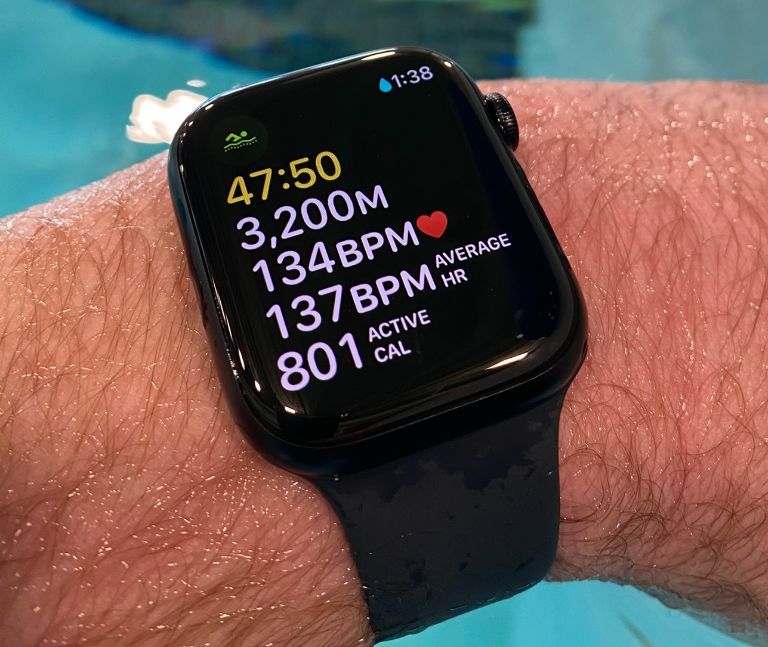
- Swim duration
- Average pace
- Calories burned
- Stroke type (freestyle, backstroke, breaststroke, butterfly)
Some watches can even detect when you do a flip turn and add it to your stats.
Popular Smartwatches For Swimming
Not all smartwatches are equal in the pool. Here are some of the best models for swimming and what sets them apart.
| Model | Water Resistance | Key Swim Features | Price Range |
|---|---|---|---|
| Apple Watch Series 9 | 50m (5 ATM) | Lap counting, stroke detection, pool/open water | High |
| Garmin Swim 2 | 50m (5 ATM) | Advanced metrics, heart rate, GPS | Mid-High |
| Samsung Galaxy Watch 6 | 50m (5 ATM) | Lap counting, basic stats | Mid |
| Fitbit Versa 4 | 50m (5 ATM) | Lap counting, stroke count | Mid |
| Polar Vantage V2 | 100m (10 ATM) | Stroke detection, advanced swim analytics | High |
Apple Watch Series
The Apple Watch Series is one of the most popular choices. It’s reliable in the pool, tracks most metrics, and syncs with the Health app. You can set the pool length, and the watch will count laps, distance, and even rest time. It’s also easy to read underwater.
Garmin Swim 2
Garmin is famous for sports watches. The Swim 2 model is made for swimmers. It tracks heart rate underwater (with fair accuracy), stroke type, SWOLF (a measure of swimming efficiency), and works for both pool and open water. Garmin’s data is also detailed and useful for serious training.
Samsung Galaxy Watch Series
Samsung’s Galaxy Watch models are waterproof and offer basic swim tracking. They count laps, distance, and time, but advanced analytics are limited compared to Garmin or Apple. Still, for casual swimmers, they work well.
Fitbit Versa Series
Fitbit Versa watches are affordable and easy to use. They track basic swim stats like laps and duration. Fitbit’s app is simple, but you won’t get advanced data.
Polar Vantage V2
Polar’s watches are known for sports science. The Vantage V2 is great for triathletes and tracks more detailed swim data, including heart rate, stroke type, and training load. It’s also one of the few with a higher water resistance rating.
Open Water Vs. Pool Swimming
Tracking a swim in a pool is different from open water. Let’s see why.
Pool Swimming
Most smartwatches use accelerometers and gyroscopes to detect when you push off the wall, turn, or do strokes. You usually set the pool length (like 25m or 50m) before you start. The watch counts laps and multiplies by the pool length to get your total distance. Accuracy is usually good, but the watch might miss a lap if you stop in the middle or don’t touch the wall.
Open Water Swimming
Open water is more challenging to track. GPS is used to measure your path, distance, and speed. However, GPS signals can be weak underwater. Most watches record your location when your wrist comes out of the water during each stroke.
This can lead to some errors, especially in rough water or if you swim with a style that keeps your arm underwater.
Comparison: Pool Vs. Open Water Tracking
| Feature | Pool Swimming | Open Water Swimming |
|---|---|---|
| Distance Accuracy | High (if pool length is set correctly) | Medium (depends on GPS signal) |
| Lap Counting | Yes, automatic | No (distance only) |
| Stroke Type Detection | Yes | Rarely |
| Heart Rate Monitoring | Variable accuracy | Variable accuracy |
What Data Can You Expect?
A good swimming smartwatch will give you more than just time and distance. Here’s what you can expect:
- Lap count: The number of laps completed.
- Distance: Total meters or yards swum.
- Stroke count: Number of strokes per lap.
- Stroke type: Many watches can tell if you’re doing freestyle, backstroke, breaststroke, or butterfly.
- Pace: How fast you swim each lap or 100 meters.
- SWOLF: This score combines stroke count and time to measure efficiency (lower is better).
- Calories burned: An estimate, based on your weight, age, and swim effort.
- Heart rate: Some watches try to measure this, but it’s less accurate in water.
Understanding Swolf
SWOLF stands for “Swim Golf.” It adds your strokes per lap to the time (in seconds) it takes to swim that lap. For example, if you take 20 strokes in 30 seconds, your SWOLF is 50. The goal is a lower SWOLF, which means you swim faster with fewer strokes.

How Accurate Are Smartwatches In The Pool?
Accuracy is a top concern for swimmers. Most modern smartwatches do a good job, but they are not perfect.
Lap And Distance Tracking
In pools, if you set the correct pool length, most watches are accurate to within 1 lap over a 40-lap swim. However, short breaks, missing a wall push, or sudden stops can confuse the watch.
Stroke Detection
Watches are good at detecting freestyle and backstroke but may get confused with butterfly or breaststroke, especially if your form changes. If you switch strokes mid-lap, the watch may mislabel the lap.
Heart Rate
Heart rate tracking underwater is a challenge. Water between your skin and the sensor can block light used for optical heart rate. Some watches, like the Garmin Swim 2, use improved algorithms, but chest straps (when compatible) are more accurate.
Open Water Gps
GPS is less precise in open water. If you swim in a straight line and your arm comes out of the water often, results are better. If you zig-zag or swim with your wrist underwater, the watch may miss parts of your route.
Common Problems And How To Fix Them
Even the best smartwatches have trouble in the water. Here are some common problems and tips to improve accuracy.
Missed Laps
If your watch misses laps:
- Make sure to push off the wall firmly each turn.
- Avoid stopping in the middle of the pool.
- Set the correct pool length before starting.
Wrong Stroke Detection
To help your watch detect strokes:
- Keep your technique consistent.
- Don’t switch strokes mid-lap.
- Practice strong, clear movements.
Heart Rate Errors
For better heart rate data:
- Make sure the watch is snug but comfortable.
- Rinse the sensor area after swimming to remove chlorine or salt.
- Consider a chest strap if your watch supports it.
Foggy Or Wet Screen
Some watches have a “water lock” mode that locks the screen so water can’t activate it by mistake. Turn this on before swimming.
Battery Life
Swimming can use more battery than running or walking, especially with GPS on. Make sure your watch is charged before long swims.
How To Get The Most From Your Swimming Smartwatch
To get the best results, use these practical tips:
- Choose the right watch: Pick a model with a high water resistance rating and good swim tracking reviews.
- Set pool length: Always enter the correct pool length before starting your workout.
- Wear it tightly: The watch should be snug to avoid movement but not so tight it stops blood flow.
- Rinse after swimming: Chlorine and saltwater can damage sensors. Rinse with fresh water after every swim.
- Sync data: Upload your swims to your phone or computer to see trends and progress.
- Learn from your data: Look at your SWOLF, pace, and stroke count to find areas to improve.
Two Overlooked Insights
- Sensor Cleaning Is Crucial: Even a thin film of sunscreen or pool chemicals can reduce sensor accuracy. Clean your watch face and sensors gently after every swim.
- Check for Software Updates: Brands often release updates that improve swim tracking. Regularly update your watch’s firmware for better accuracy and new features.
Who Should Use A Smartwatch For Swimming?
Anyone who swims regularly can benefit from tracking. Here’s how different swimmers use smartwatches:
- Beginners: Track progress, count laps, and stay motivated.
- Fitness swimmers: Watch trends in pace and distance to improve endurance.
- Competitive swimmers: Analyze SWOLF, stroke count, and split times for small improvements.
- Triathletes: Use open water GPS for training and races.
- Casual swimmers: Make sure you’re getting a good workout and not losing count of laps.
What To Look For When Choosing A Swim-ready Smartwatch
Not all watches are created equal. Here’s what matters most:
Water Resistance
Aim for at least 5 ATM (50m) for pool swimming. If you do open water or triathlons, look for 10 ATM or higher.
Swim Tracking Features
Check if the watch offers:
- Lap and distance tracking
- Stroke type detection
- SWOLF and other advanced metrics
- Open water GPS (if needed)
- Heart rate tracking (if important to you)
Ease Of Use
You don’t want to struggle with menus before jumping in the pool. Look for clear controls and a water lock mode.
App Support
A good app makes it easy to see your data, set goals, and share with coaches or friends.
Battery Life
Longer battery life means fewer interruptions, especially for open water swimming.
Durability
Choose a watch with a tough build, scratch-resistant glass, and a secure strap.
Real-world Comparison
| Feature | Apple Watch Series 9 | Garmin Swim 2 | Fitbit Versa 4 |
|---|---|---|---|
| Water Resistance | 5 ATM | 5 ATM | 5 ATM |
| Stroke Detection | Yes | Yes | Basic |
| Open Water GPS | Yes | Yes | No |
| SWOLF Score | Yes | Yes | No |
| Heart Rate in Water | Moderate | Better | Limited |
| Battery Life | 1-2 days | Up to 7 days | 6+ days |
How Smartwatches Help Swimmers Improve
Tracking your swimming gives you more than just numbers. It’s about turning data into action.
- Motivation: Watching your lap count rise or seeing faster times can keep you pushing forward.
- Technique Feedback: Tracking stroke count and SWOLF helps you swim more efficiently.
- Goal Setting: Set targets for laps, distance, or pace and use the watch to measure results.
- Recovery: Watching heart rate and rest times helps avoid overtraining.
Example: Improving Your Swolf
Suppose your SWOLF is 55. You focus on stretching your arm and gliding more. Over a month, it drops to 50. This means you’re swimming more efficiently—fewer strokes, same (or faster) time.
The Social Side
Most smartwatch apps let you share results with friends or coaches. Some even have leaderboards for friendly competition.
Are There Any Downsides?
No device is perfect. Here are a few things to keep in mind:
- Not 100% accurate: Expect small errors in lap count or distance, especially if your technique changes.
- Heart rate is tricky: Most wrist-based sensors are less accurate in water.
- Screen readability: Not all watches are easy to read underwater or in bright sun.
- Battery life: GPS and swim tracking drain the battery faster.
- Price: Advanced swim features often cost more.
The Future Of Swim Tracking
Smartwatch technology is improving fast. Future models may add:
- Better heart rate sensors designed for water use.
- AI-powered stroke recognition for more accurate data.
- Longer battery life for triathlons and long swims.
- More swim-specific coaching built into watch apps.
Some brands are already experimenting with ECG sensors and blood oxygen tracking in water.
Real-world Stories
Many swimmers share their experiences online. For example, a triathlete using the Garmin Swim 2 found their open water distance tracking was within 3% of the official race measurement. A casual pool swimmer using the Apple Watch missed only one lap out of 40.
These small errors are normal and usually don’t affect training.
Tips For Beginners
If you’re new to swim tracking:
- Start with short swims to learn how your watch works.
- Review your data after each swim to spot mistakes.
- Use the watch as a guide, not the only truth. Listen to your body, too.
- Read the manual—some features are hidden or need special setup.
When Not To Use A Smartwatch
Avoid using your smartwatch if:
- The water is hotter than 40°C (like in hot tubs), which can damage seals.
- The watch’s water resistance rating is below 5 ATM.
- You notice water inside the display—this means the seal is broken.
- You’re doing deep diving (most watches are not rated for this).
The Bottom Line
Smartwatches can track swimming, and they do it surprisingly well. From counting laps to measuring your pace, these devices are a helpful tool for swimmers of all levels. They’re not perfect, but with the right setup and expectations, you can get accurate, useful data to improve your performance in the water.
Technology is getting better, so the future of swim tracking looks bright.
For more details on water resistance standards, you can read the official explanation from the Wikipedia page on water resistance.

Frequently Asked Questions
Can I Use Any Smartwatch For Swimming?
No, only watches with a water resistance rating of at least 5 ATM (50 meters) are safe for pool swimming. Check your manual or product page before getting it wet.
How Accurate Is Heart Rate Tracking While Swimming?
Heart rate tracking is less accurate in water because water can block the sensor’s light. Some watches do better than others, but a chest strap is usually more reliable if your watch supports it.
Do Smartwatches Work In Saltwater Or Only Pools?
Most swim-ready smartwatches work in both saltwater and pools, but always rinse your watch with fresh water after swimming in the ocean to avoid corrosion.
What Is Swolf, And Why Does It Matter?
SWOLF is a swimming efficiency score. It adds your strokes per lap to the time it takes to swim that lap. A lower score means you’re swimming more efficiently.
Can Smartwatches Track Underwater Distance In Open Water?
Smartwatches use GPS for open water distance, but GPS only works when your arm comes out of the water. This means distance is estimated and can be a bit off, especially if you swim with your arm mostly underwater.

