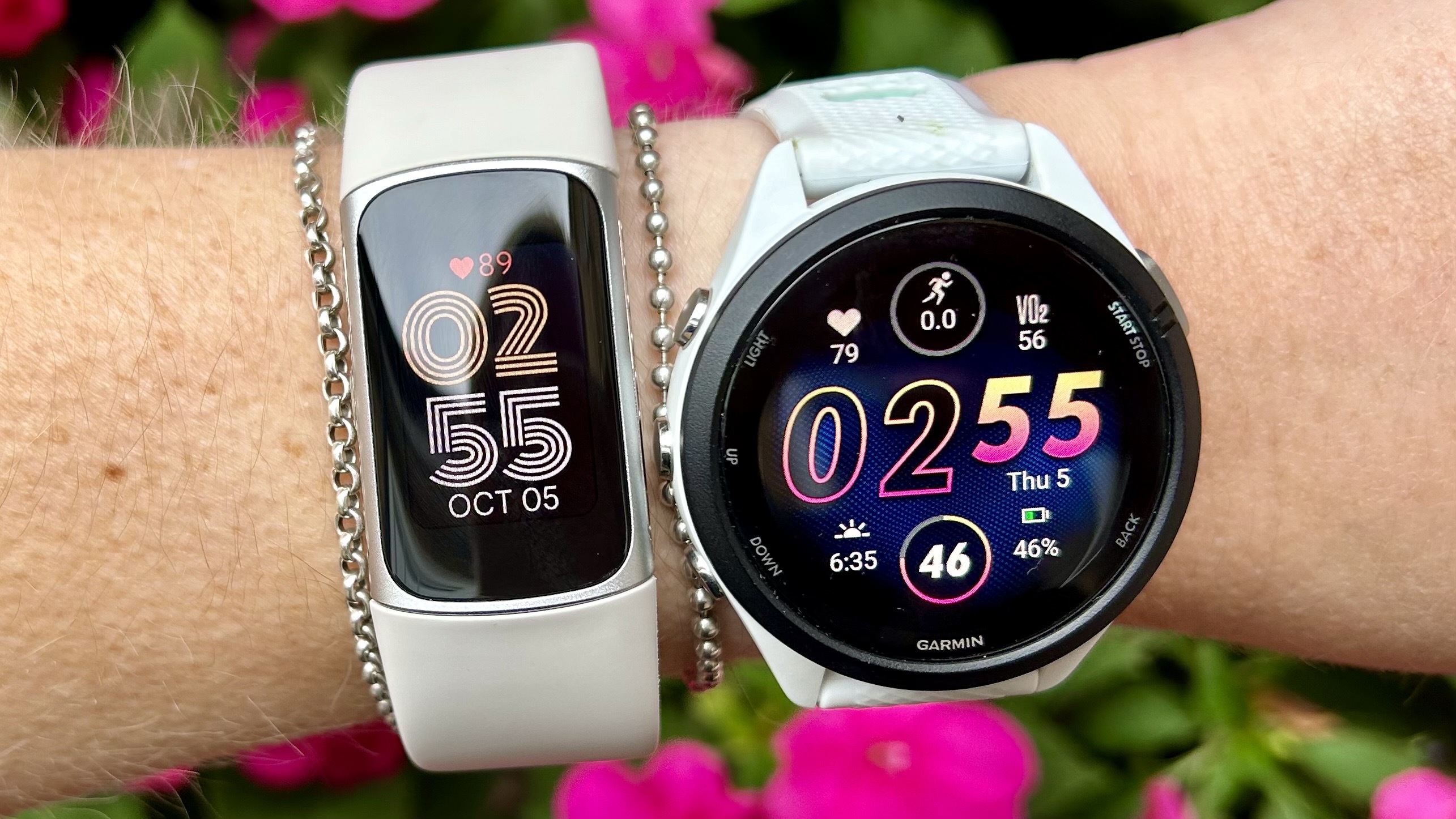
What makes a smartwatch different from a fitness tracker? Many people wonder about this when they want to buy a wearable device. Both smartwatches and fitness trackers are worn on the wrist, and both can measure your steps, calories, and sleep.
But beyond the surface, there are some important differences. These differences can affect your experience, your health goals, and even your daily life.
Choosing between a smartwatch and a fitness tracker is not always simple. The right choice depends on your needs, budget, and lifestyle. Some people need advanced features like answering calls, controlling music, or using GPS without a phone. Others only want to track steps and improve their fitness.
Understanding the real differences will save you money and frustration.
This guide explains every important aspect of smartwatches and fitness trackers. You’ll discover how they work, what features matter, and which device suits different users. By the end, you’ll know exactly what sets these two devices apart—and which one is truly right for you.
What Is A Smartwatch?
A smartwatch is like a mini computer for your wrist. It connects to your smartphone and offers many of the same features. Most smartwatches have a touch screen, apps, and sometimes even their own mobile internet connection (cellular).
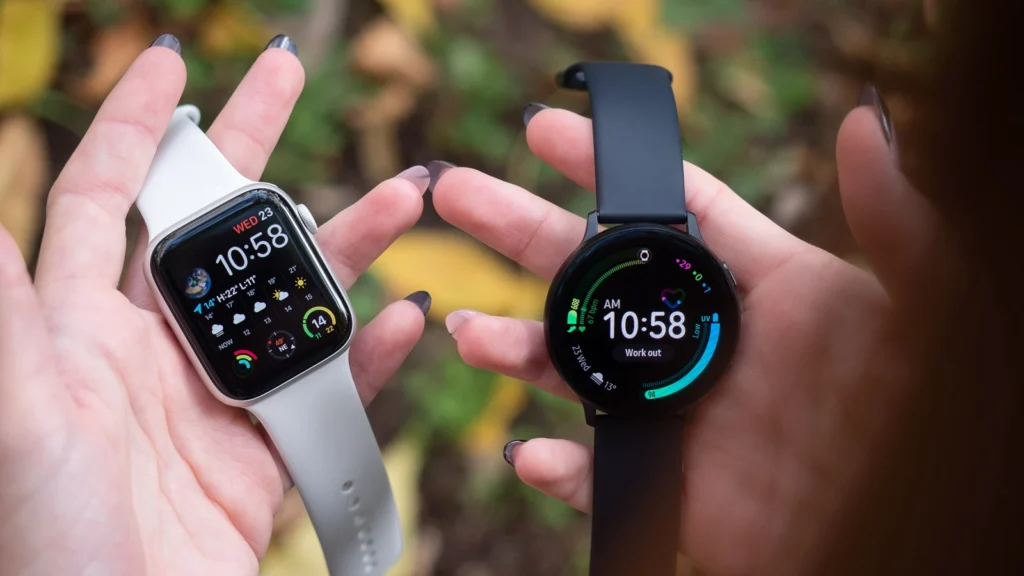
You can receive notifications, answer calls, reply to texts, and even use voice assistants like Siri or Google Assistant. Popular smartwatches include the Apple Watch, Samsung Galaxy Watch, and Garmin Venu.
Smartwatches usually have a colorful, bright display. You can customize the watch face, download third-party apps, and control smart home devices. Many smartwatches also have built-in GPS, music storage, and even payment systems like Apple Pay or Google Pay.
Main Features Of Smartwatches
- Notifications: Get calls, texts, emails, and app alerts right on your wrist.
- Apps: Download and use apps for weather, news, productivity, or games.
- Music Control: Play, pause, or skip songs on your phone or stored music.
- Voice Assistants: Use your voice to set reminders, send messages, or get directions.
- GPS Navigation: Track runs, walks, or bike rides without your phone.
- Contactless Payments: Pay for items using your watch.
- Health & Fitness Tracking: Count steps, monitor heart rate, track sleep, and sometimes measure blood oxygen or ECG.
- Customizable Faces: Change the watch face to match your style or mood.
Some smartwatches can even make emergency calls or detect falls. The focus is on being a multi-purpose device, not just fitness.
Who Uses Smartwatches?
Smartwatches are best for people who want more than just fitness data. If you like technology, want to stay connected, or need productivity tools on your wrist, a smartwatch is ideal. They’re popular among busy professionals, tech fans, and people who want everything in one device.
What Is A Fitness Tracker?
A fitness tracker is designed mainly for health and activity tracking. It’s usually smaller and lighter than a smartwatch. The main goal is to motivate you to move more, sleep better, and improve your overall health.
Fitness trackers often have a simple display, or sometimes just LED lights. You won’t find many apps or advanced features. Instead, they focus on measuring steps, calories, sleep, and sometimes heart rate. Examples include the Fitbit Charge, Xiaomi Mi Band, and Garmin Vivosmart.
Main Features Of Fitness Trackers
- Step Counting: Tracks your daily steps and activity minutes.
- Calories Burned: Estimates how many calories you use each day.
- Sleep Tracking: Measures your sleep duration and quality.
- Heart Rate Monitoring: Checks your pulse throughout the day.
- Simple Notifications: Some can show calls or texts, but usually not as advanced as smartwatches.
- Exercise Modes: Track running, cycling, swimming, or other activities.
- Water Resistance: Many are safe to wear while swimming or showering.
- Long Battery Life: Can last from 5 days to several weeks on a single charge.
Fitness trackers are usually controlled through a smartphone app. Most don’t have a touch screen; they may use buttons or taps to switch between modes.
Who Uses Fitness Trackers?
Fitness trackers are great for people who want basic health data. If you’re new to fitness, want motivation to move more, or just need a simple tool to improve your health, these devices are a good choice. They’re popular among beginners, older adults, and anyone who prefers simplicity over lots of features.
Core Differences: Smartwatch Vs. Fitness Tracker
While both devices can track steps and monitor your health, there are many differences. Let’s break down the most important areas where smartwatches and fitness trackers are not the same.
1. Functionality
Smartwatches are multi-purpose. They do much more than just track fitness. You can use apps, answer calls, check notifications, and even pay for coffee. They aim to replace or extend your smartphone’s features.
Fitness trackers are focused on health data. They track your movement, sleep, and sometimes heart rate or stress. They rarely have apps and usually can’t answer calls or support voice assistants.
Insight: Many beginners assume fitness trackers can do everything a smartwatch does, but most do not. Advanced functions like answering texts or using GPS maps are usually only found in smartwatches.
2. Design And Display
Smartwatches usually have large, colorful displays. The screens are often round or square and show lots of information. You can customize the watch face or change straps.
Fitness trackers have simple, slim designs. The screens are smaller, sometimes just a line of text or icons. They feel lighter and less noticeable. Some trackers look like a bracelet, while others have a tiny screen.
Non-obvious insight: If you have small wrists or dislike wearing bulky devices, a fitness tracker often feels more comfortable.
3. Battery Life
Smartwatches often need to be charged every 1 to 3 days. The bright screen, GPS, and advanced features use a lot of power. Some newer models may last up to 5 days if you limit features.
Fitness trackers can last 5 to 14 days, and some simple models last over 20 days. Since they have fewer features and simpler displays, their batteries last longer.
This is a key point if you dislike frequent charging or travel often.
4. Price
Smartwatches are more expensive. Entry-level models start around $150–$200, while premium smartwatches can cost $400–$800 or more. You’re paying for advanced features, brand, and design.
Fitness trackers are much cheaper. You can find reliable models for $30–$100. Even advanced trackers rarely cost more than $150.
Buyer mistake: Many people pay for a smartwatch when a fitness tracker would have met their needs for much less money.
5. Health And Activity Tracking
Both devices can count steps and monitor your heart rate. However, smartwatches often have more sensors and advanced health features. For example, some smartwatches can record an ECG (electrocardiogram), measure blood oxygen, or track stress.
Fitness trackers focus on basic data: steps, calories, heart rate, and sleep. Some can measure blood oxygen or stress, but usually in a simpler way.
Smartwatches also have more exercise modes and can store more data. Some can even track your location with GPS, which is helpful for runners or cyclists.
6. App Ecosystem
Smartwatches support a wide range of apps. You can download weather, music, finance, or even games. This makes the device more flexible and powerful.
Fitness trackers rarely support apps. Most of the tracking is done through a companion app on your phone, not the device itself.
Example: On an Apple Watch, you can install Uber or Spotify. On a Fitbit tracker, you can only use the default tracking functions.
7. Notifications And Communication
Smartwatches let you read and respond to texts, answer calls, and get app alerts. Some models have microphones and speakers for phone calls or voice replies.
Fitness trackers may show a simple notification for calls or messages, but you usually can’t reply or answer from the device.
8. Gps And Connectivity
Many smartwatches have built-in GPS, Wi-Fi, and sometimes even LTE/4G. You can track your runs, get directions, or use maps without your phone.
Fitness trackers usually rely on your phone’s GPS. Some newer models have built-in GPS, but it’s less common and usually less accurate.
Real-world impact: If you want to run without carrying your phone, a smartwatch with GPS is the better choice.
9. Customization
Smartwatches allow you to change the watch face, download new apps, and swap bands easily. You can make the device fit your style or needs.
Fitness trackers have fewer customization options. Some let you change the band, but you can’t change the screen display or download apps.
10. Water Resistance
Both types of devices are often water resistant. However, fitness trackers are more likely to be designed for swimming or showering. Most smartwatches can handle splashes or rain, but not all are made for swimming.
11. Compatibility
Smartwatches sometimes work best with certain phones. For example, the Apple Watch only works with iPhones. Samsung and Wear OS watches work with both Android and iOS, but with more features on Android.
Fitness trackers usually work with both Android and iOS using a companion app. They are more flexible if you plan to switch phones in the future.
12. Target Audience
Smartwatches target people who want all-in-one convenience—technology fans, professionals, or those who want to stay connected without checking their phones all the time.
Fitness trackers are aimed at people who want simple health tracking, motivation to move, or just a lightweight, affordable wearable.
Feature Comparison: At A Glance
To help you see the differences quickly, here is a side-by-side comparison:
| Feature | Smartwatch | Fitness Tracker |
|---|---|---|
| Display | Large, color, touch screen | Small, simple, sometimes no screen |
| Battery Life | 1–3 days (up to 5 days) | 5–14 days (up to 20+ days) |
| Notifications | Read and reply, answer calls | Basic alerts only, no reply |
| Fitness Tracking | Advanced (GPS, ECG, SpO2, stress) | Basic (steps, sleep, heart rate) |
| Apps | Downloadable from app store | Usually none, just built-in |
| Music | Control and store music | Limited or none |
| Price Range | $150–$800+ | $30–$150 |
| Customization | High (faces, apps, bands) | Low (bands only, sometimes) |
| Water Resistance | Good, but not always for swimming | Usually swim-proof |
| Compatibility | May be limited (e.g., Apple Watch needs iPhone) | Works with most phones |
Use Case Scenarios
Choosing between a smartwatch and a fitness tracker depends on your daily life. Let’s look at some real-world examples.
Scenario 1: Busy Professional
You get many emails, texts, and calls during the day. You want to check notifications without always pulling out your phone. You need calendar reminders, and sometimes pay for coffee on the go.
Best choice: Smartwatch. It keeps you connected and organized.
Scenario 2: New To Fitness
You want to walk more and track your sleep. You don’t care about apps or fancy screens. You want something simple, light, and cheap.
Best choice: Fitness tracker. It motivates you without distractions.
Scenario 3: Serious Runner
You run several times per week and want to track distance, route, and heart rate. You don’t like carrying your phone.
Best choice: Smartwatch with built-in GPS. It can track runs, show maps, and store music.
Scenario 4: Older Adult
You want to monitor steps and sleep. You prefer a device that is easy to use and has a long battery life.
Best choice: Fitness tracker. It’s simple and lasts many days without charging.
Scenario 5: Student
You want notifications for texts and calls, but also want to track your daily activity. You’re on a budget.
Best choice: Some advanced fitness trackers now offer basic notifications. If you want more, consider an entry-level smartwatch.
Pros And Cons Of Smartwatches
Smartwatches offer many advantages, but they are not for everyone. Here are the main points to consider.
Advantages
- All-in-one device: Combines health, notifications, and apps in one place.
- Customizable: Change faces, bands, and add apps to suit your needs.
- Advanced health tracking: Some models offer ECG, blood oxygen, or stress tracking.
- Contactless payments: Pay using your wrist, no wallet needed.
- Standalone features: Some can make calls or use GPS without a phone.
Disadvantages
- Short battery life: Needs charging every 1–3 days.
- Expensive: Costs more than fitness trackers.
- Learning curve: More features can make them harder to use.
- Compatibility issues: Some only work with certain phones.
Pros And Cons Of Fitness Trackers
Fitness trackers are focused on health, and their simplicity is both a benefit and a drawback.
Advantages
- Long battery life: Charge once a week or less.
- Lightweight and comfortable: Easy to wear all day and night.
- Affordable: Costs less than most smartwatches.
- Easy to use: Simple controls, great for beginners.
Disadvantages
- Limited features: Few or no apps, basic notifications.
- Less stylish: Fewer design choices.
- Basic health tracking: Advanced features like ECG or GPS are rare.
- Dependent on phone: For notifications, GPS, and more.
Data And Trends
The market for wearables is growing fast. According to Statista, the global smartwatch market was valued at over $18 billion in 2023, while the fitness tracker segment reached $6.5 billion. Smartwatches are becoming more popular because they offer more features, but fitness trackers still sell well due to their lower price and simplicity.
A study by the Pew Research Center found that 21% of Americans wear a smartwatch or fitness tracker. Among these, young adults and health-focused people are the most common users.
Interesting fact: Many people start with a fitness tracker and “upgrade” to a smartwatch later, as their needs change.
How To Choose: Key Decision Factors
If you’re still unsure, here are the main points to help you decide:
- Your main goal: Do you want health data or full smartphone features?
- Budget: How much can you spend comfortably?
- Battery life needs: Do you want to charge often or rarely?
- Design preference: Do you want a big, colorful screen or a slim, simple band?
- Phone compatibility: Will your device work with your phone?
- Advanced features: Do you need GPS, ECG, or payments?
- Comfort: Will you wear it all day and night?
- Style: Do you want to change faces or bands?
Common Mistakes To Avoid
- Overpaying for features you won’t use: Many buy expensive smartwatches for step tracking only.
- Ignoring compatibility: Some smartwatches work poorly with certain phones.
- Forgetting about battery life: A device that’s always dead is no help.
- Choosing style over comfort: Bulky devices may be uncomfortable for long-term wear.
- Assuming all trackers are waterproof: Not all devices can be used for swimming.
Real-world Examples
Here are some popular devices in each category:
Smartwatches:
- Apple Watch Series 9
- Samsung Galaxy Watch 6
- Garmin Venu 2
Fitness Trackers:
- Fitbit Charge 5
- Xiaomi Mi Band 8
- Garmin Vivosmart 5
Each of these has different strengths. For example, the Apple Watch is great for iPhone users who want many apps and features. The Fitbit Charge is excellent for step and sleep tracking, with long battery life.
Future Trends
Wearables are getting smarter. Some future features include:
- Blood pressure monitoring: Already in some smartwatches.
- Continuous glucose monitoring: For people with diabetes.
- Better stress tracking: Using more sensors and AI.
- Longer battery life: New technology will make charging less frequent.
- More health-focused apps: Both device types will offer better data and insights.
As technology improves, the line between smartwatches and fitness trackers may blur. Some fitness trackers are already adding more features, while smartwatches are becoming lighter and more affordable.
Summary Table: Which Should You Choose?
To help you decide, here’s a quick summary:
| Need/Preference | Best Choice |
|---|---|
| Basic health tracking, long battery, low price | Fitness tracker |
| All-in-one device, notifications, apps | Smartwatch |
| Advanced health data (ECG, SpO2) | Smartwatch |
| Lightweight, easy to use | Fitness tracker |
| Standalone GPS, music, payments | Smartwatch |
| Swimming or showering often | Fitness tracker |
| Customizable style | Smartwatch |
Frequently Asked Questions
What Is The Main Difference Between A Smartwatch And A Fitness Tracker?
The main difference is functionality. A smartwatch offers many features like apps, notifications, and payments, making it a mini-computer for your wrist. A fitness tracker focuses on simple health data, such as steps and sleep.
Can A Fitness Tracker Replace A Smartwatch?
For basic health tracking, yes. If you want calls, apps, or advanced features, a fitness tracker cannot replace a smartwatch.
Do Smartwatches And Fitness Trackers Both Need A Smartphone?
Most do, especially for syncing data and notifications. Some smartwatches can work alone with built-in cellular, but most features still require a phone nearby.
Are Fitness Trackers More Accurate Than Smartwatches?
Accuracy depends on the brand and sensors. Generally, both are similar for steps and heart rate, but smartwatches may offer more advanced health sensors. Always check reviews for the specific device.
Where Can I Learn More About Health Tracking Technology?
You can read more about wearable technology and health tracking on the Wikipedia Wearable Technology page for detailed information.
Smartwatches and fitness trackers both have their place. The best choice is the one that fits your needs, budget, and lifestyle. Take time to consider what features you really want, and you’ll be happy with your decision for years to come.