
When you start learning about fitness supplements, you will quickly hear about BCAA and EAA. Both of these are types of amino acid supplements. Many people use them to support muscle growth, help with exercise recovery, or reduce muscle soreness. But what are they exactly? And what is the real difference between BCAA and EAA? Understanding these differences can help you make better choices for your workouts, diet, and health goals.
Let’s dive deep into what BCAA and EAA really are, how they work in your body, and why knowing the difference matters.
What Are Amino Acids?
To understand BCAA and EAA, you first need to know about amino acids. Amino acids are the building blocks of protein. Your body uses them to build muscles, repair tissues, make hormones, and support many other important functions.
There are 20 different amino acids. Nine of these are called essential amino acids. This means your body cannot make them by itself. You must get them from food or supplements. The other 11 are called non-essential amino acids because your body can produce them on its own.
The nine essential amino acids are:
- Histidine
- Isoleucine
- Leucine
- Lysine
- Methionine
- Phenylalanine
- Threonine
- Tryptophan
- Valine
Among these nine, three are very special. They are called branched-chain amino acids (BCAA).
What Are Bcaa?
BCAA stands for branched-chain amino acids. The “branched-chain” part comes from their chemical structure. There are three BCAAs:
- Leucine
- Isoleucine
- Valine
These three make up about 35% of the essential amino acids in muscle protein. They are important for muscle energy and growth.
How Do Bcaa Work?
BCAAs are unique because your muscles can use them directly for energy, especially during exercise. Most other amino acids are processed first by your liver. BCAAs can skip this step and go straight to your muscles.
Of the three, leucine is the most powerful for starting muscle protein synthesis. This is the process your body uses to build and repair muscle.
Common Benefits Of Bcaa
People often use BCAA supplements for:
- Muscle growth: Leucine helps start the muscle-building process.
- Reducing muscle soreness: Some studies show BCAA may help you feel less sore after hard exercise.
- Reducing exercise fatigue: BCAA can sometimes help you feel less tired during long workouts.
Food Sources Of Bcaa
You can get BCAA from animal and plant foods, especially:
- Meat, poultry, and fish
- Eggs
- Dairy products
- Soy protein
- Beans and legumes
- Nuts and seeds
What Are Eaa?
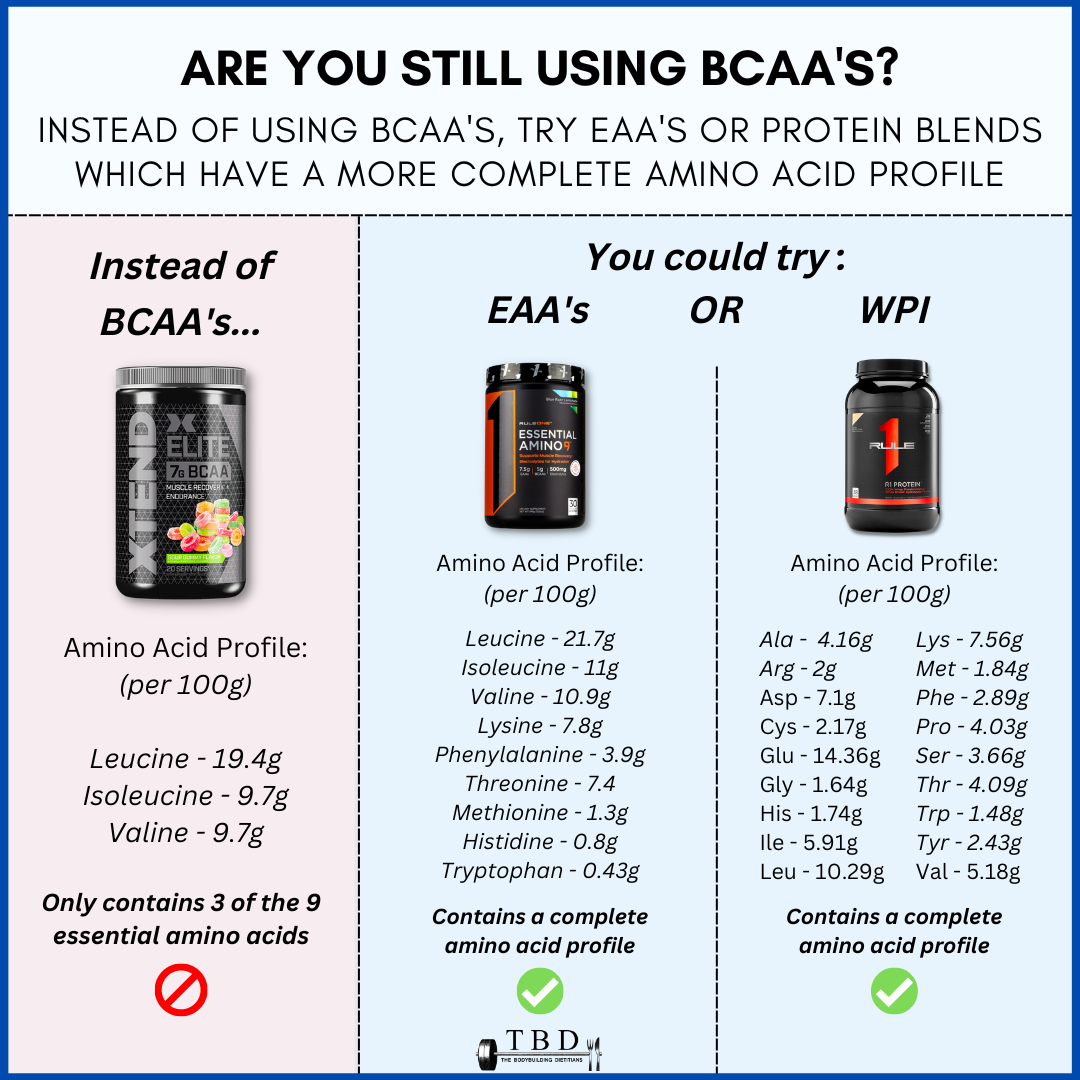
EAA stands for essential amino acids. This group includes all nine amino acids your body cannot make. That means BCAA are part of EAA, but EAA includes more than just BCAA.
The nine essential amino acids are:
- Leucine
- Isoleucine
- Valine
- Lysine
- Methionine
- Phenylalanine
- Threonine
- Tryptophan
- Histidine
How Do Eaa Work?
EAA work together to help your body build protein, repair tissues, and keep your muscles healthy. While BCAA (especially leucine) start the muscle-building process, you need all nine EAA to finish it. If just one is missing, your body cannot build new proteins.
Benefits Of Eaa
EAA supplements may help with:
- Complete muscle growth: They provide all amino acids needed for new muscle.
- Better recovery: EAA help repair muscles after exercise.
- Improved overall health: Essential for making enzymes, hormones, and supporting your immune system.
Food Sources Of Eaa
All complete proteins contain EAA. Good sources include:
- Meat, poultry, and fish
- Eggs
- Milk, cheese, and yogurt
- Soy products (tofu, tempeh)
- Quinoa
- Buckwheat
Most plant proteins do not have all EAA in large amounts, but eating a variety can cover your needs.
Key Differences Between Bcaa And Eaa
At first, BCAA and EAA might sound similar because both are amino acids and both are used for muscle health. However, there are important differences. Understanding these can help you choose the right supplement.
Here is a direct comparison:
| Feature | BCAA | EAA |
|---|---|---|
| Number of Amino Acids | 3 | 9 |
| Includes Leucine | Yes | Yes |
| Supports Muscle Growth | Yes, starts process | Yes, completes process |
| Energy During Exercise | Yes | Somewhat |
| Can Be Used Alone? | Yes, but limited | Yes, more complete |
| Best For | Quick energy, start muscle repair | Full muscle repair, growth, health |
1. Amino Acid Content
- BCAA has only three amino acids: Leucine, isoleucine, and valine.
- EAA has all nine essential amino acids, including the three BCAAs.
2. Muscle Protein Synthesis
- BCAA (especially leucine) triggers the start of muscle protein synthesis. But if you only take BCAA, your body cannot finish building new muscle protein unless it has the other six essential amino acids.
- EAA provides all the amino acids needed to build and repair muscle fully.
3. Effectiveness For Muscle Growth
- BCAA supplements can help reduce muscle breakdown, but the effect on muscle growth is limited if you do not have enough of the other essential amino acids from your diet.
- EAA supplements are more effective for muscle growth because they give your body everything it needs, not just the trigger (leucine).
4. Energy During Exercise
- BCAA can be used by your muscles directly for energy, especially during long or intense exercise.
- EAA also support energy, but BCAA are more efficient in this role.
5. Use Cases
- BCAA are popular for people who exercise in a fasted state or do long endurance workouts.
- EAA are useful for anyone wanting full muscle recovery, especially if their diet is low in protein.
Detailed Benefits And Limitations
Let’s look closer at the specific benefits and the common limitations of both BCAA and EAA.
Bcaa: Benefits And Limitations
Benefits:
- Rapid energy: Muscles can use BCAA quickly.
- Reduced muscle soreness: Some studies found less soreness after intense workouts.
- Less muscle breakdown: Helpful during calorie cutting or fasting.
Limitations:
- Incomplete muscle growth: Without all EAA, new muscle protein cannot be fully built.
- May not improve performance: Some research shows little effect on overall workout performance.
- Depends on diet: If you already eat enough protein, BCAA supplements may add little value.
Non-obvious insight: Many beginners think BCAA alone is enough for muscle growth. In reality, if your diet lacks other essential amino acids, BCAA cannot build new muscle by themselves.
Eaa: Benefits And Limitations
Benefits:
- Complete protein synthesis: All EAA are present to build new muscle.
- Better for low-protein diets: If you eat less protein, EAA supplements are more helpful than BCAA.
- Supports many functions: EAA are needed for enzymes, brain function, and hormone production.
Limitations:
- Cost: EAA supplements are often more expensive than BCAA.
- Taste: EAA powders often taste bitter and may be harder to mix.
- Possible digestive discomfort: Some people get upset stomachs with high doses.
Non-obvious insight: Even if you take EAA supplements, you still need enough calories and rest for optimal muscle growth. EAA are not a shortcut if your overall diet is poor.
When Should You Use Bcaa Or Eaa?
This is a common question for people who want to get the most out of their supplements. The answer depends on your diet, your goals, and your training style.
When Bcaa May Be Helpful
- Training in a fasted state: If you work out without eating, BCAA can protect muscle from breaking down.
- During long endurance exercise: For example, running or cycling for more than 90 minutes.
- Low-calorie diets: BCAA can help reduce muscle loss when cutting weight.
When Eaa Are Better
- Building muscle: EAA are more complete and support full muscle growth.
- If your protein intake is low: Vegetarians, vegans, or people on restricted diets may benefit more from EAA.
- Recovery after hard workouts: For the best repair and growth, EAA provide more support.
Practical Example
Imagine you are a vegetarian athlete. Your diet may have less total protein and some plant proteins may lack certain essential amino acids. Taking an EAA supplement can help fill these gaps and support your muscle recovery better than just taking BCAA.

Scientific Research: What Do Studies Say?
Many studies have compared BCAA and EAA. Here are some key findings:
- One study in 2017 found that EAA supplements increased muscle protein synthesis by 50% more than BCAA supplements when taken after resistance training.
- Another study showed that BCAA supplements alone do not increase muscle protein synthesis unless the other EAA are available.
- Research published in the Journal of the International Society of Sports Nutrition found that EAA are superior to BCAA for building muscle in both young and older adults**.
- For reducing muscle soreness and fatigue, both BCAA and EAA can help, but the effect is usually small if you already eat enough protein.
Here’s a summary of research findings:
| Supplement | Muscle Growth | Muscle Soreness | Performance |
|---|---|---|---|
| BCAA | Limited | Possible small benefit | No strong effect |
| EAA | Strong | Possible small benefit | No strong effect |
Side Effects And Safety
Both BCAA and EAA supplements are considered safe for most people when taken in normal amounts. However, there are a few things to watch for:
- Digestive issues: High doses can cause bloating, gas, or stomach discomfort.
- Kidney concerns: People with kidney disease should not take high protein or amino acid supplements without talking to a doctor.
- Imbalance: Taking only BCAA for long periods may create an imbalance in your amino acid intake.
For healthy adults, moderate use is safe. If you are pregnant, breastfeeding, or have health conditions, consult your doctor first.
Choosing The Right Supplement
With so many options in stores, it’s easy to get confused. Here’s how to make the right choice:
- Check your diet first: If you eat enough high-quality protein, you may not need any amino acid supplements.
- Know your goal: For muscle growth and recovery, EAA are more complete. For energy during long workouts, BCAA can help.
- Read the label: Look for trusted brands with third-party testing.
- Avoid mega doses: More is not always better. Follow the recommended serving.
- Watch for added ingredients: Some products contain caffeine, sugar, or artificial flavors.
Are Supplements Always Necessary?
Many beginners think they need BCAA or EAA to succeed in fitness. In reality, whole foods like chicken, fish, eggs, dairy, and soy give you all the amino acids you need—often at a lower cost.
Supplements are most useful if:
- You have trouble eating enough protein
- You are on a plant-based diet
- You train hard and need quick recovery
- You work out while fasting
For most people who eat a balanced diet, supplements are optional, not required.
Common Myths About Bcaa And Eaa
There’s a lot of marketing around these products. Here are some myths to avoid:
- Myth 1: BCAA are better than EAA for muscle growth.
- Fact: EAA are more effective because they include all the building blocks.
- Myth 2: You must take BCAA or EAA before every workout.
- Fact: If your diet is good, you may not need them at all.
- Myth 3: Plant-based diets cannot provide EAA.
- Fact: A varied plant diet can meet EAA needs, but supplements may help if you restrict certain foods.
- Myth 4: Taking more BCAA or EAA leads to faster results.
- Fact: Your body can only use so much at one time.
- Myth 5: BCAA and EAA are the same thing.
- Fact: All BCAA are EAA, but not all EAA are BCAA.
How To Use Bcaa And Eaa For Best Results
If you decide to use supplements, here’s how to get the most benefit:
- Take EAA after your workout for best muscle recovery.
- Use BCAA during long workouts for extra energy.
- Combine with a carb source if you want to boost recovery.
- Stay hydrated: BCAA and EAA work best when you drink enough water.
- Do not skip meals: Supplements should support, not replace, a healthy diet.

Real-world Example: Athlete Supplement Choices
Let’s take two athletes:
- Athlete A eats chicken, eggs, and dairy every day and gets 1.5g protein per kilogram of body weight. This person may not need any BCAA or EAA supplements.
- Athlete B is vegan and sometimes skips meals. This athlete might benefit from EAA supplements to cover possible gaps.
It’s important to look at your whole diet and training plan before buying supplements.
Cost Comparison
BCAA supplements are usually less expensive because they contain only three amino acids. EAA supplements cost more but offer more complete support for muscle growth.
Here’s a simple comparison:
| Type | Average Cost per Serving | Amino Acids Included |
|---|---|---|
| BCAA | $0.50 – $1.00 | 3 (Leucine, Isoleucine, Valine) |
| EAA | $1.00 – $2.00 | 9 (All essential amino acids) |
When comparing value, EAA may give you more for your money if your goal is muscle growth and recovery.
Final Thoughts
Understanding the difference between BCAA and EAA is more than just knowing what the letters stand for. It’s about how your body uses these nutrients and what you really need for your fitness goals. BCAA can help with fast energy and reducing muscle breakdown, but EAA are essential for full muscle growth and repair.
If you already eat enough protein, you may not need either supplement. But for people with low protein intake, intense training, or plant-based diets, EAA is usually the better choice.
Always remember, supplements are just that—a supplement to your diet, not a replacement for real, whole foods. Make your decision based on your own needs, not just what’s popular at the gym or on social media.
For more in-depth scientific information, you can visit the Wikipedia: Branched-chain amino acid page.
Frequently Asked Questions
What Is The Main Difference Between Bcaa And Eaa?
BCAA are three specific amino acids (leucine, isoleucine, and valine) important for muscle energy and repair. EAA include all nine essential amino acids your body cannot make on its own. EAA is more complete for muscle growth, while BCAA are faster for energy.
Can I Take Both Bcaa And Eaa Together?
Yes, but it’s usually not necessary. EAA supplements already contain BCAA. Taking both does not offer extra benefit if you already use EAA.
Are Bcaa Or Eaa Better For Muscle Growth?
EAA are better for muscle growth because they provide all the necessary amino acids to build new muscle. BCAA can start the process but cannot finish it alone.
Do I Need Bcaa Or Eaa If I Eat Enough Protein?
If you eat enough high-quality protein each day, you likely do not need BCAA or EAA supplements. Whole foods give you all the essential amino acids.
Are There Any Side Effects From Using Bcaa Or Eaa?
Most people have no problems when using normal amounts. High doses can cause stomach upset. People with kidney problems should avoid extra amino acid supplements unless a doctor says it’s safe.

