
Can Protein Powder Cause Acne?
For many people who want to build muscle or improve their nutrition, protein powder is a popular choice. You see it in gyms, health food stores, and even supermarkets. But a question often comes up: can protein powder cause acne? Some people notice more pimples after starting a protein supplement, while others do not see any change. If you are worried about skin health and protein shakes, this article will help you understand the connection, what the science says, and how to make the best choices for your body.
What Is Protein Powder?
Protein powders are concentrated forms of protein from various sources. They are designed to help people meet their daily protein needs more easily, especially if they have busy lives, follow intense exercise routines, or have special diets.
Common types of protein powder include:
- Whey protein: Made from milk, quickly absorbed, and popular among athletes.
- Casein protein: Also from milk, but digests slowly.
- Soy protein: Plant-based, good for vegans and vegetarians.
- Pea protein: Another plant-based option, often hypoallergenic.
- Rice protein: Hypoallergenic, used in many vegan blends.
- Egg white protein: Animal-based, but dairy-free.
Many brands add sweeteners, flavors, vitamins, and other ingredients. Some are pure, while others are full of additives.
Understanding Acne
Acne is a common skin problem. It happens when hair follicles get clogged with oil and dead skin cells. Bacteria can grow in these clogged pores, causing redness and swelling. Acne is most common in teenagers, but adults can have it too.
The main factors that affect acne are:
- Hormones: Androgens increase oil production.
- Genetics: If your parents had acne, you might too.
- Diet: Some foods can trigger breakouts in sensitive people.
- Stress: Can make acne worse.
- Skin care habits: Heavy creams or not washing face can add to the problem.
Is There A Link Between Protein Powder And Acne?
Many people say they get more acne after using protein powder, especially whey protein. But does science support this? The answer is not simple. Some studies suggest a link, but the evidence is not strong for everyone.
Scientific Studies
- A 2012 study in Brazil found that young athletes using whey protein had more acne after starting the supplement.
- Another study in 2017 followed 30 bodybuilders. Those using whey protein had more acne than those who did not.
- However, not all studies agree. Some show no clear connection, or only a small effect.
Why is the evidence mixed? Acne is a complex problem. What causes acne for one person may not affect another. Many factors—diet, hormones, genetics—work together.
What About Other Protein Powders?
Most of the research focuses on whey protein. Plant-based powders like soy, pea, or rice do not seem to have the same effect. However, very few studies look at these proteins and acne directly.
Why Might Protein Powder Trigger Acne?
To understand if protein powder can cause acne, it helps to know how it might work in the body. Here are the main theories:
1. Dairy And Hormones
Whey and casein proteins come from milk. Milk naturally has hormones that can increase oil production in your skin. These hormones can raise levels of insulin-like growth factor 1 (IGF-1), which is linked to acne.
When you drink a protein shake, you get more of these hormones than you would from a glass of milk. This can make your skin more oily, creating a better environment for acne to develop.
2. Insulin Response
Whey protein increases insulin levels in your body. High insulin can:
- Make your oil glands work harder
- Increase cell growth in the skin
- Lead to clogged pores
For people sensitive to insulin changes, this can mean more breakouts.
3. Added Ingredients
Some protein powders have sugars, artificial sweeteners, or thickening agents. These ingredients can also affect your skin. Sugar, for example, can spike insulin levels, while some people react to sweeteners with rashes or breakouts.
4. Increased Caloric Intake
Adding protein shakes to your diet can mean more total calories. If you eat more than you need, your body may produce more oil, which can also cause acne.
5. Contamination And Fillers
Some lower-quality protein powders contain impurities or cheap fillers. These might not be safe for your skin or your health. Always check for third-party testing on supplements.
Non-obvious Insights:
- Some people may not react to milk in their normal diet, but concentrated whey can still trigger acne because the dose is higher.
- Even “clean” protein powders with no flavoring can trigger acne if your skin is sensitive to dairy proteins or increased insulin.
Who Is Most At Risk?
Not everyone who uses protein powder will get acne. Here are groups who might be more sensitive:
- Teenagers and young adults: Hormones are already high, so extra milk hormones make a bigger impact.
- People with oily skin: More likely to get clogged pores.
- Those with a family history of acne: Genetics play a big role.
- People with insulin resistance: If you already have blood sugar problems, added insulin spikes can make acne worse.
- Those who use high doses: More protein means a higher risk.
How To Tell If Protein Powder Is Causing Your Acne
It can be hard to know if your protein powder is to blame. Here are steps to help you figure it out:
- Track your skin: Start a journal. Note when you start or stop a supplement and how your skin changes.
- Try an elimination test: Stop using protein powder for 2-4 weeks. See if your skin improves. Reintroduce it and watch for breakouts.
- Switch types: Try a plant-based or egg white protein. If your acne improves, you may be sensitive to dairy proteins.
- Read labels: Look for added sugars, flavors, or other possible irritants.
Remember, other things can cause acne too—stress, new skincare, or diet changes.
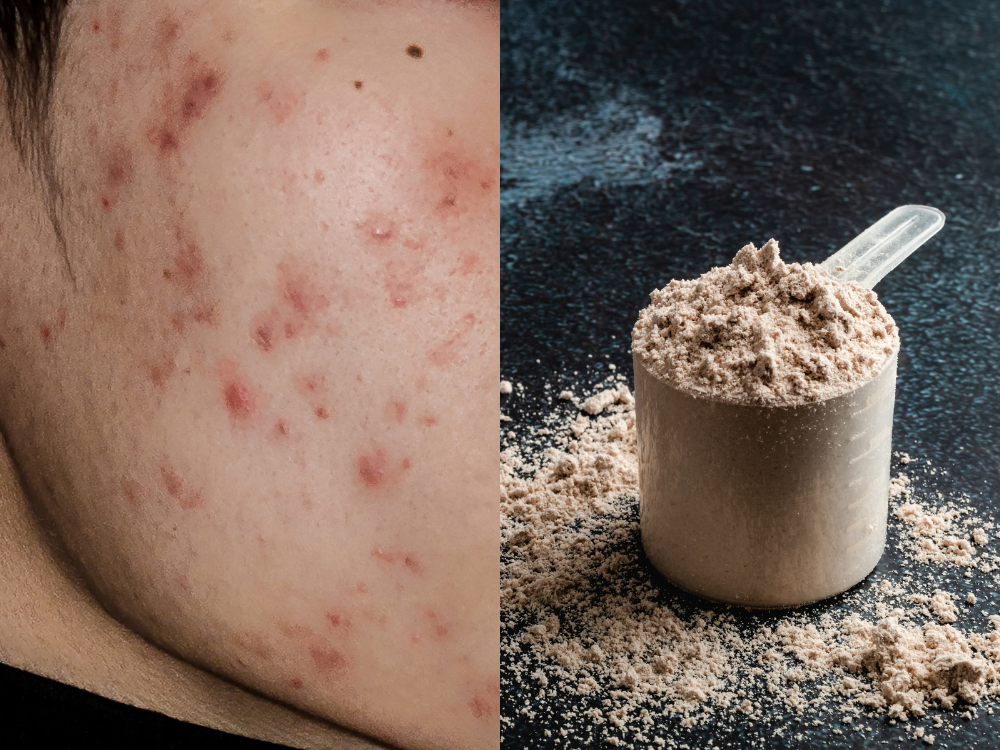
Comparison: Whey Vs. Plant-based Protein For Acne
Here’s a look at how different types of protein powder might affect acne-prone skin:
| Protein Type | Source | Hormone Content | Acne Risk | Notes |
|---|---|---|---|---|
| Whey | Milk | High | Higher | May increase IGF-1, fast digesting |
| Casein | Milk | High | Moderate | Slow digesting, less studied for acne |
| Soy | Plant | None | Lower | Complete protein, may affect hormones differently |
| Pea | Plant | None | Low | Good for sensitive skin, hypoallergenic |
| Egg White | Egg | None | Low | Dairy-free, high-quality protein |
Key takeaway: For those who get breakouts with whey or casein, switching to a plant-based protein can help.
Are Some Protein Powders Worse Than Others?
Yes, not all powders are equal. What you choose can make a big difference for your skin.
Things to watch for:
- High sugar content: Can raise insulin and inflammation.
- Artificial flavors and colors: Some people react to these additives.
- Poor quality control: Cheap brands may have contaminants.
Tips for picking a better powder:
- Choose unsweetened or naturally sweetened options.
- Look for third-party tested brands (like NSF or Informed Choice).
- Avoid powders with a long list of ingredients.

Data: How Common Is Acne From Protein Powder?
It is hard to find exact numbers, as most research is small or based on self-reports. However, dermatologists report seeing more young men with acne who use protein powder, especially those who lift weights.
One survey of 100 gym-goers found:
- 49% used protein supplements.
- 30% of those users reported more acne after starting supplements.
But remember, self-reports can be biased. People who expect a problem may notice it more.
Other Factors That Can Make Acne Worse
Protein powder is just one part of your diet. Other things can make acne more likely:
- High glycemic foods: White bread, sugar, and soda raise insulin.
- Poor sleep: Not enough rest can increase stress hormones.
- Lack of skincare: Not washing off sweat after a workout can clog pores.
- Hormonal cycles: Especially in women, monthly changes can trigger acne.
Non-obvious insight: Sometimes, people add protein shakes after starting a new workout routine. Sweating more, touching your face at the gym, or using new towels can all affect your skin too.
Ways To Reduce Acne Risk While Using Protein Powder
You do not have to give up protein powder if you are careful. Here’s how to lower your chances of breakouts:
- Pick a plant-based protein: These are less likely to affect hormones.
- Choose clean ingredients: Look for powders with just one or two ingredients.
- Limit sugar: Avoid flavored powders with lots of added sugar.
- Wash your face after exercise: Sweat can mix with powder residue and clog pores.
- Watch your portion size: Use only as much as your body needs—too much protein can stress your system.
Example Daily Routine
- Use one scoop of pea protein in a smoothie with water and fruit.
- After a workout, shower and wash your face with a gentle cleanser.
- Track any changes in your skin for a few weeks.
Protein Needs: Are You Overdoing It?
Most adults need about 0.8 grams of protein per kilogram of body weight daily. Athletes or people trying to build muscle may need more—up to 1.6–2.2 grams per kilogram. Many people get enough protein from food, so supplements are not always needed.
Example:
A 70 kg person needs about 56 grams of protein per day as a minimum. One chicken breast or a cup of beans can provide 20–30 grams. Adding multiple protein shakes on top of a high-protein diet can lead to excess, which may not be healthy for your skin or your body.
Are There Any Benefits To Protein Powder For Skin?
While some people worry about acne, protein is important for skin health. It helps:
- Repair skin tissue
- Build collagen (for firmness)
- Keep wounds healing well
The problem is not protein itself, but how it is delivered and how much you take. Natural food sources are less likely to cause problems.
What Should You Do If Protein Powder Causes Acne?
If you notice more breakouts after starting protein powder:
- Stop using the powder for a month. See if your skin clears up.
- Switch to a different protein source. Try pea, rice, or egg white protein.
- Check your overall diet. Are you eating more sugar or processed foods?
- Talk to a dermatologist. They can help you create a plan.
If you need more protein for fitness or health reasons, get most of it from whole foods.
Good food sources of protein:
- Chicken, turkey, or fish
- Eggs
- Beans and lentils
- Tofu or tempeh
- Quinoa or nuts

Comparing Whole Foods Vs. Protein Powder For Acne Risk
Here is a simple comparison:
| Source | Protein Quality | Hormone Content | Acne Risk | Other Benefits |
|---|---|---|---|---|
| Whey Protein Powder | High | High | Moderate–High | Convenient, fast |
| Chicken Breast | High | Low | Low | Also contains vitamins and minerals |
| Beans/Lentils | Medium | None | Low | High fiber, plant nutrients |
| Pea Protein Powder | Medium | None | Low | Hypoallergenic |
Key Takeaways And Practical Guidance
- Whey protein is most often linked to acne, likely due to milk hormones and insulin response.
- Plant-based proteins are less likely to cause breakouts.
- Not everyone will react to protein powder the same way—genetics and other factors matter.
- If you get acne after starting a new protein powder, try switching or cutting back to see if your skin improves.
- Focus on a balanced diet with whole foods as your main protein sources.
Non-obvious tip: If you want to keep using whey, try using it only on workout days, not daily, to see if your skin handles it better.
When To See A Doctor
If you have severe or painful acne, or if it does not improve after making changes, see a dermatologist. They can help you find treatments that work for your skin type and health needs.
Where To Learn More
For more detailed information on the relationship between dairy, protein supplements, and acne, check out this review article from the NIH.
Frequently Asked Questions
Does All Protein Powder Cause Acne Or Just Whey Protein?
Most reports of protein powder causing acne involve whey protein. Whey comes from milk and can raise hormone levels that affect the skin. Plant-based proteins like pea or rice are much less likely to trigger acne.
How Long After Starting Protein Powder Does Acne Appear?
For many people, acne starts within one to four weeks after adding protein powder to their diet. If you notice more breakouts soon after starting, the supplement could be a factor. However, everyone’s skin reacts differently.
Can I Prevent Acne While Still Using Protein Powder?
Yes, you can lower your risk by choosing plant-based powders, avoiding added sugars and flavors, and keeping your skin clean after workouts. Using only as much protein as you need also helps.
Are There Any Protein Powders That Are Safe For Acne-prone Skin?
Pea protein, rice protein, and egg white protein are good choices for people with acne-prone skin. Look for powders with simple ingredients and no added sugars or chemicals.
Should I Stop Using Protein Powder If I Get Acne?
If you notice more acne after starting a new protein powder, it is smart to stop for a few weeks. If your skin improves, try a different type or get more protein from whole foods. If acne continues, see a dermatologist for advice.
If you care about both your fitness and your skin, understanding your body’s reaction to different protein sources can help you make the best choices. With careful selection and good habits, you can enjoy the benefits of protein without sacrificing clear skin.

