
When Is The Best Time To Take Protein Powder?
Everyone knows protein is important, especially if you care about muscle, fitness, or weight loss. But when it comes to protein powder, people always ask: “When is the best time to take it?” Some say right after a workout. Others think before bed is better. There’s also advice for mornings, or even between meals. With so many opinions, it’s easy to feel confused.
If you want real results—stronger muscles, faster recovery, or just to get more from your diet—timing your protein matters. But it’s not as simple as “just drink it anytime. ” The right time can depend on your goals, your routine, and even your age.
Let’s look at what science and real-world experience say about the best time to take protein powder, so you can make the smartest choice for your body.
Why Protein Timing Matters
Protein is made of amino acids, which help build and repair muscles, skin, and even hormones. If you exercise, your body needs more protein to recover and grow. But it’s not just how much you eat—it’s also when you eat it.
Here’s why timing makes a difference:
- After exercise, your muscles are “hungry” for protein. This is called the anabolic window.
- At night, your body repairs itself while you sleep. This needs a steady supply of amino acids.
- If you go long hours without protein, your body may start to break down muscle for fuel.
- Spreading protein throughout the day helps keep your muscles supplied and your metabolism strong.
Small changes in timing can help you build more muscle, recover faster, or even lose weight more easily.
Main Goals: Why Do You Take Protein Powder?
Before choosing the best time, it helps to know why you use protein powder. Most people have one or more of these goals:
- Muscle building (hypertrophy)
- Fat loss
- Faster recovery after exercise
- Convenience (busy schedule, meal replacement)
- Managing hunger and cravings
- Supporting healthy aging (preventing muscle loss)
Different goals can mean different timing strategies. Let’s look at what works best for each case.
Protein Timing For Muscle Building
If your top goal is building muscle, timing your protein is especially important.
The Post-workout “anabolic Window”
For many years, people believed you must take protein within 30–60 minutes after training—the so-called anabolic window. The idea is that your muscles are primed to absorb protein and start repairing.
Recent studies show the window is probably longer—maybe up to two hours after exercise. But getting protein soon after your workout still helps. For example:
- A study in the Journal of the International Society of Sports Nutrition found people who took protein within two hours of training gained more muscle than those who waited longer.
- The best results seem to come when you have some protein both before and after your workout.
Pre-workout Protein
Having protein before exercise (about 1–2 hours before) can also help. This gives your body amino acids during the workout, which may reduce muscle breakdown.
Spreading Protein Across Meals
Don’t just focus on one shake. Research shows dividing your daily protein into 3–4 meals (or shakes) is better for muscle growth than eating it all at once.
Example: Muscle-building Protein Schedule
- Breakfast: Protein shake or high-protein meal
- Lunch: Lean meat, tofu, or beans
- Post-workout: Protein shake (within 1–2 hours)
- Dinner: Protein-rich meal
Non-obvious insight: Many people forget the importance of pre-sleep protein. Taking a slow-digesting protein (like casein) before bed can help muscles recover and grow overnight.
Protein Timing For Fat Loss
If your main aim is losing fat, protein can be a powerful tool. It helps control hunger, boosts metabolism, and prevents muscle loss during dieting.
Morning Protein For Appetite Control
Starting your day with protein—like a protein shake at breakfast—can keep you full longer. Studies show people who eat more protein at breakfast eat fewer calories later in the day.
Protein Between Meals
If you often get hungry between meals, having a protein shake as a snack can help. It’s better than sugary snacks or carbs, as it keeps you satisfied and supports muscle.
Post-workout For Fat Loss
Even when cutting calories, post-workout protein is important. It protects your muscles, which is key to burning more calories over time.
Non-obvious insight: Protein shakes can also help when you’re in a hurry. Replacing a meal or snack with a shake (with some fruit or nuts) is an easy way to stick to your diet plan.

Protein Timing For Recovery
After tough workouts, your muscles are damaged and need to repair. Protein helps speed up this recovery.
Right After Exercise
Having protein within 30–60 minutes after exercise gives your body the building blocks it needs. This is true for both strength and endurance workouts.
Before Bed For Recovery
At night, your body goes into repair mode. Taking a slow-digesting protein (like casein) before bed can help recovery and reduce muscle soreness.
Practical tip: Mixing your protein powder with milk (instead of water) slows digestion, which is helpful before sleep.
Protein Timing For Convenience
Many people use protein powder because it’s quick and easy. Busy day? Not hungry for a full meal? Shakes are a good choice.
When You Miss A Meal
If you skip breakfast or lunch, a protein shake fills the gap. It’s better than skipping meals, which can slow your metabolism.
On The Go
If you travel, study, or work long hours, carrying protein powder makes it easy to get enough protein. Just add water or milk.
Meal Replacement
Some people use protein powder as a meal replacement. If you do this, add some healthy fats (like nut butter) and carbs (like a banana) to make it more balanced.
Protein Timing For Managing Hunger
Protein is the most filling macronutrient. If you struggle with cravings or overeating, timing your shake can help.
Between Meals
A shake mid-morning or mid-afternoon can stop you from reaching for sugary snacks.
Before A Big Meal
Having a small protein shake 20–30 minutes before a main meal can help you eat less, as you’ll feel fuller.
Before Bed
If you get hungry at night, a protein shake (especially with some fiber) can stop late-night snacking.
Protein Timing For Healthy Aging
As we age, we naturally lose muscle—a process called sarcopenia. Getting enough protein, and spreading it out through the day, slows this loss.
Protein At Every Meal
Older adults should aim for 20–30 grams of protein per meal. Using protein powder makes this easier, especially at breakfast.
Before And After Exercise
Exercise is important for older people. Having protein before and after workouts helps keep muscles strong.
Before Bed
Nighttime protein helps prevent muscle breakdown during long hours without food.
Comparing Different Times To Take Protein Powder
You might wonder how different timing strategies compare. Here’s a simple table to show the main benefits of each option.
| Timing | Main Benefit | Best For |
|---|---|---|
| Morning | Reduces hunger, supports metabolism | Fat loss, busy schedules |
| Pre-Workout | Supplies amino acids, reduces muscle breakdown | Muscle building, recovery |
| Post-Workout | Boosts muscle repair and growth | Muscle building, recovery |
| Between Meals | Controls appetite, prevents overeating | Fat loss, hunger management |
| Before Bed | Supports overnight muscle repair | Muscle growth, healthy aging |
Protein Powder Types And Timing
Not all protein powders are the same. The type you choose can affect the best time to take it.
Whey Protein
Whey protein is fast-digesting. It’s ideal for:
- Post-workout: Quickly delivers amino acids to muscles
- Morning: Breaks overnight fast
Casein Protein
Casein is slow-digesting. It works best:
- Before bed: Provides steady release of protein overnight
- Between meals: Keeps you full longer
Plant-based Proteins
Pea, soy, and rice protein are popular plant-based options. They digest at a medium speed. Good for:
- Any time of day
- Post-workout for vegans/vegetarians
Collagen Protein
Collagen isn’t a complete protein, but it’s good for skin, joints, and bones. Can be taken:
- Anytime, often in coffee or smoothies
Quick Comparison Of Protein Powder Types
| Type | Digest Speed | Best Timing | Key Use |
|---|---|---|---|
| Whey | Fast | Post-workout, morning | Muscle growth, quick recovery |
| Casein | Slow | Before bed, between meals | Overnight repair, appetite control |
| Plant-based | Medium | Anytime | Vegan/vegetarian diets |
| Collagen | Varies | Anytime | Skin/joint support |
How Much Protein Powder Should You Take?
Timing is important, but amount matters too. Most experts suggest:
- 0.8 to 1.2 grams per kg of body weight per day for active people
- For muscle gain: Up to 1.6–2.2 grams per kg
- For fat loss: Keep protein high to protect muscle
One scoop of most protein powders gives 20–25 grams of protein.
Example: If you weigh 70 kg (154 lbs), aim for 56–112 grams of protein per day, depending on your goals.
Remember: Protein powder is a supplement—not a replacement for real food. Try to get most of your protein from whole foods like eggs, fish, beans, and chicken.
Common Mistakes With Protein Powder Timing
Many people make small mistakes that reduce results. Here are a few to avoid:
- Only using protein powder after workouts: You need protein throughout the day, not just after training.
- Skipping protein at breakfast: This can make you hungry and lower muscle growth.
- Not adjusting timing for your goal: Fat loss, muscle gain, and recovery may need different timing.
- Using the wrong protein type at the wrong time: Fast-digesting for post-workout, slow-digesting for overnight.
- Relying only on powder: Whole foods matter for vitamins, minerals, and overall health.
Practical tip: If you miss your “ideal” timing, don’t panic. Total daily protein is still the most important factor.
What If You Train Fasted?
Some people exercise before breakfast. Should you take protein before, after, or both?
- If you train fasted, try to have a protein shake right after your workout.
- If you can, a small shake before training gives even better results.
- For fat loss, fasted training with post-workout protein is fine, but don’t skip the post-exercise shake.
Protein Powder And Special Populations
Women
Women often worry about “bulking up” with protein. In reality, women need protein for muscle, bone health, and hormone balance. Timing rules are the same, but women may need slightly less total protein.
Older Adults
Older adults need more protein per meal to prevent muscle loss. Using shakes at breakfast and after exercise is especially helpful.
Vegetarians/vegans
Plant-based protein powders (pea, soy, rice) work well. Timing is just as important as for animal-based proteins.
Should You Take Protein Powder On Rest Days?
Yes. Your body repairs and grows muscle on rest days, not just training days. Keeping protein intake steady supports recovery and prevents muscle loss.
Protein Powder And Weight Loss
Research shows people who eat more protein lose more fat and less muscle. For the best results:
- Take a protein shake at breakfast or as a snack
- Have protein after workouts, even on low-calorie days
- Replace high-carb snacks with a protein shake to control hunger
How To Make Protein Powder Taste Better
Some people don’t like the taste of plain protein powder. Here are a few ways to improve it:
- Mix with milk instead of water for a creamier taste
- Add fruit (like banana or berries) in a blender
- Mix in cocoa powder, cinnamon, or vanilla
- Add nut butter for richness
- Blend with ice for a smoothie texture
Non-obvious insight: A pinch of salt can make chocolate or vanilla protein taste much better by boosting flavor.
Signs You Might Need To Adjust Your Timing
If you’re not seeing results, or you feel low energy, consider changing when you take your protein powder. Some signs to watch for:
- Feeling hungry soon after meals (try a shake with breakfast or as a snack)
- Sore muscles for days after workouts (add post-workout or before-bed shake)
- Slow progress in muscle gain (spread protein more evenly across meals)
- Frequent cravings, especially at night (try a shake before bed)
Myths About Protein Powder Timing
Let’s clear up a few common myths:
- Myth: You must take protein within 30 minutes after a workout, or it won’t work.
- Fact: The window is bigger—up to two hours. Consistency is more important.
- Myth: More protein always means more muscle.
- Fact: There’s a limit to how much your body can use. Extra protein is just extra calories.
- Myth: Protein powder is bad for kidneys.
- Fact: For healthy people, normal protein powder use is safe. If you have kidney problems, talk to your doctor.
For more science on protein timing, see this detailed summary on Examine.com.
Tips For Making The Most Of Your Protein Powder
- Plan your shakes ahead: Keep powder at work or in your bag for busy days.
- Combine with real food: Add fruit, oats, or nuts for a balanced meal.
- Stay hydrated: Protein needs water to process, so drink enough fluids.
- Listen to your body: Timing is a tool, not a rule. Adjust based on your hunger, energy, and results.
Frequently Asked Questions
What If I Miss My Post-workout Protein?
Don’t stress. The “anabolic window” is longer than once believed—up to two hours. Focus on your total daily protein. If you miss one shake, just get back on track at your next meal.

Can I Take Protein Powder Before Bed?
Yes, especially casein protein. It digests slowly and supports overnight muscle repair. This is helpful for muscle growth, recovery, and healthy aging.
Should I Take Protein Powder Even If I Don’t Exercise?
If you struggle to get enough protein from food, a shake can help. Protein is needed for healthy skin, hair, nails, and overall wellness—not just muscle.
Is It Okay To Take More Than One Protein Shake A Day?
It’s fine for most people, but try not to rely on shakes for all your protein. Whole foods provide extra vitamins and minerals. 1–2 shakes per day is common.
What’s The Best Time For Protein Powder If I Want To Lose Weight?
Many people find a morning shake or a shake as a snack between meals helps control hunger. Also, taking protein after workouts protects your muscle while losing fat.
Final Thoughts
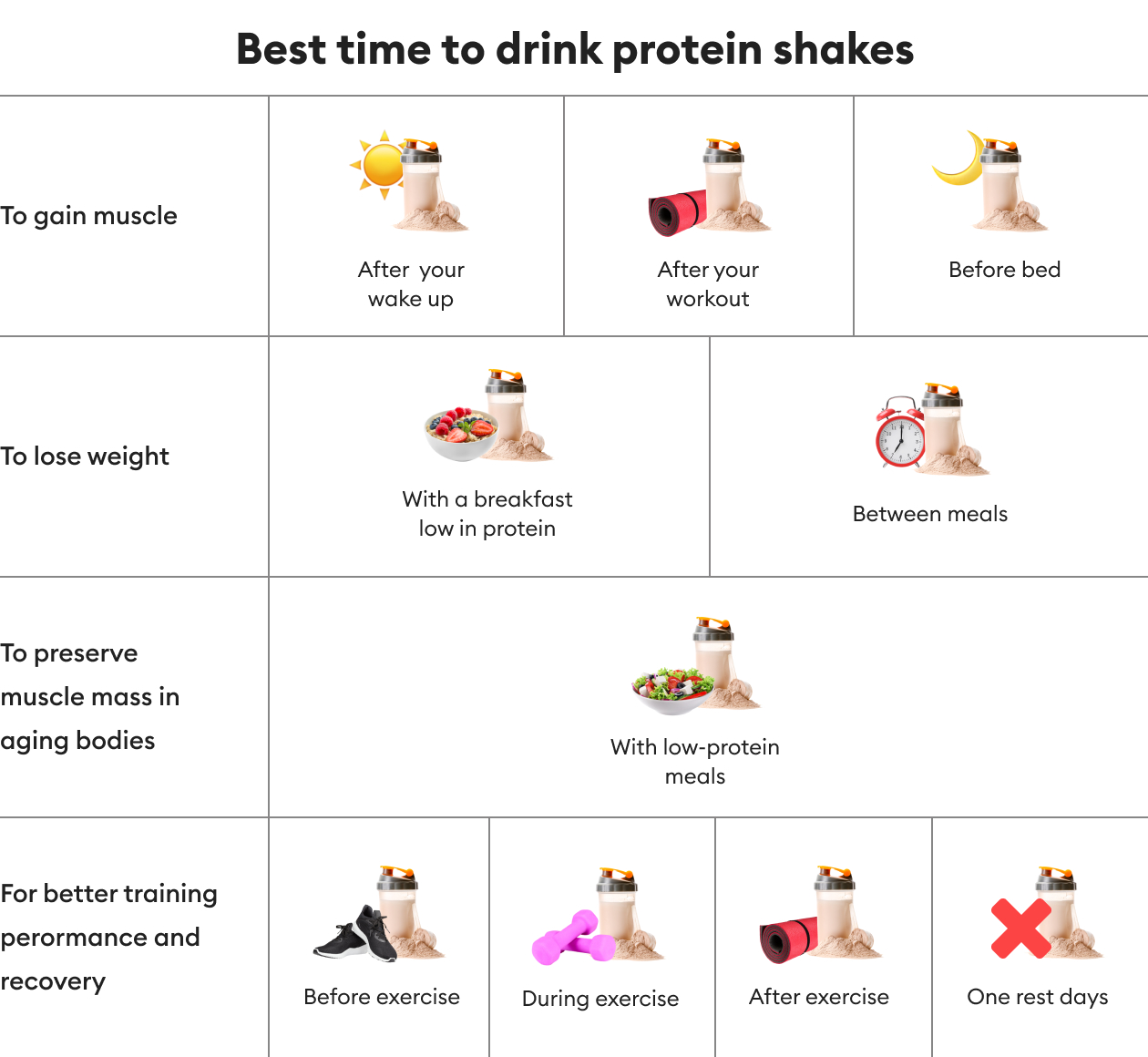
The best time to take protein powder depends on your goals, schedule, and personal needs. For muscle building and recovery, focus on the period around your workout and consider a shake before bed. For fat loss or appetite control, morning and between-meal shakes are smart.
But remember, total daily protein is the most important factor.
Experiment with timing, listen to your body, and adjust as needed. With smart protein timing, you’ll see better results from your hard work—no guesswork required.

