
Smartwatches have changed how we track our health, manage daily tasks, and stay connected. What makes these devices so powerful is not just their sleek design or smart notifications, but the wide range of sensors packed inside. Each sensor collects specific data, turning a simple watch into a mini-computer on your wrist. Understanding these sensors can help you choose the right smartwatch and use it more effectively. Let’s explore every important sensor you’ll find in modern smartwatches, how they work, and why they matter.
The Heart Of A Smartwatch: Core Sensors Explained
Modern smartwatches are more than just fitness trackers. They provide a full set of features thanks to different built-in sensors. These tiny components sense, measure, and record real-world information. Here are the most common and important sensors you’ll find in almost every popular smartwatch today.
Accelerometer
The accelerometer is the most basic yet essential sensor. It measures movement and speed in three directions: up-down, left-right, and forward-back. This sensor helps your smartwatch count steps, track running, and notice when you raise your wrist. Without it, even basic activity tracking would not be possible.
What many users don’t realize is that accelerometers can also detect patterns. For example, they can tell if you’re walking, running, cycling, or even sleeping based on how your arm moves. This sensor works all the time, so it can also alert you if you’ve been sitting too long.
Gyroscope
The gyroscope works alongside the accelerometer. While the accelerometer senses straight-line movement, the gyroscope measures rotation and orientation. For example, when you turn your wrist to look at the watch screen, the gyroscope detects this motion.
This sensor is important for tracking activities like swimming, yoga, or any exercise involving twists and turns. Some smartwatches use gyroscope data to improve step counting accuracy and sleep analysis.
Magnetometer
The magnetometer acts as a digital compass. It finds the direction your smartwatch is facing by sensing Earth’s magnetic field. This is essential for GPS navigation, outdoor sports, and even some augmented reality apps.
A useful detail: magnetometers can also help with indoor navigation in large buildings, like malls or airports, where GPS signals are weak.
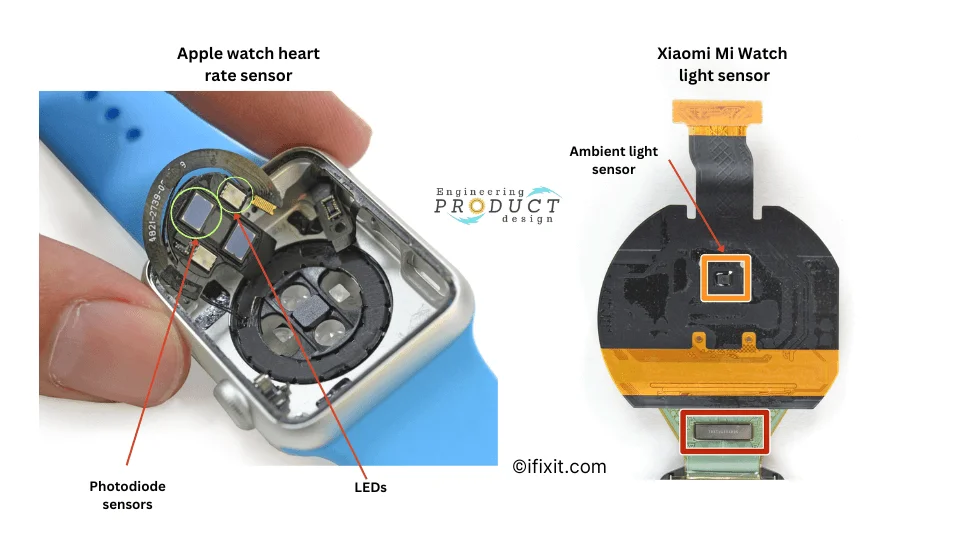
Optical Heart Rate Sensor
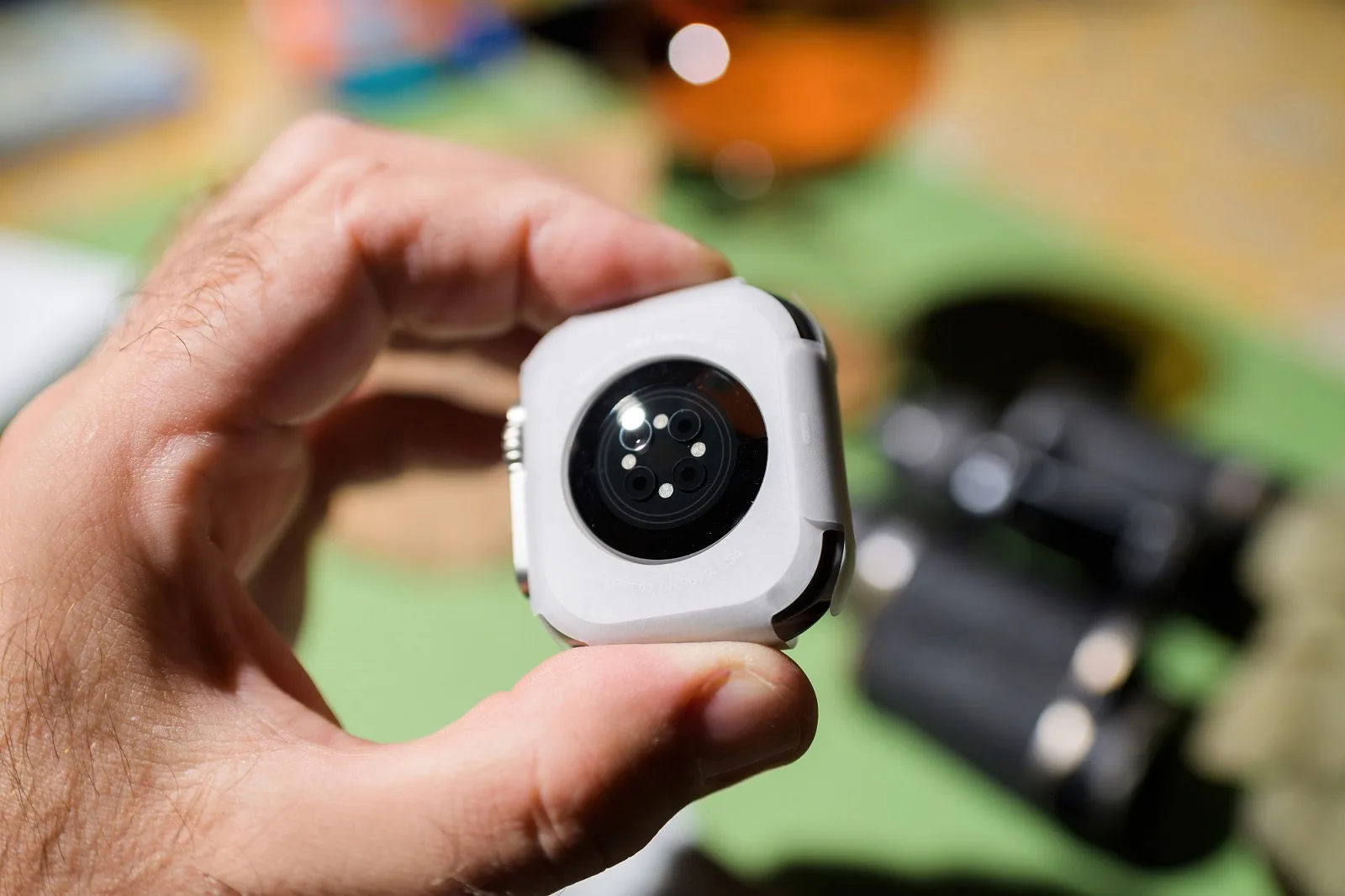
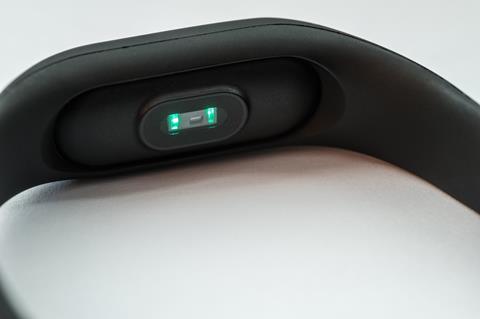
Most smartwatches now have an optical heart rate sensor. This sensor uses green LED lights that shine into your skin and measure how much light bounces back. Blood absorbs light differently when your heart beats, so the watch can count your heartbeats per minute.
This type of sensor makes it easy to monitor your heart rate 24/7, track your workout intensity, or even check your stress level. But here’s something many people miss: tattoos, dark skin, or wrist hair can sometimes affect accuracy. Wearing your watch snugly (but not too tight) helps improve results.
Barometer
A barometer measures air pressure. This sensor is valuable for athletes and hikers because it can estimate changes in altitude. If you climb stairs, hike up a hill, or go mountain biking, the barometer logs your elevation gain.
Barometer readings also help your smartwatch predict weather changes or storms—an underrated feature for outdoor fans.
Ambient Light Sensor
The ambient light sensor checks the brightness around you. Smartwatches use this data to adjust screen brightness automatically, saving battery life and making the screen easier to read in sunlight or darkness.
One insight: some watches use ambient light data to help detect when you’re sleeping or awake, based on how dark your environment is.
Spo2 (pulse Oximeter) Sensor
The SpO2 sensor measures your blood oxygen level. It works like the heart rate sensor but uses red and infrared light. This sensor is especially useful for people who exercise at high altitudes, have respiratory issues, or want to track their sleep quality.
A key detail: not all SpO2 readings are medical-grade. Still, they can alert you to sudden drops in oxygen that might need medical attention.
Gps (global Positioning System)
The GPS sensor uses signals from satellites to find your location. It allows your smartwatch to map your runs, bike rides, and hikes, showing exactly where you went and how far.
Standalone GPS in a watch is a must-have for runners and cyclists who don’t want to carry a phone. Some watches also support extra systems like GLONASS or Galileo for better accuracy.
Thermometer
A few advanced smartwatches include a thermometer. This sensor tracks your skin temperature, which can help detect illness or monitor changes during sleep.
An important point: smartwatch thermometers usually measure skin, not body, temperature. Skin temperature changes faster due to room temperature or exercise. Still, tracking trends over time can provide useful health clues.
Ekg/ecg (electrocardiogram) Sensor
The ECG sensor records the electrical signals of your heart. By touching the watch’s crown or button, you complete a circuit and get a short ECG reading.
This sensor can spot irregular heartbeats (like atrial fibrillation) early, which is vital for heart health. However, not all countries allow this feature due to health regulations.
Nfc (near Field Communication) Sensor
The NFC sensor enables contactless payments. You can pay for coffee, groceries, or train rides by holding your watch near a payment terminal—no phone or wallet needed.
NFC can also be used for quick pairing with devices or unlocking smart doors.
Microphone
A built-in microphone lets you use voice assistants (like Siri or Google Assistant), take phone calls, or record voice memos. For some models, the microphone also helps detect coughs or snoring during sleep tracking.
Speaker
Many smartwatches have a speaker. It plays music, reads messages aloud, or gives spoken workout instructions. Paired with a microphone, it allows for phone calls right from your wrist.
Electrical Skin Response (eda/gsr) Sensor
Some smartwatches include an EDA sensor (Electrodermal Activity), sometimes called GSR (Galvanic Skin Response). This sensor measures sweat level changes in your skin, which can reflect stress or excitement.
EDA sensors are becoming popular for stress management features, guiding users through breathing exercises when stress levels rise.
Uv Sensor
A UV sensor measures ultraviolet light exposure. It helps you know when it’s time to apply sunscreen or stay in the shade, protecting your skin from sun damage.
This sensor is rare but very useful for people who spend lots of time outdoors.
Blood Pressure Sensor
A few smartwatches now offer a blood pressure sensor. These use optical or pressure-based methods to estimate your blood pressure. While not as accurate as a doctor’s cuff, they can help you track trends and share data with your doctor.
One beginner mistake: relying on smartwatch blood pressure readings alone. These sensors are best for spotting changes, not replacing regular medical checks.
Bioimpedance Sensor
Newer models use a bioimpedance sensor. It sends a tiny electrical current through your body to estimate body composition—like fat percentage, muscle mass, and water content.
This is a breakthrough for fitness fans who want to track more than just weight and steps.
Proximity Sensor
A proximity sensor detects when something is near the watch. It helps turn on the display when you look at your watch, or power it down when covered or not in use, saving battery.
This sensor also helps some watches recognize gestures, like waving your hand to dismiss a call.
Altimeter
The altimeter measures your altitude above sea level. While barometers estimate altitude using air pressure, a dedicated altimeter gives more accurate altitude tracking, especially useful for climbers and skiers.
Haptic Feedback Motor
The haptic motor isn’t a sensor, but it’s worth mentioning. It produces small vibrations to give you silent notifications or feedback during workouts.
Many users don’t realize that different vibration patterns can signal different types of alerts, helping you manage notifications without looking at your watch.
How Do Smartwatch Sensors Work Together?
Smartwatch sensors rarely act alone. They work together, combining data to give you a complete picture. For example:
- Sleep tracking: Uses the accelerometer (movement), heart rate sensor, and sometimes SpO2 and ambient light sensor to know when you fall asleep, how long you sleep, and your sleep quality.
- Workout tracking: Combines accelerometer, gyroscope, GPS, heart rate, and barometer to give you accurate results.
- Health alerts: Some watches can warn you about high heart rate, low oxygen, or irregular heartbeats by using several sensors at once.
Here’s a quick comparison of what different sensors contribute to common smartwatch features:
| Feature | Key Sensors Used |
|---|---|
| Step Counting | Accelerometer, Gyroscope |
| Sleep Tracking | Accelerometer, Heart Rate, SpO2, Ambient Light |
| GPS Navigation | GPS, Magnetometer |
| Elevation Tracking | Barometer, Altimeter |
| Contactless Payments | NFC |
| Stress Monitoring | EDA Sensor, Heart Rate |
Comparing Sensors In Popular Smartwatches
Not every smartwatch includes every sensor. Here’s a look at how some top brands compare on sensor features:
| Smartwatch Model | Heart Rate | GPS | ECG | SpO2 | NFC | EDA | Barometer |
|---|---|---|---|---|---|---|---|
| Apple Watch Series 8 | Yes | Yes | Yes | Yes | Yes | No | Yes |
| Samsung Galaxy Watch 5 | Yes | Yes | Yes | Yes | Yes | No | Yes |
| Fitbit Sense 2 | Yes | Yes | No | Yes | Yes | Yes | Yes |
| Garmin Fenix 7 | Yes | Yes | No | Yes | No | No | Yes |
Less Common Sensors: What’s Next?
As technology improves, smartwatch makers are adding new sensors. Here are a few less common but emerging types:
- Hydration sensors: These try to estimate your body’s water level by checking skin moisture. It’s still early, but could be useful for athletes.
- Glucose monitors: Non-invasive blood sugar sensors are being developed, which would be a huge help for people with diabetes.
- Air quality sensors: Some concepts can sense pollution or allergens, useful for people in cities.
- Infrared cameras: Used for advanced temperature reading or night vision features.
One thing to remember: new sensors may sound exciting, but real-world accuracy can be limited until the technology matures.
How Sensors Affect Battery Life
Sensors make smartwatches powerful, but they also use battery power. For example, GPS and SpO2 sensors use more energy than the accelerometer. Watches with many sensors running at once (like during a workout) will need charging more often.
Many watches let you turn off certain sensors or use battery-saving modes. If you only need basic step tracking, switching off GPS or SpO2 can extend your battery life.
Accuracy: What To Expect
No smartwatch sensor is perfect. Here’s what you should know:
- Movement sensors are usually very accurate for step counting, but may count arm swings or miss steps if you push a stroller.
- Heart rate sensors can be less accurate during intense exercise or if the watch is loose.
- SpO2 and blood pressure sensors are for trends, not medical diagnosis. Always check with a doctor if you see worrying results.
- GPS works best outdoors with a clear sky. Indoors or near tall buildings, accuracy drops.
A useful tip: update your watch software often, as updates can improve sensor accuracy.
Real-life Examples: How Sensors Help
- A hiker uses GPS, barometer, and altimeter to track their route, elevation, and weather changes.
- A runner checks heart rate and SpO2 to train safely at high altitudes.
- A busy worker uses the accelerometer to set reminders to stand up and move every hour.
- A parent tracks their child’s sleep and activity with automatic logs and gentle reminders.
These sensors turn the smartwatch from a simple watch into a health, fitness, and lifestyle partner.
Two Insights Most Beginners Miss
- Sensors are only as good as their data interpretation. The raw data collected is processed by algorithms that may differ between brands. This means two watches can give different results even with similar sensors. Always look at long-term trends, not just single numbers.
- Sensor placement and skin contact matter. For best accuracy, your watch should be snug (but comfortable) and sit above the wrist bone. Loose or poorly placed watches can give wrong readings, especially for heart rate and SpO2.
How To Choose A Smartwatch Based On Sensors
If you’re buying a smartwatch, think about which features you’ll use most. Here are a few tips:
- Fitness fans: Look for a watch with GPS, heart rate, SpO2, and barometer.
- Health tracking: ECG, EDA, blood pressure, and SpO2 are important.
- Outdoor explorers: GPS, altimeter, barometer, UV sensor, and a robust battery.
- Everyday users: Focus on heart rate, accelerometer, NFC for payments, and good battery life.
Don’t get distracted by extra sensors you may never use. More sensors can mean higher price and shorter battery life.
How Sensor Data Is Used And Shared
Most smartwatches sync sensor data to your phone or cloud account. You can review your stats, spot trends, or share health reports with your doctor. Some watches let you export raw data for deeper analysis.
Keep privacy in mind. Check your watch’s privacy settings and how your health data is stored or shared with third parties.
The Future Of Smartwatch Sensors
Sensor technology is moving fast. In a few years, we may see watches that can:
- Monitor blood sugar with no needles
- Track hydration and nutrient levels
- Analyze sweat for early signs of illness
- Detect falls or medical emergencies automatically
For now, today’s smartwatches are already powerful tools for staying healthy and connected.
Frequently Asked Questions
What Is The Most Important Sensor In A Smartwatch?
The accelerometer is the most basic and widely used sensor. It enables step counting, activity tracking, and even sleep monitoring. For many users, the accelerometer and heart rate sensor cover most daily needs.
How Accurate Are Smartwatch Heart Rate Sensors?
Heart rate sensors are quite accurate for most activities, but can be affected by loose fit, tattoos, or intense movement. For medical-grade accuracy, chest straps or medical devices are better. Still, smartwatches provide useful trends and alerts for everyday use.
Can I Use Smartwatch Sensors For Medical Diagnosis?
Smartwatch sensors are designed for wellness and lifestyle tracking, not for medical diagnosis. Some watches are approved for detecting specific heart issues (like atrial fibrillation), but always consult a doctor for medical concerns.
Do All Smartwatches Have Gps?
Not all smartwatches have built-in GPS. Entry-level models may use your phone’s GPS instead. If you want to track runs or rides without a phone, look for a watch with standalone GPS.
Where Can I Learn More About Smartwatch Sensors And Technology?
You can find more in-depth information on sensor technology and how it’s changing wearables by visiting the Wikipedia Smartwatch page.
Smartwatch sensors are what set these devices apart from traditional watches. By understanding what each sensor does and how they work together, you can make smarter choices, get more value from your device, and take better care of your health and fitness.
Whether you’re training for a marathon or just trying to move more every day, these tiny sensors are working silently to help you live smarter.

