
CrossFit is a powerful workout method that combines weightlifting, cardio, and bodyweight exercises. It helps people get stronger, faster, and fitter. But the high intensity and variety of movements also bring a real risk: injuries. Many beginners and even experienced athletes get hurt in CrossFit, often because they push too hard or skip the basics. The good news is, most CrossFit injuries are preventable if you follow smart strategies.
If you want to enjoy CrossFit for years, staying injury-free should be your top goal. Let’s look at practical steps you can take, what mistakes to avoid, and how to set yourself up for safe progress.
Why Crossfit Injuries Happen
Understanding why injuries occur helps you avoid them. CrossFit workouts are known for high reps, heavy weights, and complex movements. Most injuries come from:
- Poor technique on difficult lifts
- Lifting weights that are too heavy
- Not warming up or cooling down
- Ignoring body signals (pain, fatigue)
- Skipping rest and recovery days
- Lack of mobility or flexibility
According to a 2018 study in the *Orthopaedic Journal of Sports Medicine*, about 19% of CrossFit participants reported injuries in a 6-month period. The most common injuries were to the shoulders, lower back, and knees.
Master The Basics First
One of the biggest mistakes is jumping into advanced workouts too early. The foundation of injury prevention is learning proper form on basic movements like:
- Squats
- Deadlifts
- Push-ups
- Pull-ups
- Overhead press
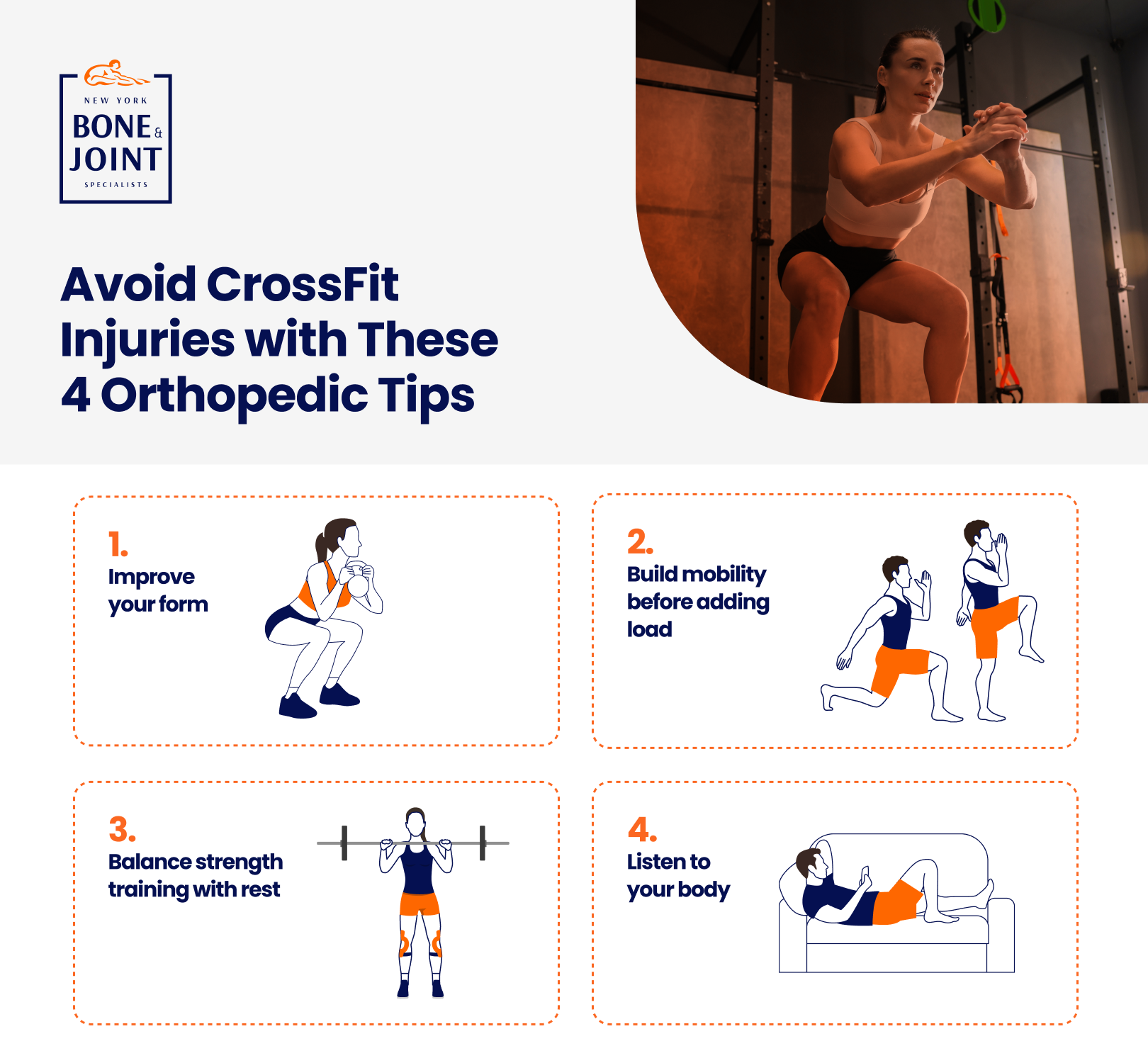
Take time to learn each movement step by step. Use light weights or just your body weight at first. If you’re not sure, ask a certified CrossFit coach to watch and correct your form. Even experienced athletes need regular technique checks, because bad habits can develop over time.
Warm Up The Right Way
A good warm-up prepares your muscles, joints, and nervous system. It also increases blood flow and helps you focus. Warming up is not just stretching for a few seconds. Try this routine before each CrossFit session:
- 5–10 minutes of light cardio (rowing, jogging, or jump rope)
- Dynamic stretches (leg swings, arm circles, hip rotations)
- Movement-specific drills (air squats before weighted squats, empty barbell lifts before loading weights)
A proper warm-up can reduce the risk of injury by up to 50%, according to sports medicine research.
Use The Right Equipment
CrossFit uses a lot of gear—bars, plates, kettlebells, ropes, and more. Bad equipment or using the wrong shoes can lead to sprains and accidents. Here’s what to check:
- Shoes: Choose flat, stable shoes for lifting. Avoid running shoes with soft soles.
- Weight belts: Use only when lifting near your max.
- Chalk: Helps grip the bar and prevents slipping.
- Wrist wraps or knee sleeves: Optional, but can add support for heavy lifts.
Always inspect equipment before use. Broken bars or loose collars are a safety hazard.
Progress Slowly And Listen To Your Body
Trying to keep up with others or beating personal records every week leads to overuse injuries. The smartest CrossFitters know how to pace themselves. Here’s how to progress safely:
- Increase weight or reps gradually (no more than 5–10% per week)
- If you feel pain (not just muscle fatigue), stop and check your form
- Take regular rest days—your body needs them to recover and get stronger
Even elite athletes schedule deload weeks with lighter workouts to prevent burnout and injury.
Focus On Mobility And Flexibility
Stiff muscles and tight joints make injuries more likely. CrossFit athletes often struggle with shoulder mobility and hip flexibility. Add these habits to your routine:
- Stretch after every workout, holding each stretch for 20–30 seconds
- Foam roll tight areas (back, legs, shoulders)
- Try yoga or mobility classes once a week
Improved mobility helps you achieve better form, especially in lifts like the overhead squat or snatch.
Learn To Scale Workouts
CrossFit is famous for the “Workout of the Day” (WOD), but not every WOD is right for every person. Scaling means adjusting the difficulty to your level. You can scale by:
- Lowering the weight
- Reducing the number of reps or rounds
- Replacing advanced moves (like muscle-ups) with simpler options (like ring rows)
Don’t let ego or peer pressure push you into doing more than you can handle. Even Games athletes scale their training when recovering from injury.
Prioritize Recovery And Sleep
Muscles repair and grow during rest—not in the gym. If you’re always tired or sore, your risk of injury goes up. Key recovery strategies include:
- 7–9 hours of sleep per night (studies link poor sleep to more injuries)
- Light active recovery on off days (walking, swimming)
- Proper nutrition: Protein, healthy fats, and enough calories to fuel your workouts
Some CrossFitters use ice baths or massages, but basic sleep and nutrition are most important for recovery.
Hydrate Before, During, And After Workouts
Dehydration reduces muscle performance and increases the risk of cramps, strains, and heat exhaustion. Here’s how to stay hydrated:
- Drink 500 ml (about 17 oz) of water 1–2 hours before your workout
- Sip water during long WODs, especially in hot weather
- Drink extra water after training, especially if you sweat a lot
Remember, coffee and energy drinks don’t replace water.
Know The Most Common Crossfit Injuries
Being aware of frequent injury spots helps you protect them. Here’s a look at the most common injuries and how to avoid them:
| Injury Area | Common Cause | Prevention Tips |
|---|---|---|
| Shoulder | Poor overhead technique, heavy snatches | Strengthen rotator cuff, check form |
| Lower Back | Bad deadlift/squat form | Keep neutral spine, strengthen core |
| Knees | Landing hard, twisting, deep squats with poor form | Track knees over toes, control descent |
| Wrists | Handstand push-ups, cleans | Wrist mobility drills, support wraps |
If you notice pain in these areas, take it seriously. Modify your workout and consult a coach or physiotherapist if needed.
Don’t Skip The Cool Down
After intense exercise, your body needs to return to a normal state. A cool-down reduces muscle soreness and helps recovery. It should include:
- 5–10 minutes of light activity (easy cycling, walking)
- Gentle stretching, focusing on muscles used during the workout
Skipping the cool-down can increase your risk of muscle stiffness and delayed-onset muscle soreness (DOMS).
Pay Attention To Nutrition
Fueling your body the right way supports injury prevention. CrossFit burns a lot of calories and uses up muscle glycogen. Basic nutrition tips:
- Eat a balanced meal of protein and carbs within 2 hours after training
- Add healthy fats for joint and brain health
- Use supplements (like fish oil, magnesium) only if your diet is lacking
A poor diet slows recovery and weakens your immune system, making injuries more likely.
Train With Qualified Coaches
Not all CrossFit gyms (boxes) are equal. The best ones have certified coaches who watch your form, adjust workouts, and give feedback. A good coach:
- Stops you from doing unsafe reps
- Teaches scaling and progression
- Motivates you without pushing too far
Before joining a box, ask about coach credentials and their safety record. Avoid gyms where people lift unsupervised or coaches ignore poor technique.
Compare: Proper Vs. Risky Crossfit Habits
It’s easy to think you’re being safe, but sometimes habits creep in that increase your risk. Here’s a quick comparison:
| Safe Habit | Risky Habit |
|---|---|
| Scaling workouts to your level | Trying to match advanced athletes |
| Resting when tired or sore | Pushing through pain |
| Regular form checks with a coach | Ignoring feedback or lifting alone |
| Warming up and cooling down | Skipping warm-up or post-workout stretching |
Awareness of these differences can keep you safe and healthy.
Two Insights Many Beginners Miss
- Small aches matter: Many new CrossFitters ignore mild pain, thinking it’s just muscle soreness. But sharp or lingering pain often signals a technique error or overuse. Rest, address the cause, and don’t wait for it to become serious.
- Mobility is strength: People focus on lifting heavier weights, but lack of mobility limits safe progress more than lack of strength. Spend as much time on flexibility as on strength training.
When To See A Doctor Or Physiotherapist
If you experience any of these, don’t try to “tough it out”:
- Sudden, severe pain during a lift
- Swelling, bruising, or loss of joint movement
- Numbness or tingling
- Pain that doesn’t improve with rest in a few days
Seeking help early can prevent a minor issue from becoming a long-term injury.
Real-world Example: Injury Prevention Pays Off
Consider Sarah, a CrossFit beginner who started without a coach and quickly hurt her shoulder trying kipping pull-ups. She took a break, then joined a class with a certified coach. By learning proper progressions and focusing on mobility, Sarah built up slowly. Two years later, she’s injury-free and hitting new personal records. Her story is common: proper coaching and patience lead to safer, stronger results.
Useful Resources
If you want more in-depth information, you can visit the official CrossFit Essentials page for safety tips, movement videos, and expert advice.
Frequently Asked Questions
What Is The Most Common Injury In Crossfit?
The most common injuries are to the shoulders, followed by the lower back and knees. These usually happen from poor lifting form, overuse, or not warming up properly.
How Can I Tell If My Pain Is Just Soreness Or A Real Injury?
Muscle soreness usually feels like a dull ache and appears a day after exercise. An injury often causes sharp pain, swelling, bruising, or limits your movement. If pain is severe or lasts more than a few days, see a doctor.
Is Crossfit More Dangerous Than Other Types Of Exercise?
Research shows that when done with proper form and supervision, CrossFit’s injury rate is similar to other high-intensity sports. The key is proper technique, scaling, and recovery.
How Important Is Rest For Injury Prevention?
Rest is critical. Your muscles repair and grow during rest, not during workouts. Overtraining leads to fatigue, poor form, and higher injury risk. Always schedule at least one or two rest days each week.
What Should I Do If I Get Injured During Crossfit?
Stop training immediately. Apply ice to the area, rest, and avoid painful movements. If symptoms persist, consult a medical professional. Returning too soon can make the injury worse.
Staying safe in CrossFit means balancing intensity with smart habits. With good coaching, attention to form, and listening to your body, you can enjoy all the benefits of CrossFit—without the setbacks of injury. Remember, progress is a marathon, not a sprint.
Train smart, and you’ll stay strong for the long run.

