
Smartwatches are everywhere today. They track your steps, show your messages, and even tell you when to stand up. But many people now want more from these small devices. One of the most talked-about features is measuring blood oxygen levels, also called SpO2. You might wonder: can a smartwatch really do this? Is it accurate, safe, and helpful? Understanding the truth behind this technology is important, especially if you care about your health or are thinking of buying a smartwatch for this reason.
In this article, you’ll learn how smartwatches check your blood oxygen, which models offer this feature, how accurate they are, what science says, and what you should know before using one. By the end, you’ll know exactly what to expect from a smartwatch’s blood oxygen sensor and whether you should trust it for health tracking.
What Is Blood Oxygen Level And Why Does It Matter?
Blood oxygen level, or SpO2, shows how much oxygen your blood is carrying. It is given as a percentage. For most healthy people, normal SpO2 is between 95% and 100%. If it drops below 90%, it can be a sign of a problem, such as lung disease, heart issues, or sleep apnea.
Low blood oxygen can make you feel tired, dizzy, or short of breath. In serious cases, it may mean your organs are not getting enough oxygen to work properly. That’s why hospitals and doctors often check SpO2, especially if you are sick or have breathing problems.
Some people want to watch their blood oxygen at home, especially during the COVID-19 pandemic. This led to a big interest in devices that can monitor SpO2 easily, like pulse oximeters and now, smartwatches.
How Do Smartwatches Measure Blood Oxygen?
Most smartwatches use a method called pulse oximetry to check SpO2. This is the same basic idea as a finger pulse oximeter, but in a smaller, wearable form.
The Technology Behind It
Pulse oximeters shine light (usually red and infrared) through your skin. The light passes through your blood vessels. Blood with more oxygen absorbs light differently than blood with less oxygen. The sensor measures how much light returns and uses this to guess your SpO2.
Smartwatches have tiny LED lights and sensors on the back. When you wear the watch, it shines light into your wrist. The sensors read the light that comes back. A computer chip inside does the math to estimate your blood oxygen.
Wrist Vs. Finger: Key Differences
Smartwatches check SpO2 on your wrist. Traditional pulse oximeters use your fingertip. The finger has thinner skin and more blood flow, which makes it easier to get a good reading. The wrist is trickier. Skin is thicker, hair can get in the way, and you move your arm more.
All these things can make readings less accurate.
Common Steps Involved
- The watch shines red and infrared light into your skin.
- Sensors read how much light is absorbed.
- The device uses algorithms to estimate SpO2.
- Results are displayed on the screen or in a connected app.
Some smartwatches check SpO2 only when you ask. Others track it all day and night, giving you trends over time.
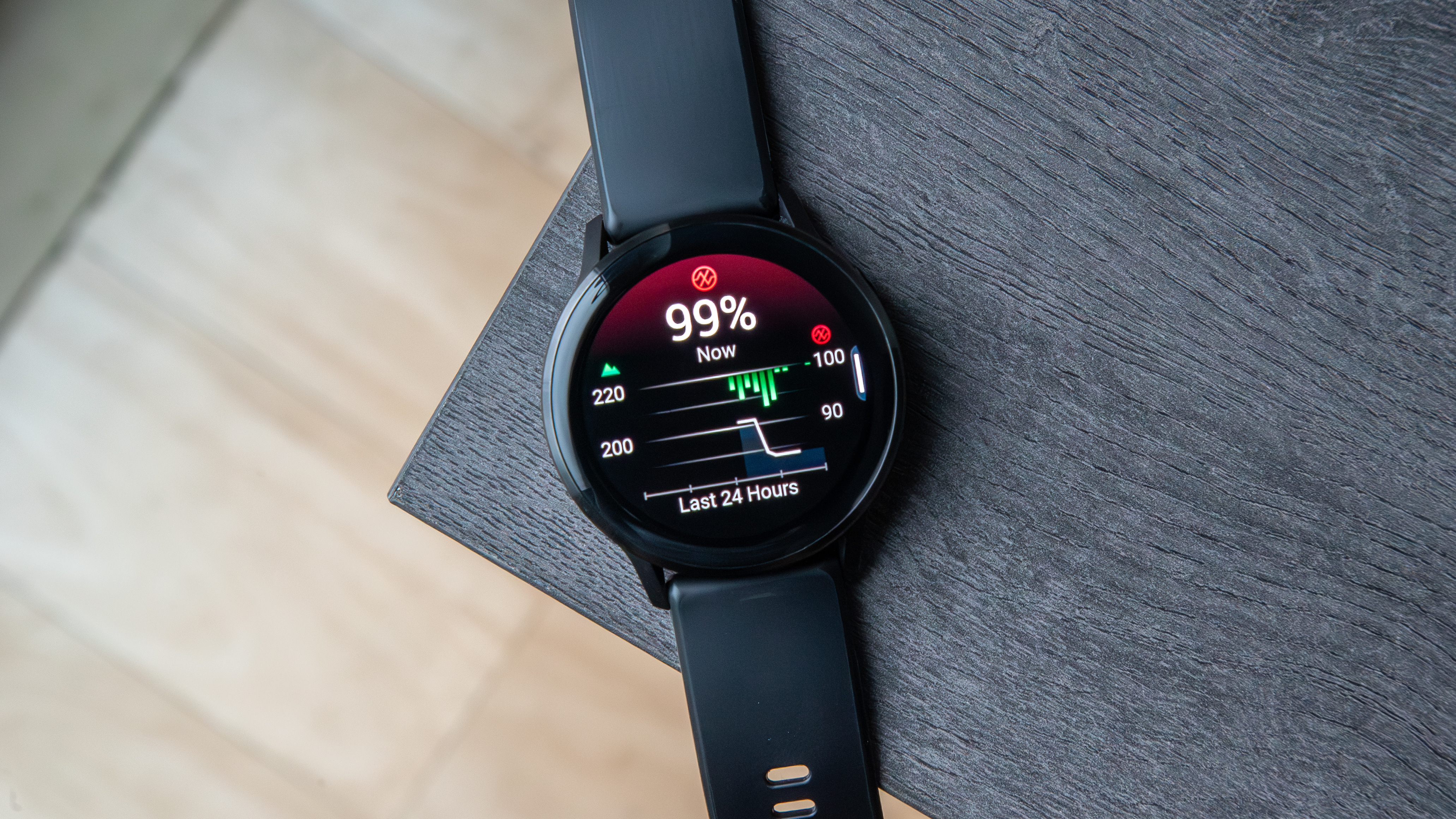
Which Smartwatches Can Measure Blood Oxygen?
Not all smartwatches offer blood oxygen tracking. In recent years, more brands have added this feature, but it is still not standard on every model. Here’s a look at some popular smartwatches with SpO2 sensors.
| Brand/Model | Blood Oxygen Feature | How It Works | Release Year |
|---|---|---|---|
| Apple Watch Series 6/7/8/Ultra | Yes | On-demand & background tracking | 2020-2022 |
| Samsung Galaxy Watch 3/4/5 | Yes | On-demand & sleep tracking | 2020-2022 |
| Fitbit Sense/Charge 5/Versa 3 | Yes | Sleep tracking & spot checks | 2020-2022 |
| Garmin Venu 2/Fenix 7 | Yes | All-day & sleep SpO2 | 2021-2022 |
| Huawei Watch GT3/Watch 3 | Yes | Continuous & on-demand | 2021 |
| Amazfit GTR 3/4 | Yes | On-demand & all-day | 2021-2022 |
| Oppo Watch Series | Yes | On-demand | 2021 |
| Withings ScanWatch | Yes | Spot checks & night tracking | 2020 |
Some cheaper fitness bands may also show blood oxygen, but accuracy and reliability can be lower. Always check the product specs before you buy.
How Accurate Are Smartwatch Blood Oxygen Readings?
This is the big question for most people. Can you trust a smartwatch to give you the right blood oxygen number?
Clinical Vs. Consumer Devices
Medical-grade pulse oximeters are used in hospitals. They must meet strict standards and are tested for accuracy. They often have an error margin of about ±2%. This means if your true SpO2 is 98%, the device might show between 96% and 100%.
Smartwatches are consumer devices. Most are not approved as medical devices. Their readings can be influenced by many things:
- Skin tone (darker skin may affect the light sensors)
- Wrist movement
- Position of the watch
- Tattoos or scars
- Ambient light
- Cold skin or poor blood flow
What Studies Show
Some studies have tested popular smartwatches. Results show that SpO2 readings from watches like the Apple Watch Series 6 and Fitbit Sense are reasonably close to those from medical pulse oximeters in healthy people. Differences are usually 2–4%. For example, if the oximeter shows 97%, the watch may show 95–99%.
But in people with poor circulation, lung disease, or low blood oxygen, the error can be bigger. In these cases, smartwatches may show a higher number than the real value. This could be risky if you trust the watch in a medical emergency.
Practical Advice
- Use the watch in the way the manual says.
- Sit still with the watch snug on your wrist.
- Don’t rely only on smartwatch SpO2 in serious health situations.
- For medical needs, use a certified pulse oximeter.
A helpful insight: Many users don’t realize that their watch’s SpO2 sensor often works best at night when you’re not moving. Daytime readings can jump around, so trends over several days are more useful than one single number.
What Are The Benefits Of Blood Oxygen Tracking On A Smartwatch?
You might wonder why you should care about SpO2 on your watch if it’s not as accurate as a hospital device. There are still useful reasons to track it.
Early Warning Signs
If you have conditions like sleep apnea, asthma, or COPD, tracking SpO2 trends can help you spot problems. A sudden drop in blood oxygen at night may suggest breathing issues during sleep.
Health And Fitness Insights
- Athletes: High-altitude training can lower SpO2. Monitoring it helps guide workouts.
- Hikers/Climbers: SpO2 can drop at high altitudes. Watches can alert you if levels get too low.
- General wellness: Sudden changes in SpO2 may be a sign of illness, even before you feel sick.
Peace Of Mind
During the COVID-19 pandemic, many people used SpO2 tracking to watch for silent drops in blood oxygen, sometimes called “happy hypoxia.” While smartwatches are not medical tools, they can offer early clues to seek help.
Sleep Quality Tracking
Some watches use SpO2 data to estimate sleep quality and spot breathing interruptions. This is not a medical sleep test, but it can reveal patterns worth discussing with your doctor.
Limitations And Common Mistakes With Smartwatch Spo2
Even as technology improves, smartwatch blood oxygen measurement has real limits.
Not A Medical Device
Most smartwatches say clearly: Not for medical use. They are meant for wellness and fitness only. If you have a health problem, never rely on a smartwatch as your only tool.
Factors That Affect Readings
- Loose or dirty watch
- Tattoos or thick hair under the sensor
- Moving your wrist during reading
- Bright sunlight or cold skin
Even experienced users sometimes forget that skin temperature can make a big difference. If your hands or wrist are cold, blood flow drops and the sensor may get it wrong.
Misunderstanding The Numbers
Some people panic if they see a low SpO2 for a moment. A single low reading is not always a problem. Look at trends over time, not just one number. If you feel fine, one odd result is not a reason to worry.
Over-testing
Checking SpO2 too often can make you anxious and doesn’t help much. Unless your doctor tells you to monitor, once or twice a day is enough.
How To Get The Most Accurate Blood Oxygen Results
If you want the best results from your smartwatch SpO2 sensor, follow these practical steps:
- Wear the watch snugly: Not too tight, but close to the skin.
- Stay still: Sit down and rest your arm on a table.
- Avoid tattoos: Sensors work best on bare skin.
- Warm up your wrist: Cold skin can throw off readings.
- Clean the sensors: Wipe off sweat, dust, and oil often.
- Check at the right time: Night readings are more stable.
- Update your device: Software updates can improve accuracy.
A useful tip: If your reading seems odd, wait a few minutes and try again. Take several readings for a better average.
Smartwatch Vs. Medical Pulse Oximeter: A Detailed Comparison
It’s helpful to see how smartwatches stack up against traditional medical pulse oximeters.
| Feature | Smartwatch | Pulse Oximeter |
|---|---|---|
| Accuracy | Good for healthy people; less reliable for illness | High; used in hospitals |
| Ease of Use | Very easy; worn all day | Simple, but only when needed |
| Continuous Tracking | Yes (some models) | No; spot checks only |
| FDA/Medical Approval | Usually no | Yes (most models) |
| Extra Features | Heart rate, GPS, notifications | Usually SpO2 only |
| Price | Higher; $100+ | Lower; $20-$50 |
If you have a medical condition, a real pulse oximeter is best. For fitness and general trends, a smartwatch is fine.
What Science And Health Authorities Say
Health agencies like the FDA and World Health Organization have not approved most smartwatches for medical diagnosis. They warn that readings may not be accurate in people with health problems.
A 2021 study published in the journal *Nature* found that smartwatch SpO2 sensors are reasonably accurate in healthy adults, but less so in people with dark skin or circulation problems. Another study by Stanford University showed that watches tend to overestimate low SpO2 values, which could give a false sense of security.
For people with conditions like COVID-19, COPD, or sleep apnea, experts recommend using an approved pulse oximeter and not relying only on a smartwatch. The Apple Watch Series 6, for example, says in its documentation that SpO2 readings are for “wellness purposes only” and not for medical diagnosis.
If you want to explore these findings, you can read more on the National Institutes of Health website.
Privacy And Data Security Concerns
Tracking your blood oxygen is personal. Smartwatches send this data to their apps and sometimes to the cloud. Always check:
- Who can see your health data
- How your data is stored and shared
- Privacy settings in your health app
Some users forget that sharing this data with third-party apps or services can mean your health information is less private. Always use strong passwords and update your device often.
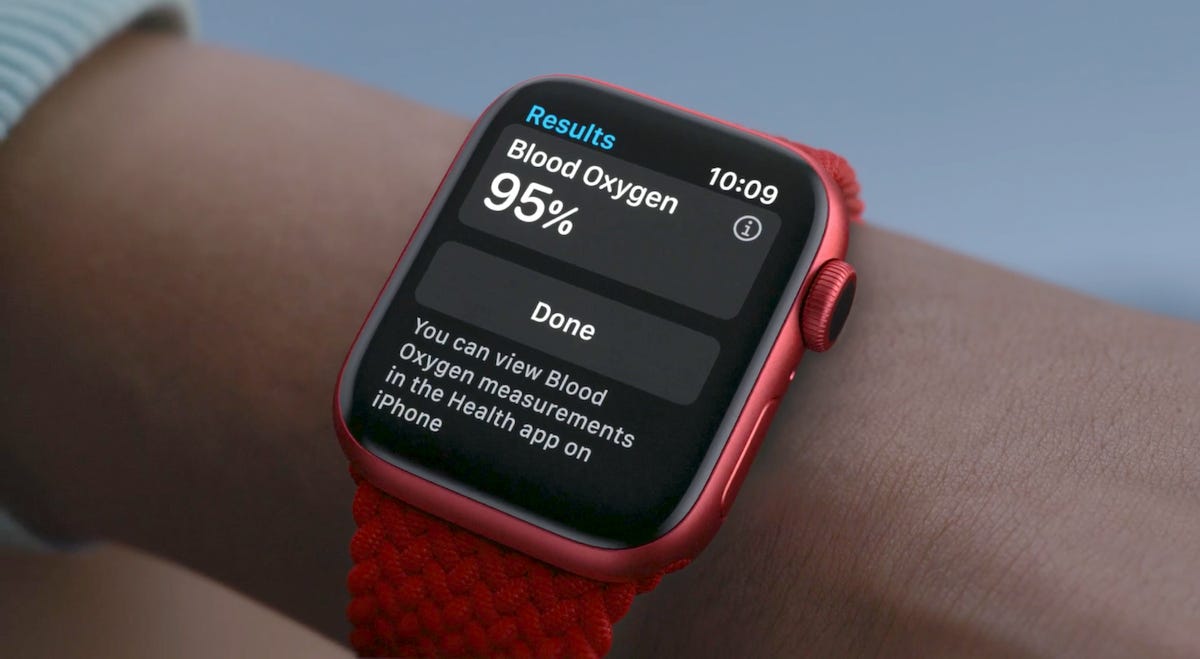
Who Should Use Blood Oxygen Tracking On A Smartwatch?
Smartwatch SpO2 is best for:
- Fitness fans tracking workouts or sleep
- Travelers going to high-altitude locations
- People interested in wellness trends
- Anyone curious about their health
It is not a replacement for medical tools. If you have lung or heart disease, always talk to your doctor before using this feature for health decisions.
The Future Of Blood Oxygen Sensors In Wearables
Technology is getting better each year. Newer smartwatches use improved sensors and smarter software. In the next few years, we can expect:
- More accurate readings for all skin tones
- Better tracking during movement
- AI to spot health problems sooner
- More medical-grade approvals
Companies are also working to make sensors smaller, use less battery, and handle sweat, tattoos, and bright light better. But for now, remember: wellness tracking is not the same as medical diagnosis.

Frequently Asked Questions
How Often Should I Check My Blood Oxygen With A Smartwatch?
For most people, once or twice a day is enough. If your watch tracks SpO2 all night, you can just look at trends in the app. Checking too often can make you worry about normal changes.
Can Smartwatches Detect Serious Health Problems With Blood Oxygen?
Smartwatches can show trends or sudden drops, but they are not medical devices. If you feel sick or have symptoms, use a medical pulse oximeter or see a doctor. Do not rely only on the watch for health emergencies.
Why Do My Smartwatch Spo2 Readings Change So Much?
Many things affect readings: movement, skin temperature, how you wear the watch, even tattoos or hair. Readings at night or when you are still are usually more stable. Look at averages and trends, not single numbers.
Is It Safe To Use Smartwatch Blood Oxygen Tracking Every Day?
Yes, it is safe to use the feature as often as you like. The light used is low power and does not harm your skin. Just remember, it is for information only, not medical care.
Which Smartwatch Has The Most Accurate Blood Oxygen Sensor?
Studies show that models like the Apple Watch Series 6/7/8, Garmin Fenix series, and Fitbit Sense are among the most accurate for healthy users. But even these are not as reliable as a true pulse oximeter, especially for people with health conditions.
Smartwatches have come a long way, and blood oxygen tracking is a great feature for many users. It’s important to know what it can and cannot do. Use it for general wellness and fitness, but always get medical advice if you are worried about your health.
With new technology coming, smartwatches will keep getting better, but for now, use their SpO2 features wisely and with the right expectations.

