
Can Protein Powder Be Mixed With Milk?
When you look for ways to boost your daily protein, you might wonder if you can mix protein powder with milk. This question is common among gym beginners, athletes, and even people who simply want to improve their nutrition. Mixing protein powder with milk seems simple, but there are details that make a big difference in taste, nutrition, and results.
This article explores everything you need to know about mixing protein powder with milk. We will look at the benefits, possible downsides, taste changes, nutrition facts, and common mistakes. If you want to use protein powder for muscle growth, weight loss, or just as a quick breakfast, you’ll find practical answers here.
Let’s break down the facts so you can make the best choice for your body and lifestyle.
Why Mix Protein Powder With Milk?
There are several reasons people choose milk as the main liquid for their protein shakes.
1. Improved Taste And Texture
Milk makes shakes creamier and richer. Many people find that protein powder mixed with water tastes thin or chalky. Milk softens flavors and creates a smoother drink.
2. Extra Protein And Nutrients
Cow’s milk contains about 8 grams of protein per cup (240 ml). When you add protein powder, you get more total protein per serving. Milk also adds calcium, vitamin D, and other nutrients that are important for bone health.
3. Better Muscle Recovery
Milk is a natural source of both whey and casein proteins. These proteins help your muscles recover after exercise. Adding protein powder to milk can give your body a mix of fast and slow-digesting proteins.
4. Feeling Full Longer
The combination of milk and protein powder can keep you full for longer. This is helpful if you use shakes as a meal replacement or want to control your appetite.
Many fitness experts recommend milk as a base for protein shakes because of these benefits. However, it’s important to look at the whole picture before deciding what’s right for you.
How Mixing With Milk Affects Nutrition
When you combine protein powder with milk, the nutrition profile changes. Here’s what you need to know:
Protein Content
Mixing protein powder with milk increases your total protein intake. For example:
- 1 scoop of whey protein powder: ~20-25 grams protein
- 1 cup (240 ml) of 2% milk: ~8 grams protein
So, together you get about 28-33 grams of protein per shake.
Calories And Carbohydrates
Milk adds extra calories and carbs to your shake. This can be good or bad, depending on your goals.
- 1 cup of whole milk: ~150 calories, 8 grams fat, 12 grams carbs
- 1 cup of skim milk: ~90 calories, 0 grams fat, 12 grams carbs
If you’re trying to gain weight or build muscle, the extra calories can help. If you’re trying to lose weight, you may want to use low-fat or skim milk to keep calories down.
Vitamins And Minerals
Milk adds important nutrients like calcium, vitamin D, potassium, and magnesium. Many people don’t get enough of these in their daily diet.
Sugar Content
Milk contains natural sugar called lactose. If you are lactose intolerant, this can cause digestive problems. Plant-based milks (like almond or soy) usually have less sugar.
Here’s a comparison of typical shake nutrition when mixed with different liquids:
| Liquid | Calories | Protein (g) | Carbs (g) | Fat (g) |
|---|---|---|---|---|
| Water | ~100-120* | 20-25* | 1-3* | 1-3* |
| Skim Milk | 190-210 | 28-33 | 13-15 | 1-3 |
| Whole Milk | 250-270 | 28-33 | 13-15 | 9-11 |
| Almond Milk (unsweetened) | 130-150 | 21-26 | 2-4 | 2-4 |
*Values marked with * depend on the specific protein powder.
Types Of Protein Powder And How They Mix With Milk
Not all protein powders are the same. The way they mix, taste, and react with milk can be very different.
Whey Protein
Whey protein is the most popular type. It mixes well with milk and creates a smooth, creamy shake. Whey is already found in milk, so the flavors blend naturally.
Casein Protein
Casein is another milk-based protein. It mixes thick and slowly digests, giving you a “full” feeling for longer. When mixed with milk, casein can become very thick—almost like a pudding if you let it sit.
Plant-based Protein
Proteins made from peas, rice, hemp, or soy can also be mixed with milk. However, plant proteins sometimes have a “grainy” texture. Milk can help cover the taste, but the shake may not be as smooth as whey.
Egg Protein
Egg protein has a mild flavor and works well with milk. It’s a good option for people who can’t have dairy but still want a smooth shake.
Collagen Protein
Collagen powder is not a complete protein, but some people use it. It dissolves easily in milk and is almost tasteless, but it doesn’t help build muscle as much as whey or casein.
Here’s a quick look at how different protein powders perform with milk:
| Protein Powder Type | Mixability with Milk | Taste with Milk | Best For |
|---|---|---|---|
| Whey | Excellent | Creamy, smooth | Post-workout, muscle gain |
| Casein | Thick, very creamy | Heavy, dessert-like | Nighttime, meal replacement |
| Plant-based | Good to fair | Earthy, may need flavoring | Vegans, dairy-free diets |
| Egg | Good | Neutral, blends well | Dairy-free, muscle recovery |
| Collagen | Excellent | Almost tasteless | Skin, joints, not muscle gain |
Best Types Of Milk For Mixing With Protein Powder
Choosing the right milk is important for taste, nutrition, and how your body reacts.
Cow’s Milk
- Whole milk: Creamiest, most calories and fat.
- 2% or 1% milk: Lower fat, but still creamy.
- Skim milk: No fat, lowest calories, but less creamy.
Cow’s milk is high in protein and nutrients, but not suitable for those who are lactose intolerant.
Lactose-free Milk
This is cow’s milk with the lactose removed. It tastes almost the same and has similar nutrition, but is easier on the stomach for those with lactose issues.
Plant-based Milks
Some popular choices:
- Almond milk: Very low in calories and protein. Good if you want a light shake.
- Soy milk: Highest in protein among plant milks (~7 grams per cup).
- Oat milk: Creamy, more carbs, medium calories.
- Coconut milk: High in fat, very creamy, low in protein.
Not all plant milks are the same—some have added sugars and flavors. Always check the label.
Goat’s Milk
Goat’s milk is another option. It’s easier to digest for some people and has a slightly different taste.
Here’s a side-by-side look at common milks for shakes:
| Milk Type | Calories (per cup) | Protein (g) | Fat (g) | Best For |
|---|---|---|---|---|
| Whole Milk | 150 | 8 | 8 | Muscle gain, taste |
| Skim Milk | 90 | 8 | 0 | Low-calorie diets |
| Soy Milk | 100 | 7 | 4 | Plant protein, vegans |
| Almond Milk | 30-40 | 1 | 2-3 | Low-calorie, light shakes |
| Oat Milk | 120 | 3 | 5 | Creaminess, vegan |
| Lactose-Free Milk | 90-150 | 8 | 0-8 | Lactose intolerance |
Step-by-step: How To Mix Protein Powder With Milk
Mixing protein powder with milk is easy, but small details can improve your shake’s taste and texture.
1. Choose Your Milk And Protein Powder
Decide what type of milk and protein powder fits your goals.
- Measure the Ingredients
- 1 scoop (about 30g) protein powder
- 1 cup (240 ml) milk
- Add to a Blender or Shaker Bottle
For the smoothest result, pour milk first, then add protein powder.
- Mix Well
- Use a blender for a creamy shake.
- A shaker bottle with a metal ball also works well.
- Stirring with a spoon is not as effective—some powders will clump.
- Add Extras (Optional)
To boost nutrition and taste, try adding:
- Banana or berries
- Peanut butter or almond butter
- Oats or chia seeds
- Cocoa powder or vanilla
- Drink Immediately
Protein shakes taste best fresh. If you leave them too long, they can separate or become too thick.
Pro tip: If your shake is too thick, add more milk or a little water.
When Is The Best Time To Drink A Milk And Protein Shake?
The best time depends on your goals.
- After a workout: Your muscles need protein to recover. Drinking a shake with milk within 30-60 minutes after exercise can help.
- As a meal replacement: A protein shake with milk can be a quick breakfast or lunch if you’re short on time.
- Before bed: Casein protein with milk digests slowly. This helps repair muscles during sleep.
Some people worry about drinking shakes late at night. As long as it fits your daily calorie needs, there is no problem.
Benefits Of Mixing Protein Powder With Milk
Here are some real advantages you’ll get:
1. More Complete Nutrition
Mixing with milk adds more than just protein. You get extra calcium, vitamin D, and other nutrients your body needs.
2. Better Taste
Most people find protein powder tastes much better with milk. This makes it easier to stick to a healthy diet.
3. Muscle Recovery
The combination of whey, casein, and the protein from milk supports faster recovery after intense exercise.
4. Satiety (feeling Full)
This shake can keep you full for longer, which helps with weight management.
5. Versatility
You can use different milks and add fruits, nuts, or flavors to match your taste or dietary needs.
Possible Downsides And Who Should Be Careful
Mixing protein powder with milk is not perfect for everyone.
Lactose Intolerance
If you are lactose intolerant, milk can cause bloating, gas, or diarrhea. Try lactose-free or plant-based milk instead.
Extra Calories
If you’re trying to lose weight, the extra calories and sugar from milk can slow your progress. Always check labels and measure your portions.
Digestion Speed
Milk can slow the digestion of protein. This is good for staying full, but not ideal if you need fast protein after a workout.
Allergies
Some people are allergic to cow’s milk or certain protein powders. Always read ingredient lists carefully.
Overuse
Relying too much on shakes can mean you miss out on whole foods and the fiber they provide. Shakes are a supplement, not a full replacement for real meals.
Common Mistakes When Mixing Protein Powder With Milk
Many people make simple errors that ruin their shakes or reduce the benefits.
1. Using Too Much Powder
More is not always better. Using extra protein powder can make shakes too thick or cause stomach discomfort.
2. Not Mixing Well
Stirring with a spoon usually leaves lumps. Use a shaker bottle or blender for best results.
3. Ignoring Calories
Adding nut butters, fruits, or using whole milk can quickly raise calories. Always count your totals if you are watching your weight.
4. Choosing The Wrong Milk
If you’re lactose intolerant, regular milk will upset your stomach. Try lactose-free or plant-based options.
5. Not Cleaning The Bottle Right Away
Protein shakes can smell bad if you leave them in a bottle. Clean your shaker as soon as you finish.
6. Mixing With Hot Milk
Most protein powders do not mix well with hot milk and can clump. Use cold or room temperature milk.
Non-obvious Insights About Mixing Protein Powder With Milk
1. Protein Quality Increases
When you mix plant-based protein powder with cow’s milk, you actually improve the overall amino acid profile. This is helpful for vegetarians who want to get all essential amino acids.
2. Milk Can Slow Absorption On Purpose
If you drink a shake before bed, the slower digestion from milk keeps amino acids available to your body for longer. This is why many bodybuilders choose milk with casein protein at night.
Practical Tips For A Better Protein And Milk Shake
- Chill Your Milk: Cold milk makes shakes taste fresher and helps powders dissolve better.
- Add Powder Slowly: If you pour all the powder in at once, it can clump. Add gradually and mix as you go.
- Try Flavored Milks: Vanilla or chocolate milk can create dessert-like shakes but watch out for added sugars.
- Use Ice for Texture: Blending with ice gives a milkshake feel.
- Test Different Brands: Not all protein powders taste or mix the same. Try samples before committing to a big tub.
Who Should Mix Protein Powder With Milk?
Ideal For:
- People trying to gain muscle or weight
The extra calories and protein help build muscle.
- Active adults and athletes
Good for post-workout recovery.
- People who want a meal replacement
With fruits, oats, or nut butters, it becomes a balanced meal.
Not Ideal For:
- People with lactose intolerance or milk allergies
- Anyone needing to strictly limit calories
- Those on plant-based diets (unless plant milk is used)
Alternatives To Mixing With Milk
If you don’t want to use milk, there are other options:
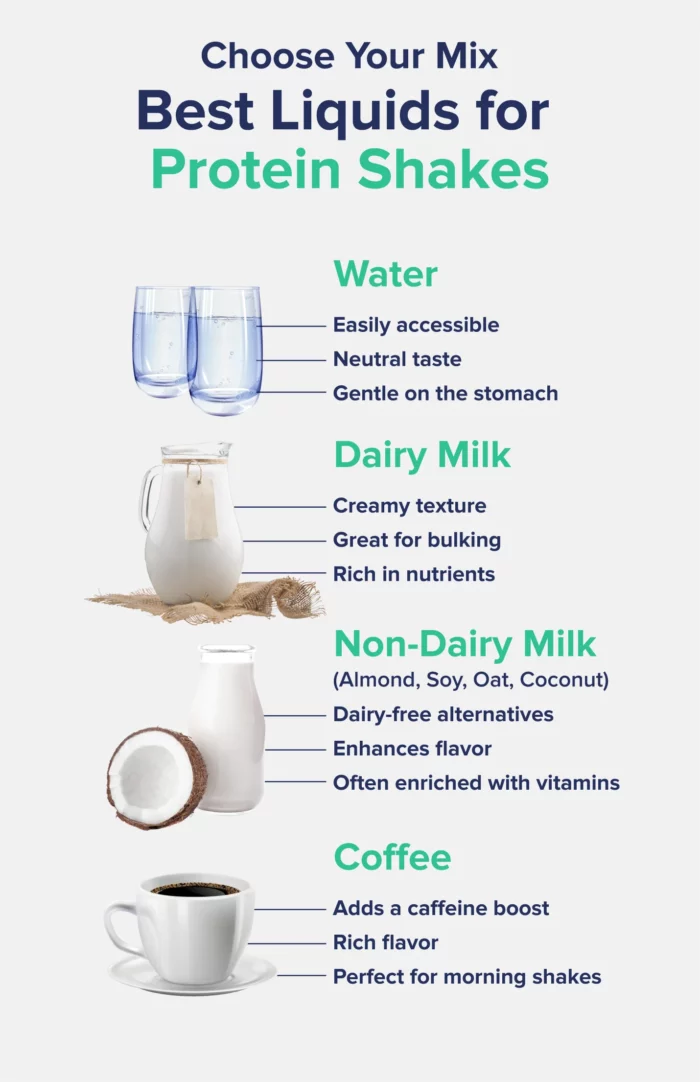
- Water: Lowest calories, but thin taste.
- Coconut water: Adds electrolytes, sweeter taste.
- Plant milks: Almond, soy, oat, etc.
- Juice: High in sugar, not ideal for everyone.
Each liquid changes the shake’s flavor and nutrition. Test what works best for you.
Are There Any Risks?
For most healthy adults, mixing protein powder with milk is safe. Problems are rare but can include:
- Overloading on calories: Can lead to weight gain if not tracked.
- Digestive issues: Especially for those with lactose intolerance.
- Nutrient imbalance: Relying only on shakes and skipping real meals.
If you have kidney disease or other health problems, talk to a doctor before adding more protein to your diet.
Scientific Studies And Expert Opinions
Research shows that combining protein powder with milk supports muscle growth and recovery. A study published in the American Journal of Clinical Nutrition found that milk-based protein shakes after exercise improved muscle protein synthesis compared to water. Milk’s mix of whey and casein proteins is especially helpful for athletes. For more details, you can read studies on PubMed.
Frequently Asked Questions
Can I Mix Protein Powder With Hot Milk?
Mixing with hot milk is not recommended for most protein powders. High heat can cause clumping and change the texture. If you want a warm shake, use lukewarm milk and blend quickly.
Is It Better To Mix Protein Powder With Milk Or Water?
It depends on your goals. Mixing with milk gives you more calories, protein, and a creamier taste. Water is better for low-calorie shakes and faster absorption.
Will Milk Cause My Protein Powder To Lose Effectiveness?
No. Milk does not reduce the effectiveness of protein powder. In fact, it can improve the protein quality and add extra nutrients.
Can I Use Plant-based Milk With Any Protein Powder?
Yes, you can use almond, soy, oat, or other plant milks with most protein powders. Just note that some plant milks are low in protein and may change the taste.
How Long Can I Keep A Protein Shake Made With Milk?
It’s best to drink your shake within 30 minutes. If you need to store it, keep it in the fridge and drink within 24 hours. Shakes left at room temperature for too long can spoil.
Mixing protein powder with milk is an easy way to make a tastier, more nutritious shake. It’s a flexible option that works for many goals, from building muscle to simple meal replacements. Try different combinations to find what works best for your body and your taste buds.
If you have special dietary needs, always read ingredient labels and ask a nutrition expert. With the right approach, your protein shake can be both delicious and healthy.


