
Are you thinking about getting a trampoline but worry about safety? You might have heard that trampolines without springs are safer, but is that really true?
Your family’s fun and safety go hand in hand, so understanding how these spring-free trampolines work is important. Keep reading to discover the facts that could help you make the best choice for your backyard and protect your loved ones while still having a great time.
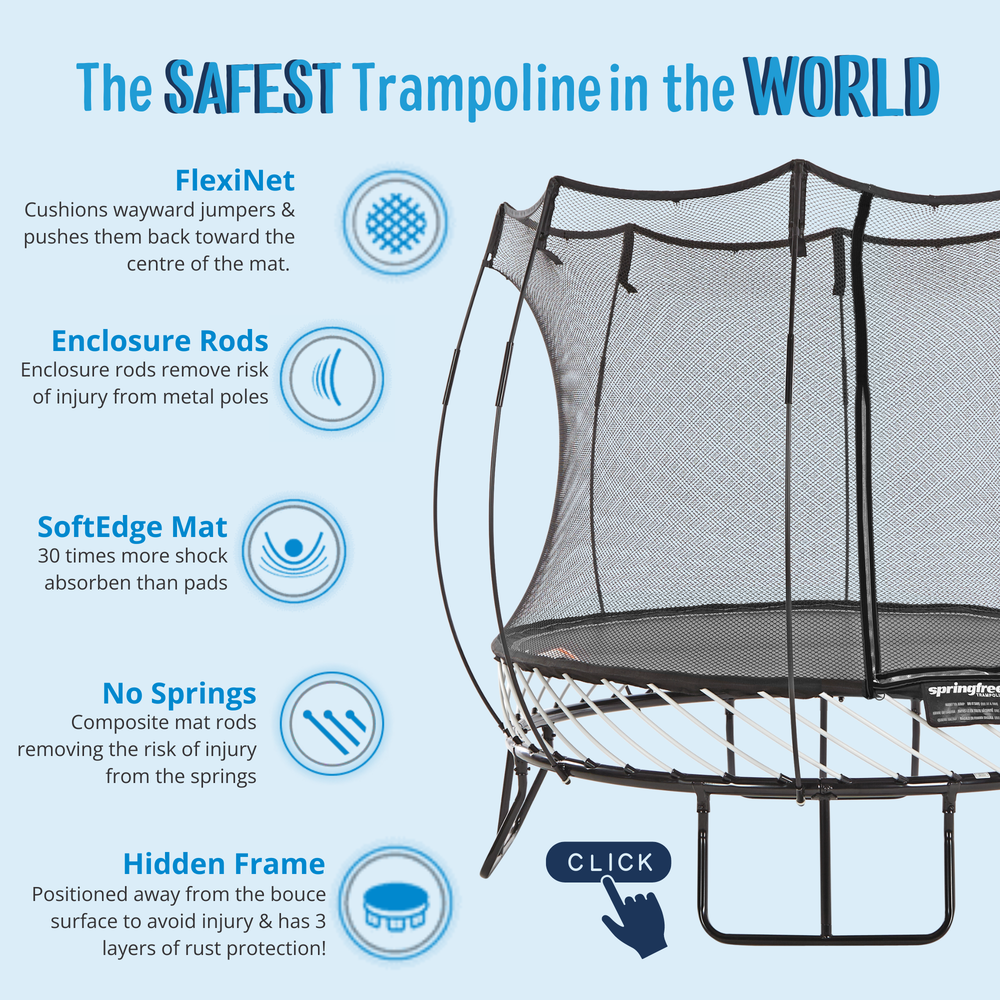
Spring-free Trampoline Designs
Spring-free trampoline designs offer a safer alternative to traditional trampolines. They remove the metal springs that often cause injuries. These trampolines use different parts and methods to keep the bounce fun and secure. Understanding these designs helps you see why they can be safer for kids and adults.
Materials Used Instead Of Springs
Spring-free trampolines use flexible rods or composite materials. These rods bend to create a smooth bounce. They are often made from fiberglass or other strong plastics. These materials do not pinch or trap fingers like metal springs do. The frame usually holds these rods securely to keep the trampoline stable.
How Spring-free Models Work
Instead of metal springs, rods stretch under weight and return to shape. This action gives a soft and even bounce. The rods are placed under or around the jumping mat. This design lowers the risk of hitting hard parts during play. It also reduces the noise that metal springs make. Spring-free trampolines focus on safety without losing fun.
Safety Benefits Of No-spring Trampolines
No-spring trampolines offer several safety benefits that make them a smart choice for families. These trampolines remove traditional metal springs, which can cause injuries. The design changes help reduce common risks. They also improve the overall experience by focusing on user safety.
Choosing a trampoline without springs can lower the chance of accidents. These models use alternative methods to provide bounce and support. This change leads to fewer pinch points and safer jumping. The frame and jumping surface work together to keep users stable and secure.
Reduced Pinch And Impact Injuries
Metal springs can pinch fingers and skin during use. No-spring trampolines replace these with elastic bands or other safe materials. This change removes the risk of getting caught or hurt by sharp edges. Users enjoy a smoother, safer bounce without hard parts.
The design also lowers the chance of impact injuries. Without springs, there are fewer hard objects near the jumping surface. This helps prevent bruises and cuts. The jumping mat is attached in a way that spreads force evenly, making landings gentler.
Enhanced Stability Features
No-spring trampolines often include stronger frames and better supports. These features keep the trampoline steady during use. Users feel more balanced and secure while jumping. The frame design reduces wobbling or shifting, which can cause falls.
Many models use advanced materials for the jumping surface and frame. These materials add strength without extra weight. The result is a trampoline that stays firm and safe. Stability improvements help protect jumpers of all ages and sizes.
Potential Risks Without Springs
Trampolines without springs might seem safer, but they have hidden risks. Springs help absorb shock and keep tension. Without them, the trampoline behaves differently. This change can cause problems during jumping.
Jumping Surface Tension Concerns
Springs keep the trampoline surface tight and flexible. Without springs, the surface may sag or feel loose. Loose surfaces do not bounce evenly. This uneven bounce can cause falls or awkward landings. Jumpers might feel unstable, increasing injury risk. Proper tension is key for safe jumps.
Durability And Wear Issues
Springs help spread stress across the trampoline. Without them, stress focuses on small areas. This focus causes the fabric to wear out faster. The jumping mat may tear or stretch quickly. Damaged mats reduce safety and comfort. Regular use without springs may shorten trampoline life.

Expert Recommendations For Safe Use
Expert advice helps keep trampoline use safe and fun. Safety starts with the right setup and ongoing care. Following clear rules during use lowers risks. Experts share key tips to protect users, especially on trampolines without springs.
Proper Setup And Maintenance Tips
Place the trampoline on flat, soft ground like grass. Avoid hard surfaces such as concrete or asphalt. Make sure the frame is sturdy and free from rust. Check the jumping mat for tears or weak spots. Tighten any loose bolts or connectors regularly. Keep the trampoline clean and dry to prevent slipping. Remove any debris that could cause injury. Store the trampoline properly during bad weather. These steps help maintain safety and prolong trampoline life.
Supervision And Usage Guidelines
Always watch children while they jump on the trampoline. Limit the number of users to one at a time. This prevents collisions and falls. Teach users safe jumping techniques and no flips or somersaults. Set clear rules for entering and exiting the trampoline. Encourage users to wear proper clothing and remove shoes. Avoid using trampolines in wet or windy conditions. Supervision and clear rules reduce accidents and keep fun safe.
Comparing Spring And Spring-free Safety
Comparing the safety of trampolines with springs and spring-free designs highlights key differences. Springs can cause pinching or injuries if a jumper lands near them. Spring-free trampolines use flexible rods under the jumping mat, reducing these risks. Both types have safety measures, but understanding their differences helps choose the safer option.
Injury Statistics And Studies
Studies show trampolines cause many injuries yearly. Spring trampolines often lead to hand and finger injuries from springs. Spring-free trampolines report fewer spring-related injuries. Some research points to similar injury rates from falls or collisions on both types. Overall, spring-free trampolines may lower specific injury risks linked to springs.
User Experience And Feedback
Users praise spring-free trampolines for safer edges and fewer pinch points. Many parents prefer spring-free models for young children. Some jumpers feel spring trampolines offer stronger bounce. Others like spring-free designs for smoother, quieter jumping. Feedback suggests spring-free trampolines feel safer without losing fun.
Choosing The Right Trampoline
Choosing the right trampoline is important for safety and fun. Not all trampolines are the same. Some come without springs, which changes how they work. This guide helps you pick a trampoline that fits your needs and keeps users safe.
Factors To Consider
Size matters. Larger trampolines offer more space to jump safely. Think about where you will place it. The surface should be flat and clear of obstacles.
Materials are key. Look for strong frames and durable jumping mats. Without springs, the trampoline uses different tension systems. Check how these parts hold up under use.
Safety features are a must. A good safety net and padding reduce injury risks. Check if the trampoline meets safety standards from trusted organizations.
Top Brands And Models
Brands like Springfree and Vuly make trampolines without springs. These are known for quality and safety. Their models use flexible rods or other tech instead of springs.
These trampolines often have better safety ratings. They reduce pinch points and sharp edges. Read reviews and compare models before buying.
Choose a brand that offers good customer support. Warranty and replacement parts are important for long-term use.

Frequently Asked Questions
Are Trampolines Without Springs Safer Than Traditional Ones?
Trampolines without springs, called springless trampolines, reduce pinch injuries. They use flexible rods instead of metal springs, enhancing safety without sacrificing bounce quality. However, proper use and supervision remain essential for safe jumping.
How Do Springless Trampolines Work Without Springs?
Springless trampolines use flexible composite rods beneath the jumping mat. These rods provide tension and bounce, replacing traditional metal springs. This design minimizes pinch points and potential injuries, offering a safer alternative while maintaining good trampoline performance.
Can Trampoline Safety Be Improved Without Springs?
Yes, removing springs reduces common injuries like pinching and cuts. Springless trampolines also often feature better padding and enclosed nets. Still, safety depends on correct installation, regular maintenance, and adult supervision during use.
Are Springless Trampolines More Durable Than Spring Models?
Springless trampolines often last longer because composite rods resist rust and wear. Metal springs can corrode or break over time, needing replacement. Durable materials and construction improve lifespan and safety for springless designs.
Conclusion
Trampolines without springs offer a safer jumping experience. They reduce the risk of pinching and injuries. Their design often includes flexible edges or special mats. This makes them a good choice for families with kids. Still, always follow safety rules and use proper supervision.
Choose a trampoline that fits your space and needs. Safety comes first, no matter the type of trampoline. Enjoy fun and safe bouncing every time.

